The Exorcist Ending Explained
This haunting movie has one of the most memorable endings of all time.
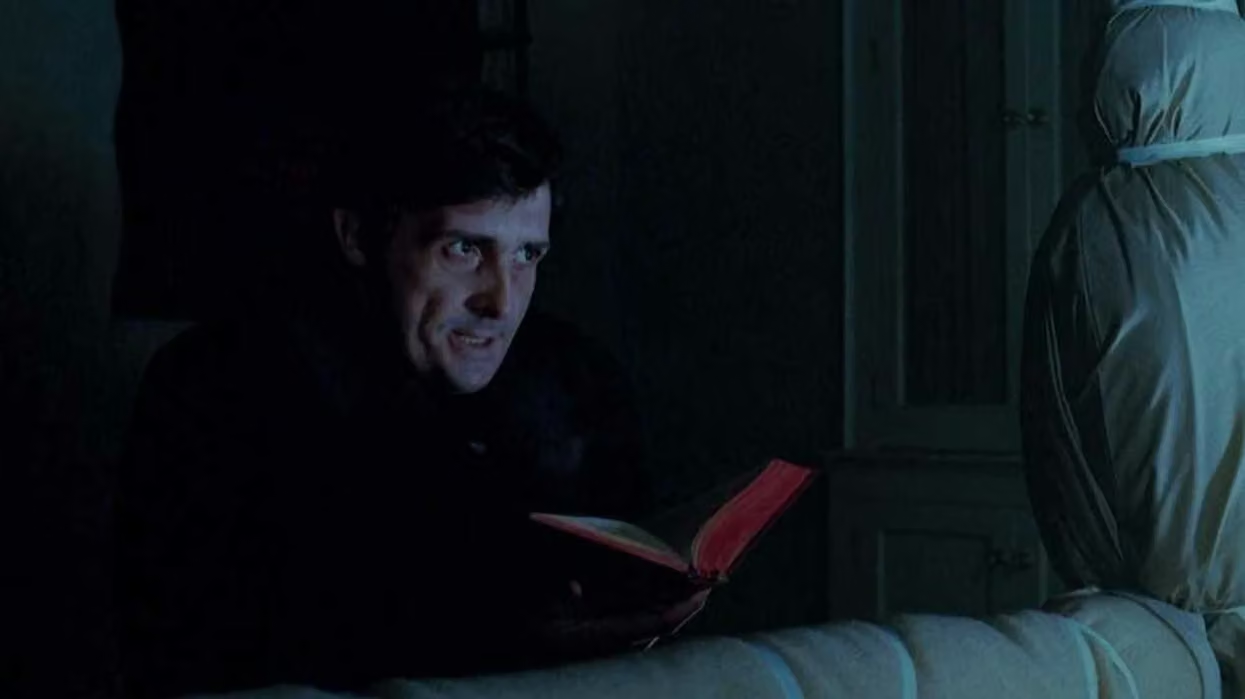
'The Exorcist'
Horror has gone through several periods, but the most notable shift came in 1973, when William Friedkin’s classic The Exorcist changed everything.
William Peter Blatty adapted the movie from his 1971 novel of the same name, and the film shook audiences to their core.
You had stories of people fainting, screaming, or real-life exorcists seeing it and saying that's just how it is in their line of work, plus other sensational tales that only made the movie's legend grow.
Oh yeah, and it destroyed at the box office, so that helped horror be embraced in Hollywood.
Now, we've accused The Exorcist of having a deeply conservative ending.
But today, I want to go deeper and talk about the film, its themes, and the philosophical layers of The Exorcist.
Let's dive in.
- YouTubewww.youtube.com
The Exorcist Cast and Crew
The success of The Exorcist stems from its grounded realism and its cast and crew, which take the movie so seriously that we have to as well. That has led audiences to lean in and to embrace it for generations.
- Director: William Friedkin
- Screenwriter / Producer: William Peter Blatty (based on his novel)
- Cinematographer: Owen Roizman
- Key Cast:
- Jason Miller as Father Damien Karras
- Ellen Burstyn as Chris MacNeil
- Linda Blair as Regan MacNeil
- Max von Sydow as Father Lankester Merrin
- Lee J. Cobb as Detective William F. Kinderman
- Mercedes McCambridge as the Voice of Pazuzu (uncredited originally)
- Father Thomas Bermingham as Father Tom (President of Georgetown University)
The Exorcist Plot Summary
The film opens in the scorched ruins of Hatra in northern Iraq, where archaeologist-priest Father Lankester Merrin unearths a small stone head depicting the ancient demon Pazuzu.
Then he stares up at a monumental statue of the entity and senses an ominous, inevitable confrontation with an evil force he has fought before...and will fight again soon.
In Georgetown, Washington, D.C., successful actress Chris MacNeil lives in a rented townhouse with her sweet 12-year-old daughter, Regan.
But all is not well in their house.
They're hearing odd noises and experiencing strange temperature drops, and Regan mentions an imaginary friend named "Captain Howdy" after playing with a Ouija board.
From there, things get way worse.
Regan pees on the carpet during a dinner party and delivers terrifying threats to guests that involve things only an adult should know about.
At the same time, across town, Father Damien Karras, a Jesuit psychiatrist based at Georgetown University, is suffering from a profound spiritual crisis.
He's no longer sure God is real, and it's shaken him to his core.
As Regan's condition deteriorates, Chris subjects her daughter to an agonizing battery of medical treatments to try to explain what is happening.
But doctors have no idea what's killing Regan.
Even worse, Regan undergoes frightening physical transformations: her body contorts in unnatural poses, her voice changes into a guttural rasp, and her face becomes severely scarred.
Tragedy strikes when Burke Dennings, a prominent film director and close family friend, is found dead at the bottom of the steep public stone steps directly beneath Regan’s bedroom window.
Chris thinks Regan did it but has no idea how her daughter could have done it.
Detective William F. Kinderman launches an investigation, discovering that Dennings’s neck was broken with extreme, inhuman force, and that his head was turned completely around.
After finding no real answers to give Chris, a panel of doctors reluctantly suggests a psychiatric placebo: an exorcism. They don't buy into it, but maybe Regan will.
This could be the best option to break her psychosis.
Chris approaches Father Karras and pleads for an exorcism. Karras approaches the case with extreme skepticism. He initially diagnoses Regan with paranoia or split-personality disorder.
But during his interviews with the girl, she speaks foreign languages backward, exhibits telekinesis, levitates the bed, and manipulates the room's atmosphere.
So that pretty much brings Karras back to the fact that he's dealing with the completely unexplained, and now, he needs a miracle to cure her.
This intensifies when he witnesses the words "Help Me" spontaneously rise in raised, bloody welts across Regan’s stomach skin.
He now knows Regan is in there, and he escalates the case to the archdiocese, which grants him permission to perform an exorcism. They call in Father Merrin to lead the rite and assign Karras to assist him.
The Exorcist Ending
The last third of the movie is Regan's exorcism. Father Merrin and Father Karras repeatedly chant holy incantations, splashing holy water while the demon retaliates with terrifying violence, levitation, and projectile vomiting.
This is where all the film's famous scenes come from, including the head spinning around and all those vile quotes from the demon.
The demon attacks them with personal accusations and hate. It weaponizes Karras’s deepest vulnerabilities, speaking in the exact voice of his dead mother to break his resolve and torment his guilt.
Merrin temporarily dismisses Karras to regain his composure. When Karras recovers and steps back inside, he finds Father Merrin slumped dead on the floor, having succumbed to a massive heart attack under the physical strain and demonic stress.
Now, it's just Karras and the demon facing off.
Overcome with grief, fury, and raw desperation, Karras tackles Regan onto the bed and physically beats her, grabbing her by the throat. He screams at the demon: "Take me! Come into me! Take me!"
The entity obliges, immediately abandoning Regan's body and invading Karras. His eyes instantly turn yellow, and his face contorts as the demon takes control.
But the demon is not dumb; it went into Karras for a reason. He realizes that the demon is preparing to use his hands to strangle Regan; Karras fights through the possessed frenzy and manages to regain control over his body for a single, fleeting second.
Looking toward the open window, Karras hurls himself through the glass and tumbles down the steep stone stairs outside the house.
Below, his close friend Father Joseph Dyer rushes to his side, administering the last rites just as Karras draws his final breath.
With the demon out of her, Regan is saved, and she doesn't remember any of the possession. She and Chris pack their belongings to leave Georgetown for good.
Karras is freed from this world and overcomes his guilt by saving a life. And the demon is defeated.
- YouTubewww.youtube.com
The Exorcist Ending Explained
Okay, there's a lot of religious iconography and biblical lore to unpack to understand Father Karras's final act.
So I'm going to take you beat by beat to extract it all.
The Ultimate Act of Faith and Sacrifice
Let's go into the most obvious takeaway from The Exorcist: this is a movie about faith and sacrifice.
Chris is a priest who would give anything for her daughter. But she has to come to terms with religion to help her.
On the other side. Father Karras has lost his faith and is unwilling to make a sacrifice for his mother.
Now, both of them get a shot at redemption.
Theologically, Karras performs an act of pure, selfless love (agape). By choosing death to prevent further harm, he reclaims his faith in his final moments and makes the same sacrifice he believes Jesus did for all mankind.
This leads Chris to embrace religion as good, not evil.
Defeating the Demon’s True Objective
Father Merrin explains that the demon’s goal is to make humanity despair, lose faith, and believe love doesn't exist in the universe.
As we've seen, Chris has lost her way, and so has Karras. The demon is winning, but in the end, they outsmart it and make sure those who witnessed this evil find their way again.
Martyrdom vs. Suicide
If you've seen the cinematic classic Constantine, or did 12 years in Catholic School like me, you know that suicide is a mortal sin that sends you to hell.
So when Karras jumps, is he committing more evil?
That's a topic that has been debated for a long time.
But as we sort of already addressed above, I do not think it is suicide; I think this is laying down your life for another.
Or, in other words: martyrdom.
The Bittersweet Finale
The film ends on a quiet note; we see that Regan is restored to health, smiling and affectionate once again. She's a little girl once more.
When she sees Father Dyer's collar before leaving, she instinctively kisses his cheek.
Deep inside, she knows faith saved his life.
And yet, so much death has happened; Chris is scared and will remember it forever, and at least three men have died trying to help her. You know the price was high for this kind of redemption.
Summing It All Up
The Exorcist endures as a masterpiece because its horror is anchored in profound questions and answers. It doesn't spoon-feed the audience; it requires us to pay attention and embrace its story.
Father Karras's tragic ending is a triumph of grace and faith. He absorbed the evil and used his powers to embrace goodness and rekindle the faith that he was doing the right thing here on this plane of existence.