If your editor dreads getting your footage, that's a problem. So, this is for you.
Jesse Senko is a photographer and director with a background in advertising. He's had years of commercial and corporate work that took him all over the world and sharpened his instincts for capturing stories fast, often without prep, in places he'd never been before.
He breaks down everything you need to know to stop making your editor's life miserable. You'll learn how to vary your coverage, build sets of shots that actually cut together, think about transitions while you're still on location, and run interviews in a way that gets answers instead of performances.
Check out his new video below.
- YouTube www.youtube.com
Shoot for the Edit
However, he says, don't edit while you shoot.
While you're shooting, you should always be thinking about what the editor will need, not just what looks good in the moment. You're capturing footage with the finished cut in mind. Different frame sizes, long enough clips, coverage from multiple angles, and transitions you can use.
But you also need room to be creative. Take risks. Do the interesting thing.
Senko's big philosophical point is that these are two different brain modes (creative and analytical), and constantly switching between them kills your flow. The modern term for it is context-shifting, and humans aren't good at it.
In doc work, especially, you're often dropped into a location with no prep and figuring out the story as you go. That's fine. But if you're making analytical editorial decisions mid-shoot, you're interrupting the creative process.
Don't Get Stuck in Medium Shot Purgatory
The most basic trap is that you start rolling, and suddenly, everything you've shot is a medium. And that's boring.
You need wides, mediums, and close-ups, too. This is the foundation of doc coverage, and it's not just about variety for variety's sake.
A wide shot of someone working alone in a vast workshop tells you something that no talking head ever could. We've got three more steps for good B-roll. Aim for wide, tight, interesting.
The 10-Second Rule
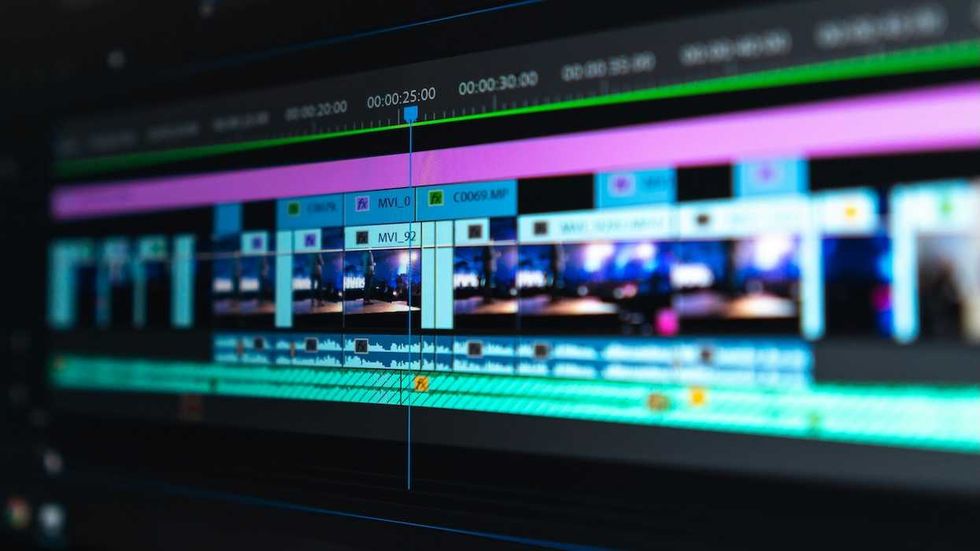
Short clips are a trap. In the moment, a 1.5-second shot feels long. Back in the edit suite, it's unusable, especially if there's a camera bump on either end eating up your frames.
Senko's rule is to have a 10-second minimum handle at the beginning and end of shots. Twenty is better. He won't cut a shot on his camera until he sees double digits on the counter.
Also, after something happens in frame, keep rolling for at least four more seconds. That clean frame after people walk through might be exactly what your editor needs for a title card.
B-roll is important. It needs to be usable.
 Credit: Peter Stumpf on Unsplash
Don't Be a Footage Hoarder, Either
Think in Sets, Not Just Shots
Coverage isn't only for narrative. Even in doc work, when you're filming two people interacting, go around to the other side. Get the other person.
Get coverage the way you would for a scene. If your subject is working with a tool, you need a close-up of the tool, the perspective from behind it, and the reaction on their face.
B-roll gets cut against interviews to make them better, and you'll need more than one angle of the same action to sustain the edit.
Get Creative, Then Get Useful
Once you have the coverage, push yourself to find unexpected angles. Try weird camera placements, surprising perspectives, and motion. These are the shots that make an editor feel delighted and surprised. It might not always be usable, but that's okay.
Senko advises, don't chase aesthetic shots at the expense of your workhorses. Chasing beautiful moments at the expense of the shots that actually hold the story together is a trap. A perfectly lit close-up doesn't save you if you never got the wide that establishes where you are. The light isn't perfect for a wide? Shoot the wide anyway.
Audiences won't ding you for a utilitarian shot. They will, however, notice when the story doesn't hold together.
We've got advice for cinematic B-roll.
 Credit: Adeel Shabir on Unsplash
Think About Transitions
A shot doesn't have to be beautiful on its own to do something powerful in context. A London black cab matched with a New York yellow cab tells you what you need to know about a change in location. You get meaning through juxtaposition.
While you're out there gathering coverage, keep an eye out for visual rhymes, repeated shapes, and elements that could carry you from one story to another. If you spend a lot of time on TikTok, you're probably already primed to look for these things, as online editors have gotten really good at finding these moments to stitch together.
The match cut in 2001: A Space Odyssey (bone to spacecraft) is one we probably all remember. And you might not hit that kind of thing on a corporate shoot in Calgary. But training yourself to notice visual rhymes while you're still on location is a good habit.
Learn more about match cuts.
For Interviews, Roll Long and Vary Your Eyelines
For interviews specifically, he says to just let the camera roll. Senko runs his for 45 minutes to an hour straight. One clip per camera means there's one sync per camera. And that's much cleaner for your editor.
Keeping cameras running also loosens subjects up. They stop performing and start talking. It's a sentiment many documentary DPs echo.
When you're shooting multiple subjects, vary the eyeline direction and lighting between them. If everyone's lit and framed the same way from the same side, you get jump cuts that make it feel like you never left the room.