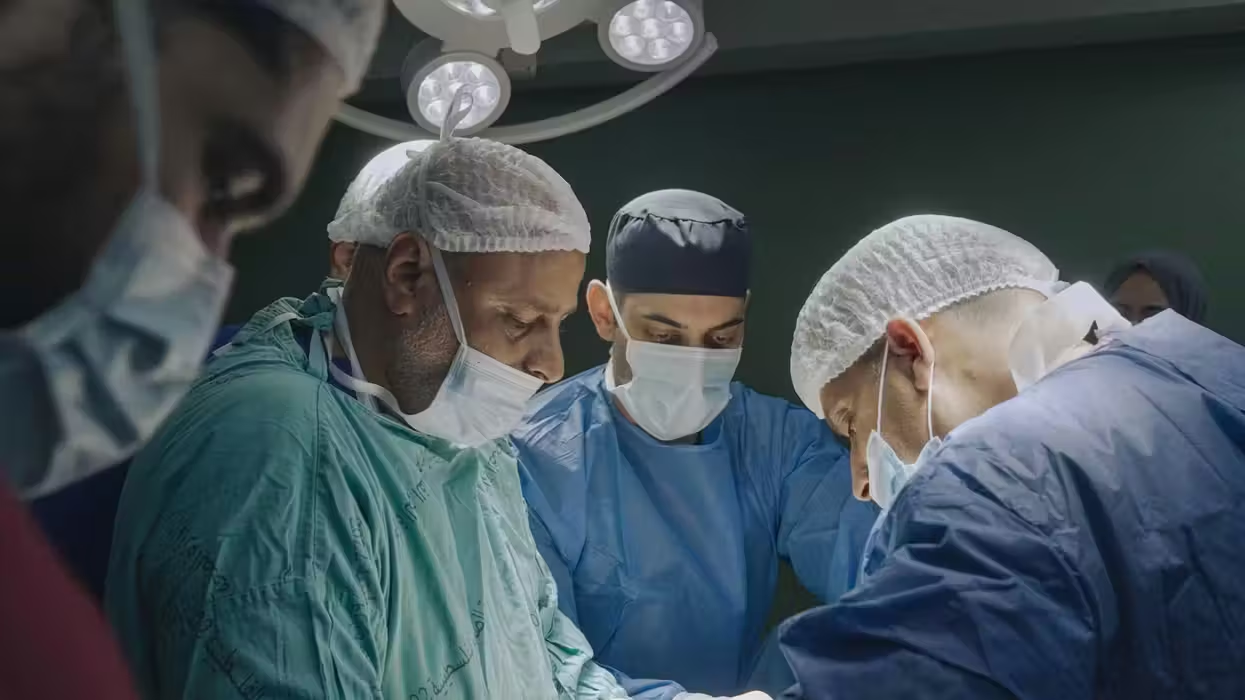
When director Poh Si Teng began following three American physicians into Gaza, she captured an unfiltered look at healthcare workers operating under extraordinary conditions inside a warzone.
But how can you take that powerful footage and translate it into a documentary?
Enter veteran editor Christopher White, ACE.
He took over the edit from Ema Ryan Yamazaki and later collaborated with her across a 12-hour time difference between New York and Tokyo.
We spoke with Christopher White about the emotional challenges of working with sensitive footage, the mechanics of balancing three distinct character arcs without a script, and how a global tag-team edit brought this essential story to life.
Let's dive in.
- YouTubewww.youtube.com
NFS: Hi Christopher! Could you begin by telling us how you got involved with American Doctor?
Christopher White: Ema Ryan Yamazaki was the first editor on this film. She started in February of 2025. At that stage, the director Poh Si Teng had only started following the doctors with her camera the month before. So there wasn’t much footage to work with, and it wasn’t certain what type of film this could be…a short, a feature?
Ema encouraged Poh to keep filming if she wanted it to be a feature, which Poh did. But Ema’s schedule only allowed her to work through April. It was then that I came on board to carry the project through the summer and fall. Poh continued filming for several more months, and it became clear that there was enough footage and story to aim for a feature-length film.
NFS: How did the project challenge your existing understanding of its subject matter?
CW: The project was challenging for me because I felt I didn't know enough about the circumstances in Gaza. I was definitely in over my head at the start of this edit, which is fine with me. I often choose projects based on what I don’t know, but want to know more about. Like Dr. Mark Perlmutter says in the film, I only knew “what I was told.” To be able to spend months and months working with this footage, getting to know the people of Gaza, experiencing their day-to-day existence through the lens of these three American doctors, was a real privilege. I also learned so much from the Director Poh Si Teng, as well as Producers Reem Haddad and Kirstine Barfod. Their perspectives and life experiences informed me and, therefore, the film. Now, after completing this film, perhaps I know just a fraction more. My education continues…
NFS: American Doctor follows the journey of three different doctors working in Palestine. How did you balance each of their arcs in the edit, and did you find yourself gravitating towards any one character as your work unfolded?
CW: Poh was interested in these three doctors because of their different personalities. And she was quite astute in recognizing these differences from the start. Dr Thaer Ahmad is more reserved, more deliberate with his words. Dr Feroze Sidhwa is highly informed and cerebral. And Dr Mark Perlmutter basically says what is on his mind. Early in the edit, I found myself leaning towards Dr. Mark because he was the most unfiltered, which provides great opportunities in the edit, though I grew to appreciate and admire Dr. Thaer so much as well. Often what is left unsaid can speak the loudest. The juxtaposition of what one doctor can say to the media without repercussions versus what another doctor can say is quite apparent.
NFS: The film also has a mostly vérité approach. Can you describe how that style of storytelling shapes your edit, and why that was the right decision for this film?
CW: Poh knew early on that she wanted to tell a story that was a present-tense, verite approach. No talking heads, no “experts”, just experiences. I love this type of storytelling, and she didn’t have to convince me at all! But this also means you can’t really edit a film like this on paper. Transcripts aren’t really relevant. So you must watch (and watch and watch) not just for content or information, but for feeling and emotion. It might be a brief interaction, a certain tone in a voice, or a fleeting expression that becomes the moment the film needs. You are seeking the feeling of a scene as much as the content. I imagine that this type of storytelling is closer to working on a fiction film with actors, except that we have only one take.
NFS: How do you practice self-care and maintain focus while working on a film with such sensitive material?
CW: To edit a film like this, one has to intentionally become desensitized to the material so you can work with it, so you can think of what you are witnessing as a story element. You have to become a little calloused to some of the footage. Ironically, as the film has travelled the festival circuit, and those callouses have receded, I have found the film more challenging to watch.
But frankly this is a hard question to answer because while yes, spending day after day watching and working with sensitive material can desensitize one to the subject matter, it is nothing compared to the experiences of the people present in the footage, those in Gaza. And not only the people in front of the camera but also behind the camera. Ibrahim Al Otla, the cinematographer, and Mohammad Sawwaf, the producer in Gaza - this is their lives! I am still awestruck at the quality of their work, under duress and danger. I hope to be able to meet them and shake their hands someday, to thank them for their commitment and dedication to capturing their experiences. So that people like me can know more. It has been an honor to share their story even further.
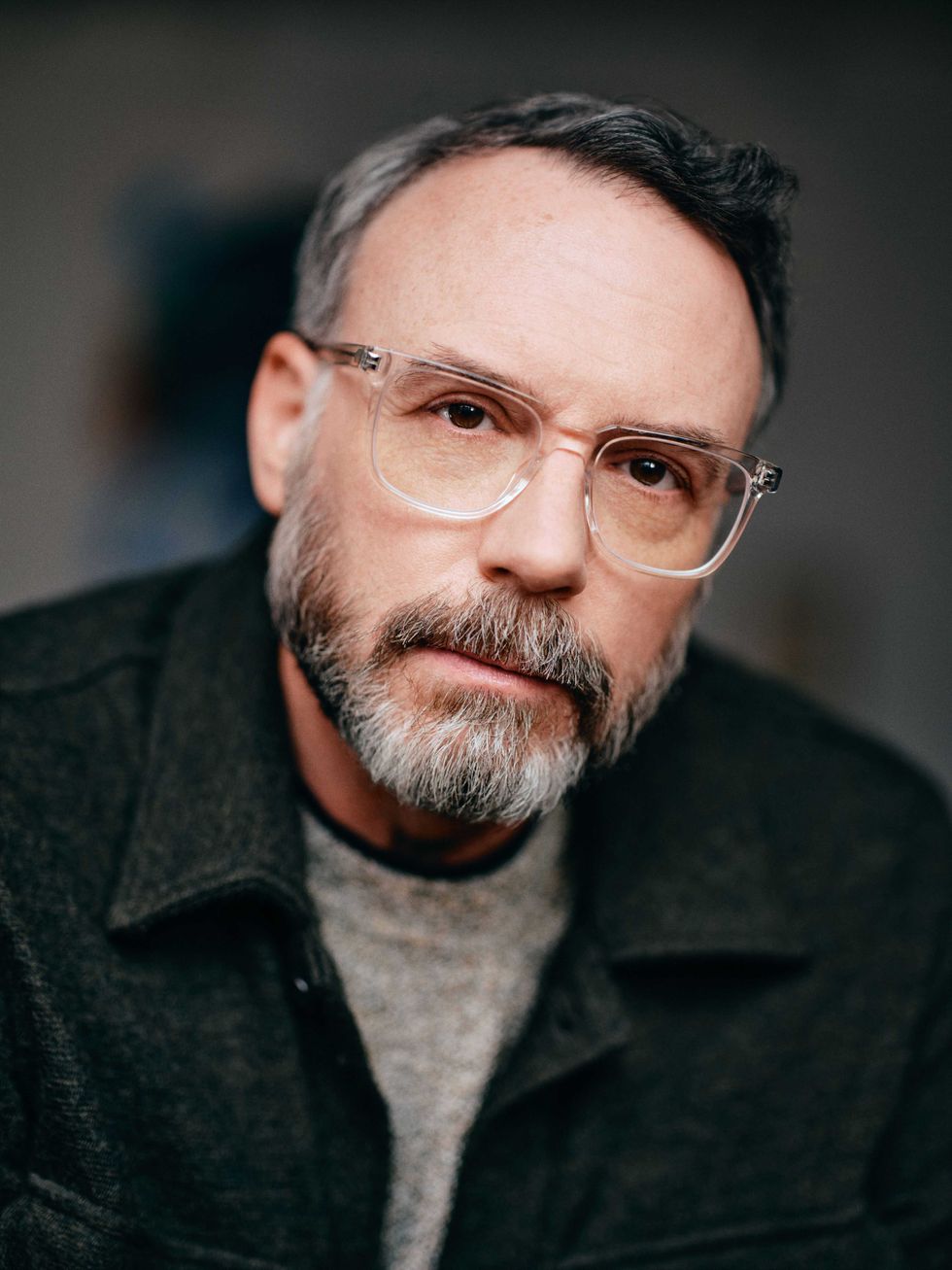 Christopher White Credit: Impact24
NFS: The film has seen a great deal of success on the festival circuit and may even be an early Oscar contender for Best Documentary. What has it been like to share the film with audiences across the country and around the world?
CW: It has been a pleasant surprise and a real privilege to see the film received around the world. During the edit, I was worried. I remember thinking “who is going to watch this?” Not because I didn’t have confidence in the film we were making, but the topic of healthcare workers in Gaza was just not really on many people’s radar, certainly in America. But something has happened since the film was finished and premiered at Sundance. It feels like the interest and awareness of Gaza has grown. More and more people are speaking up, expressing frustration that the situation in Gaza continues unabated and unchanged. And then, fold in our complicity as Americans. The film, very intentionally called American Doctor, seems to be meeting this new moment.
NFS: You also co-edited the film with Ema Ryan Yamazaki, an Oscar-nominated filmmaker in her own right. What can you tell us about the collaboration between the two of you?
CW: The collaboration between Ema and I became one of the most productive collaborations I’ve ever had, despite the fact that we were on opposite sides of the world. She is based in Tokyo, and I am in New York. The AE on the project, Mizuki Toriya, was also in Tokyo. We used Premiere Pro Productions for this film without any issues. It didn’t matter where we were in the world; we could always edit.
Because Ema had a few months on the project before I came on board, I didn’t want to waste precious production time reviewing dailies as she had. Because she is so talented and astute, I knew I could trust her selects and her story instincts.
So I started to drill down on the structure of the film. Between these two approaches, a film started to take shape.
As we headed into the fall and the home stretch of locking picture, Ema returned to the edit. It was all hands on deck. And it became clear that what I thought was going to be a disadvantage, - literally being in opposite time zones on opposite sides of the world - became one of our greatest strengths. She could work on scene(s) in her evening, and I would inherit them in my morning. And vice versa. Because of the time differences, the entire edit team literally had a 24-hour edit room going.
Poh started filming with the doctors in Dec of 2024, and we locked in November of 2025 - a very fast edit!
I would say to producers, consider hiring two editors on opposite sides of the world. It’s very productive!
NFS: Is there a specific scene or structural decision in American Doctor of which you are especially proud?
CW: The opening scene, where Mark shares his photos with us, was a challenge. Not because we didn’t know its strength, but because for a long time, we didn’t think we could open the film with this scene. It was too potent. So for a long time it was the third, fourth, or fifth scene. We felt we needed to place our doctors in Gaza from the start of the film, and then we could ease into this scene. But as time passed, it kept inching its way towards the top, until it basically became the opening of the film. Now that I have experienced the film with many audiences, I realize how much work this scene is doing to set the tone and framing for the film. It’s kind of surprising to look back and think we ever thought it could be anything else.
NFS: Is there anything else you would like to tell us about the film or any other upcoming projects?
CW: I’m currently working on another verite-oriented feature that is a little closer to home. While I can’t divulge the topic at this moment, it’s similar to American Doctor for several reasons. The events in the film are happening now, as we edit. This creates real story challenges, and we have to remain adaptable. And we also have to strive to transcend a “current events” story into hopefully something a little more timeless. And to keep looking for those small, revealing moments that become so valuable to the story.