15 Iconic Serial Killer Movies That Forged a Genre
Unravel the dark legacy of cinema’s most iconic serial killer movies.
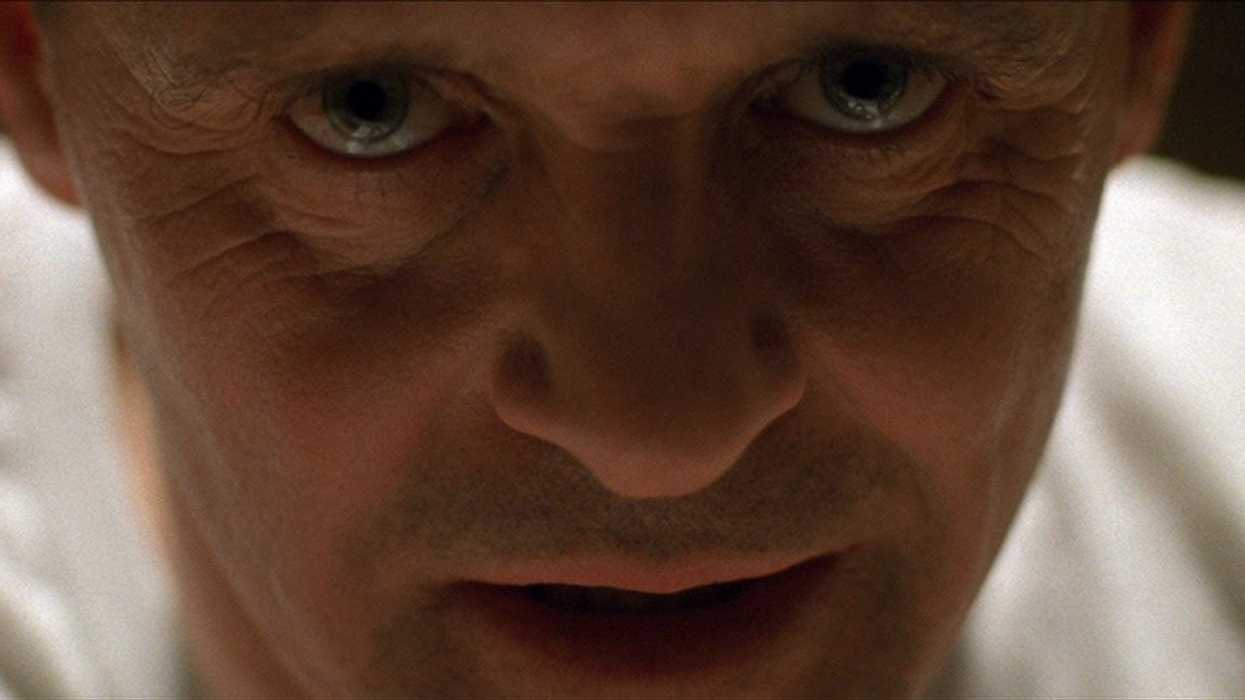
The Silence of the Lambs (1991)
There’s something unnervingly compelling about serial killers on screen. Maybe it’s the twisted logic. Maybe it’s the cold precision. Or maybe it’s just the morbid thrill of watching someone play cat-and-mouse with death—and get away with it for a while.
Serial killer cinema has evolved from Hitchcock’s buttoned-up tension in Psycho to Fincher’s clinical obsession in Zodiac and Se7en. It’s no longer just about the body count—it’s about motive, method, and the unraveling mind behind the murder. And while some films dig into real-life horrors, others craft villains so charismatic we almost forget they’re monsters.
Here, we have ranked 15 essential serial killer films that shaped the genre and redefined crime, fear, and obsession as they echo in the dark corners of pop culture.
15. Perfume: The Story of a Murderer (2006)
Directed by: Tom Tykwer | Written by: Andrew Birkin, Bernd Eichinger, Tom Tykwer | Based on the novel by: Patrick Süskind
Jean-Baptiste Grenouille (Ben Whishaw) is born with an extraordinary sense of smell—and no scent of his own. He becomes obsessed with creating the perfect perfume, even if it means murdering young women to extract their essence.
It’s a strange, lyrical film about isolation, obsession, and beauty. Tykwer crafts it like a fever dream, turning murder into something hypnotic and grotesque.
For creatives, this film shows how tone and aesthetic can elevate bizarre premises. Even the grotesque can be graceful—if handled with care.
14. Manhunter (1986)
Written and Directed by: Michael Mann | Based on the novel Red Dragon by: Thomas Harris
FBI profiler Will Graham (William Petersen) is pulled back into the field to hunt “The Tooth Fairy,” a killer obsessed with transformation. To understand him, Graham consults Hannibal Lecter (Brian Cox).
Before Silence of the Lambs, there was Manhunter. Mann’s style is cool, clinical, and neon-soaked. It’s more mood piece than thriller—focused on process, obsession, and emotional toll.
What’s notable is its restraint. Instead of shock, it leans on psychology and visual rhythm. Filmmakers interested in minimalism and control should study this one.
13. The Texas Chain Saw Massacre (1974)
Directed by: Tobe Hooper | Written by: Tobe Hooper, Kim Henkel
A group of friends stumbles upon a cannibalistic family in rural Texas. What follows is chaos, chainsaws, and Leatherface (Gunnar Hansen)—one of horror’s most enduring icons.
Hooper’s film feels like a documentary nightmare. It’s grimy, frantic, and deceptively restrained. Most of the violence is implied, but the intensity never lets up.
Indie filmmakers take note: atmosphere is everything. Made on a shoestring budget, it’s proof that fear lives in texture, sound, and timing, not expensive effects.
12. Monster (2003)
Directed by: Patty Jenkins | Written by: Patty Jenkins
Based on the true story of Aileen Wuornos (Charlize Theron), a sex worker who murdered her clients, Monster focuses on the spiral—how trauma, desperation, and love collide into violence.
Theron’s transformation is legendary, but the film doesn’t sensationalize. It’s raw, empathetic, and heartbreakingly human. Jenkins avoids moralizing, instead showing how survival can become destruction.
What’s striking is how the film refuses spectacle. It’s about character, not carnage. For storytellers, it’s a reminder: context changes everything.
11. Peeping Tom (1960)
Directed by: Michael Powell | Written by: Leo Marks
A shy cameraman (Karlheinz Böhm) films women as he murders them, capturing their final terror. His obsession with fear stems from childhood trauma, recorded by his psychologist father.
Peeping Tom destroyed Powell’s career after its release, but has since been recognized as ahead of its time. It’s about voyeurism, not just murder, making the audience complicit through the lens.
Filmmakers can learn how to turn perspective into discomfort. The killer films his victims, and we watch him do it. It’s about gaze, power, and the ethics of watching.
10. American Psycho (2000)
Directed by: Mary Harron | Written by: Mary Harron, Guinevere Turner | Based on the novel by: Bret Easton Ellis
Patrick Bateman (Christian Bale) is a Wall Street yuppie with a skincare routine, a business card fetish, and a violent alter ego. Or maybe it’s all in his head.
The film is less about killing and more about performative identity. It satirizes '80s excess while diving into psychosis with a wink. Bale’s commitment to the role makes Bateman unforgettable—equal parts ridiculous and terrifying.
For filmmakers, the blend of horror and satire is key. Tone management here is everything. It proves you can be funny, scary, and disturbing—all in the same scene. And for this to happen, as Guinevere Turner discussed in this interview, it’s important not to stick to one genre—stretch into unexpected territory and explore what else your voice can do.
9. The Vanishing (1988)
Directed by: George Sluizer | Written by: Tim Krabbé, George Sluizer | Based on the novella by: Tim Krabbé
A man’s girlfriend vanishes at a rest stop. Years later, the boyfriend receives a message from the man who took her. He agrees to meet, desperate to know what happened.
This Dutch thriller is calm on the surface but cold at its core. The villain isn’t manic—he’s methodical. The ending is one of the most quietly disturbing ever filmed.
The takeaway? Don’t rush suspense. Let dread build in silence. Minimalism, when paired with a strong premise, can be far more unnerving than overt horror.
8. Zodiac (2007)
Directed by: David Fincher | Written by: James Vanderbilt | Based on the book by: Robert Graysmith
In late ’60s San Francisco, the Zodiac Killer taunts police and media with ciphers and letters about his slayings. The film follows a cartoonist (Jake Gyllenhaal), a reporter (Robert Downey Jr.), and a detective (Mark Ruffalo) as they obsessively chase the ghost.
Zodiac is procedural without the payoff. Fincher focuses on the process—clues, suspects, false leads—and the emotional toll it takes. The film weaponizes ambiguity, dragging us into the rabbit hole with its characters.
Aspiring filmmakers should study how Fincher controls tone through pacing and detail. Even without a climactic reveal, it grips like a thriller. The tension lies in not knowing.
7. The Night of the Hunter (1955)
Directed by: Charles Laughton | Written by: James Agee | Based on the novel by: Davis Grubb
Harry Powell (Robert Mitchum) is a preacher with “LOVE” and “HATE” tattooed on his knuckles—and murder in his heart. After marrying a widow, he hunts her children to find hidden money, masking his cruelty behind scripture.
The film plays like a grim fairy tale. Laughton mixes dreamy expressionism with raw dread, creating one of the most visually striking films of its era. Mitchum’s performance is pure nightmare fuel.
Few films show how style can enhance terror quite like this. For directors, it’s a lesson in bold visual storytelling—lighting, silhouettes, and shadows that say what dialogue doesn’t.
6. I Saw the Devil (2010)
Directed by: Kim Jee-woon | Written by: Park Hoon-jung
When a serial killer (Choi Min-sik) murders his fiancée, a secret agent (Lee Byung-hun) sets out not to kill him, but to make him suffer—over and over. It’s a revenge film that spirals into something darker.
The violence here is extreme, but it’s not mindless. The film becomes a study in moral corrosion, blurring lines between justice and obsession. Kim Jee-woon keeps the tension high without losing emotional weight.
What filmmakers can take away is the way this movie subverts genre. It starts as a revenge thriller, becomes a psychological horror, and ends as a tragedy. It never lets the audience off the hook.
5. Memories of Murder (2003)
Directed by: Bong Joon-ho | Written by: Bong Joon-ho, Shim Sung-bo
In rural 1980s South Korea, two mismatched detectives—one brash, one methodical—try to solve a string of brutal rapes and murders. As the case drags on, the leads go cold and the desperation turns inward.
Loosely based on real events, the film refuses easy answers. Bong Joon-ho blends procedural drama with social critique, showing how a broken system hunts ghosts while the real evil slips through unnoticed.
What makes this film essential is its restraint. The violence is devastating but rarely shown. It’s more about what’s missing—proof, clarity, justice. A lesson in tone, pacing, and the power of ambiguity.
4. The Chaser (2008)
Written and Directed by: Na Hong-jin
A disgraced ex-cop turned pimp, Joong-ho (Kim Yoon-seok), starts noticing his girls are vanishing. When one finally goes missing mid-job, he tracks down the client—only to discover the man is a serial killer, and the system might let him go.
This South Korean thriller doesn’t follow Western beats. The killer is caught early, the suspense comes from the frustration of powerlessness, not mystery. Na Hong-jin leans hard into chaos and bureaucracy, showing a world where justice has no rhyme or reason.
Filmmakers should study how the film uses character urgency over plot mechanics. There’s no clean act structure—just raw, reactive momentum. It’s messy, but it works, and that unpredictability is what sticks.
3. Psycho (1960)
Directed by: Alfred Hitchcock | Written by: Joseph Stefano | Based on the novel by: Robert Bloch
Marion Crane (Janet Leigh) steals a stack of cash from her work and goes on the run, checking into the Bates Motel—a detour that ends in cinematic infamy. Norman Bates (Anthony Perkins), the mild-mannered innkeeper, is hiding more than just his mother upstairs.
Psycho broke every cinematic rule in the book. Hitchcock killed off the lead early, blurred the line between killer and victim, and made audiences afraid of their own showers. The editing in the shower scene alone changed the language of the film.
Hitchcock showed how horror could live in suggestion. The film’s eerie tension, unreliable POVs, and character psychology are a blueprint for suspense. Minimalist yet sharp, it's a masterclass in economy, both in story and shot.
2. Se7en (1995)
Directed by: David Fincher | Written by: Andrew Kevin Walker
Two detectives—veteran Somerset (Morgan Freeman) and rookie Mills (Brad Pitt)—hunt a killer who’s staging murders based on the seven deadly sins. The city is rotting, the crimes are grotesque, and the clock is ticking toward something far worse than they expect.
Fincher’s direction is bleak and deliberate. The rain-soaked streets, dim lighting, and slow pacing trap the viewer in a growing sense of doom. Every scene feels infected with decay—physical, moral, and societal. And that ending? Still gut-wrenching.
What’s smart here is the discipline. The film holds back, refusing to show more than it needs to. It's a valuable lesson in atmosphere, structure, and foreshadowing—perfect for filmmakers studying how to build dread through detail and pacing, not cheap thrills.
1. The Silence of the Lambs (1991)
Directed by: Jonathan Demme | Written by: Ted Tally | Based on the novel by: Thomas Harris
FBI trainee Clarice Starling (Jodie Foster) is tasked with tracking down a serial killer named Buffalo Bill. To do that, she must seek the help of another serial killer, Dr. Hannibal Lecter (Anthony Hopkins), a brilliant psychiatrist and cannibal behind bars. What unfolds is less a procedural and more a psychological tug-of-war between predator and prey—though who's who keeps shifting.
The Silence of the Lambs remains a gold standard because it’s not about the violence—it’s about the dread. Demme’s tight close-ups force intimacy. Hopkins delivers menace in whispers, not screams. And Foster plays Clarice with quiet defiance, anchoring the film’s core tension: vulnerability versus power.
Filmmakers can learn so much from its restraint. It proves you don’t need to show everything to unsettle your audience. With strong characters, sharp dialogue, and a focus on mood over gore, it builds terror from the inside out.
Conclusion
From Hitchcock’s voyeuristic suspense to Fincher’s procedural dread and South Korea’s raw brutality, serial killer films have carved out their own twisted corner of cinema. These 15 titles rewrote the rules, shaping how we tell stories about evil, obsession, and the human capacity for horror.
But maybe the bigger question is: why are we so drawn to this darkness? Is it about understanding the unthinkable—or confronting the part of ourselves that looks back from the abyss?
Either way, these films leave a mark. And now it’s your turn—what’s the one that haunted you the most? Drop it in the comments. Let the confessions begin.