The Most Devastating Line in Charles Bronson’s Action Career Was Actually This Unspoken Gesture
Famous for portraying the vigilante hero across five Death Wish films, here’s why the most iconic and devastating line of Charles Bronson’s action career was actually one where he didn’t say anything at all.
'Death Wish'
Charles Bronson is an actor with one of the most historic filmographies of all time. Born to a coal mining family in rural Pennsylvania and serving as a bomber in World War II, Bronson broke into the film industry with iconic roles in war, mob, and western classics like Drum Beat, Machine-Gun Kelly, and The Magnificent Seven.
However, while Bronson’s career accomplishments are vast and iconic, his most devastating, if not most famous, line in his historic career is actually one that goes unspoken, and serves as both the ending to the genre-defining vigilante action-thriller film Death Wish, and the launching point for an action career that would dominate his renaissance in the '80s and '90s.
Let’s look at this famous non-line from Charles Bronson’s first portrayal of mild-mannered architect Paul Kersey, pushed too far in the original Death Wish film from 1974.
Charles Bronson in 'Death Wish' (1974)
First cast as a villain in the classic Western Drum Beat, before being cast in his first leading role by B-movie auteur Roger Corman as the titular character in Machine-Gun Kelly, if you only looked at Bronson’s early career of tough-guy genre staples like The Great Escape, The Dirty Dozen, and Once Upon a Time in the West, you’d think Bronson would be best remembered as a dusty genre star of the '60s and '70s.
However, the Lithuanian-American actor took a major pivot in the 1970s after starring in one film that launched a franchise and dramatically changed the trajectory of his career. Death Wish, which was released in 1974, was directed by Michael Winner and loosely based on a novel of the same name. It gave Bronson’s career new life as he brought the mild-mannered architect turned vigilante justice-seeking assassin, Paul Kersey, into nearly a household name.
Bronson would go on to star in five Death Wish films in total, the majority of which were produced by Cannon Films, who would also sign Bronson on to star in numerous similarly-styled and themed action flicks, which gave Bronson the tough-guy action star persona that he’s most often remembered with these days.
The Ending Sequence to 'Death Wish'
When looking back at a film like Death Wish, it’s important to remember the era it came out in because, by today’s action movie standards, it could be considered more of a slow-burn think-piece actioner rather than the explosive, over-the-top action films that would dominate the late '70s and the entirety of the '80s and '90s.
An era, which ironically, Bronson would excel in and which the subsequent Death Wish sequels would all squarely reside in, with no-holds-barred shootouts from start to finish. Still, the original Death Wish was more contemplative and truly explores the darkness of crime, justice, and the desire for vengeance.
The ending of the first Death Wish film is where Bronson’s finest moment as an action star, perhaps as an actor as well, occurs as Bronson’s Kersey finally gets his revenge and accepts his exile from New York to relocate to Chicago.
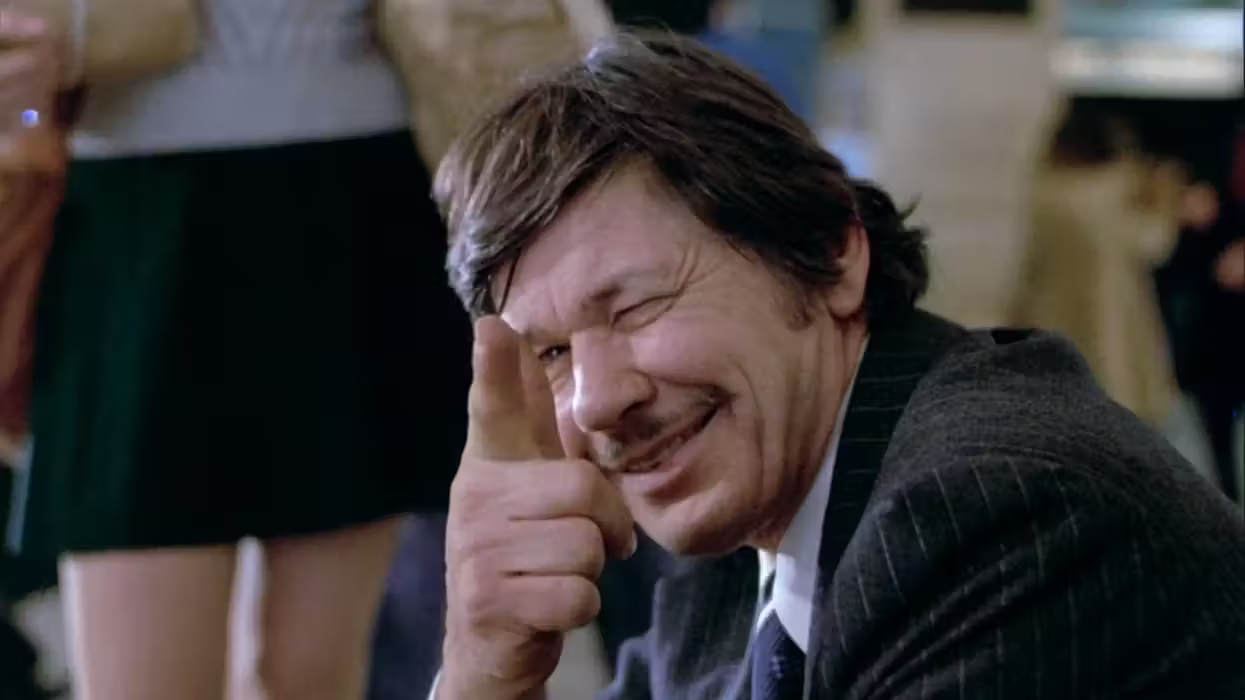
Upon arriving at Chicago Union Station, Kersey sees some hoodlums harassing a young woman. As he goes to help her and the crew run away, Charles Bronson gives a slow smile to the gang before making a finger gun gesture at them, signaling that his run of vigilantism—just as his action career— is far from over.
- 5 Greatest Charles Bronson Lines of All Time, Ranked ›
- Top 10 Iconic Western Duels in Movie History ›
- Move Over Rocky and Rambo, Stallone’s Most Iconic Action Performance Will Always Be as Cobra ›
- 10 Best Westerns of the 1970s: Ranked ›
- Film Quote of the Day: The 'Magnificent Seven' Line That Explained How We Justify Exploiting the Vulnerable ›