10 Best Westerns of the 1970s: Ranked
Ranking the ten films that turned frontier myths into hard cinema.
'Jeremiah Johnson'
The “frontier myth” positions America as a wide, open expanse of land that offers unlimited opportunities if you are ambitious, strong-willed, hardworking, and self-reliant. This romanticized idea was the inspiration behind the advent of Western films, a.k.a., their classic era (1930s-1970s). The characters in these Westerns were defined by a clear moral code: white heroes, stoic and honorable, and villains, often Native Americans, as one-dimensional savages who posed as the “outside” threats.
The Westerns of the '70s dismantled this dynamic and reinvented the genre. They subverted the classic tropes. Characters became more complex, and morality became ambiguous. The likes of John Wayne were replaced by the likes of Clint Eastwood, Charles Bronson, and Robert Redford, who often portrayed the protagonists as outsiders, and quite cynical ones. Violence became more graphic.
These movies offered a critical look at American history and frontier mythology. They became known as the Revisionist Westerns, which questioned the ethics of the past films and explored darker themes, such as greed, corruption, and the psychological toll of violence. Vietnam, Watergate, and general distrust of authorities quietly seeped into their themes. Gun still fired, but victories felt hollow. Silence carried weight.
These movies also offered more authentic and positive representations of minorities and women. They didn’t flinch from acknowledging racism and the injustice of the Old West.
Regardless of whether you are a lifelong Westerns fanatic or new to them, this list will offer you evolved Westerns that go beyond the typical shootout.
10 Best Westerns of the '70s
10. The Life and Times of Judge Roy Bean (1972)
Written by: John Milius | Directed by: John Huston
An outlaw, Roy Bean (Paul Newman), kills the townspeople who wronged him and appoints himself the judge of Vinegaroon. His judicial leadership brings an eccentric brand of justice to the Texas town, where he creates a team of other outlaws and a pet bear. As he accumulates power, he continues to be preoccupied with an actress, named Lillie Langtry (Ava Gardner), whom he has never met.
The film contrasts the epic-like structure of the old Westerns with an episodic narrative. It also mocks the elements that were essential to the classic counterparts. For example, while “the law” is sacred in old movies, here it is based on the protagonist’s whims and his obsession with Lillie. The protagonist himself is basically a squatter with a gavel, instead of a stoic, principled lawman. Bean’s whimsical law is contrasted with vibrant cinematography.
9. The Hired Hand (1971)
Written by: Alan Sharp | Directed by: Peter Fonda
After abandoning his family and aimlessly wandering for seven years, Harry Collins (Peter Fonda) returns home with a companion, Arch Harris (Warren Oates). To convince his unwelcoming wife, Hannah (Verna Bloom), to let them stay, Harry offers to be her “hired hand” at the homestead. As days pass, the estranged couple begins to get close again, only to be interrupted by an old enemy.
The movie is noted for merging the Old West grit with a subtle domestic drama, which adds to the movie’s emotional weight. Its dreamlike lyrical pace perfectly complements the stunning multi-exposure transitions. Despite being a Western, it avoids the typical action clichés to focus on the pain of a broken relationship.
8. Ulzana’s Raid (1972)
Written by: Alan Sharp | Directed by: Robert Aldrich
An aging U.S. Army Scout, McIntosh (Burt Lancaster), a young and naive Lt. Garnett DeBuin (Bruce Davison), and a few soldiers embark on a mission to hunt down a vengeful Apache, Ulzana (Joaquín Martínez), and his war party. As they face shocking violence and their own prejudices, the devastating cultural war erupts in the unforgiving wilderness.
Although considered a revisionist Western, the film still portrays Native Americans as brutal and sadistic. It is also remembered for its unflinchingly honest portrayal of violence. Unlike the old movies, it doesn’t engage with romanticizing the cavalry and instead focuses on the strategic and psychological toll of the chase.
7. Pat Garrett and Billy the Kid (1973)
Written by: Rudy Wurlitzer | Directed by: Sam Peckinpah
A group of wealthy New Mexico cattle barons hires a former outlaw, and now the sheriff, Pat Garrett (James Coburn), to hunt down his old friend, outlaw Billy the Kid (Kris Kristofferson). Against the backdrop of rugged individualism and encroaching capitalism, the movie explores the tragic clash between friendship, duty, and changing times.
The film is known for its wistful vibe, which is complemented by Bob Dylan’s soundtrack. Peckinpah’s signature editing style infuses a sense of impending doom and perfectly captures the melancholy of men who have outlived their era.
6. High Plains Drifter (1973)
Written by: Ernest Tidyman | Directed by: Clint Eastwood
A Stranger (Clint Eastwood) rides into the desolate mining town of Lago. The residents, who are expecting three notorious outlaws to be released from prison and wreak havoc on the town, hire him for protection. He accepts, but only after having the villagers paint the town red and renaming it “Hell.” The ensuing drama unfolds only to hint at the mysterious existence of the stranger.
This is Eastwood’s first Western (and second movie) in the director's chair. Here, he blends the Western with the subtly hinted elements of the supernatural. The film’s bold use of high-contrast shadows and its psychological depth contribute to its gothic, eerie atmosphere. It also challenges the “hero” archetype by making him less a traditional savior and more an avenging spirit.
5. The Shootist (1976)
Written by: Miles Hood Swarthout | Directed by: Don Siegel
A legendary gunslinger, but now aging and diagnosed with terminal cancer, J.B. Books (John Wayne) comes to Carson City in hopes of spending his final days in peace. However, his reputation precedes him, and his past catches up, prompting some to exploit his skills and others to kill him. It forces him into one final showdown but also lets him die on his terms instead of as a victim of a disease.
This film marks the final screen appearance of John Wayne, arguably the first true star of the Westerns. Coincidentally, or perhaps on purpose, the film is also a meta commentary on Wayne’s own career and the end of the classic Westerns. The clean and respectful cinematography keeps a tight focus on the interior shots, mirroring Books’ shrinking and limited time.
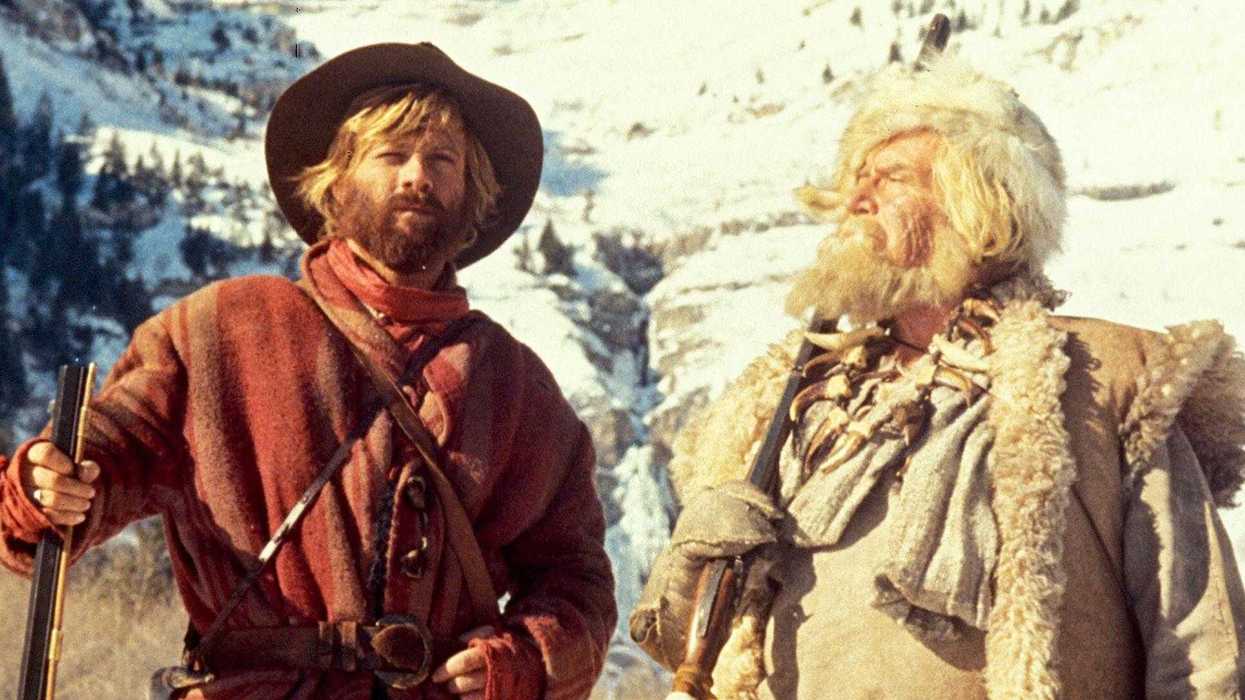
4. Jeremiah Johnson (1972)
Written by: John Milius, Edward Anhalt | Directed by: Sydney Pollack
Post-Mexican War, a war-weary veteran, Jeremiah Johnson (Robert Redford), retires to the Rocky Mountains. As he peacefully spends his time learning from an old trapper how to survive in the wilderness, he unwittingly gets into a conflict with the Crow tribe, leading to a fierce vendetta and a quest for survival and revenge.
Possibly an inspiration for the previous entry, Jeremiah Johnson excels at location shooting and physical storytelling. Its masterful but offhanded capturing of the natural beauty alone can be the reason why it is included in the top five. But credit also goes to Pollock’s choice of avoiding exposition and letting the snow and silence of the wilderness do all the talking.
3. McCabe & Mrs. Miller (1971)
Written by: Brian McKay | Directed by: Robert Altman
A forceful-natured gambler named John McCabe (Warren Beatty) arrives in a small mining town, influences its simple-minded inhabitants, and starts a brothel. He starts a business partnership with savvy Constance Miller (Julie Christie). However, this successful enterprise attracts the attention of a powerful corporation, leading to conflict and tragic consequences.
The film is highlighted by its overlapping style of dialogue and flashing cinematography that makes each frame look like a photograph. When it comes to subverting the traditional “hero,” the movie goes all the way. Its cold, snowy climax is one of the most realistic and heartbreaking sequences in cinema.
2. Blazing Saddles (1974)
Written by: Mel Brooks, Richard Pryor | Directed by: Mel Brooks
A corrupt attorney general, Hedley Lamarr (Harvey Korman), wants to drive all the residents of a small town out because its location is vital to a railroad route, and he can make millions out of it. Taking advantage of the townspeople’s racist tendencies, he appoints Bart (Cleavon Little), a Black railroad worker, as the sheriff, hoping it will cause chaos and clear the way for the railroad. Much to his dismay, Bart teams with an outlaw and saves the town.
This is the only comedy in the list. The success of its parodical nature effectively ended the serious traditional Westerns for a few years. It ranks so high up because it uses sharp, anarchic humor to expose the inherent racism and clichés of the frontier myth.
1. The Outlaw Josey Wales (1976)
Written by: Philip Kaufman, Sonia Chernus | Directed by: Clint Eastwood
The film is set during the American Civil War. After Union soldiers murder his family, a vengeful Missouri farmer, Josey Wales (Clint Eastwood), becomes a Confederate guerrilla. Following the war, he refuses to surrender and flees to Texas. He slowly accumulates a makeshift family of outcasts as he evades his past and soon becomes a legend known for his toughness and survival.
The New York Times called Eastwood’s direction of Josey Wales “extraordinarily skillful.” That should be enough to explain why it sits in the top position. It perfectly balances the grit with a surprising message of healing. It’s fundamentally a revenge movie, but its use of natural light and deep development of the supporting characters let it evolve into a profound epic about starting over.
- 12 Lines That Made Clint Eastwood a Legend ›
- 14 Iconic Mexican Standoffs in Cinema ›
- The Western Genre in Film and TV (Definition and Examples) ›
- How Did the Close-Up Change the Way We View Westerns? ›
- What Are The Best Western Movies of All Time? - No Film School ›
- The Top 10 Best Western Gunfights of All Time | No Film School ›
- 9 Most Brutal Western Movies Ever Made | No Film School ›
- 8 Unforgettable Robert Redford Movie Quotes ›
- “Dying Ain’t Much of a Living”: The Meaning Behind The Gritty Philosophy of The Outlaw Josey Wales ›
- Walking Over Your Grave: Doc Holliday’s Deadliest Line in 'Tombstone' ›
- "Two Kinds of People": The Line That Defines ‘The Good, the Bad, and the Ugly’ ›
- The Coldest Line Clint Eastwood Ever Delivered in ‘A Fistful of Dollars’ ›
- “I Reckon So”: Josey Wales’ Three Words of Steel in ‘The Outlaw Josey Wales’ ›
- Lawless Malice: The 10 Scariest Villains in Westerns ›
- The 8 Best Westerns of the ‘80s: Ranked ›
- Throwing Shade, Western Style: Why Josey Wales’ Iconic Taunt Still Hits in 2026 ›
- The 13 Best Westerns of the ‘90s: Ranked ›
- “Burnin’ Daylight!”: The Wisdom Behind John Wayne’s Most Famous Line in ‘The Cowboys’ (1972) ›
- Top 10 Iconic Western Duels in Movie History ›
- 5 Greatest Charles Bronson Lines Of All Time - Ranked ›
- ‘Shane’: The Moral Reasoning Behind a Hero’s Goodbye ›
- A Nice Piece of Hickory: Why ‘Pale Rider’s’ Simplest Fight is Its Best ›
- The Lethal “Mule” Gag: How ‘A Fistful of Dollars’ Introduced a Legend ›
- More Than a Threat: The "No-Nonsense" Irony of the "3 Coffins" Gag in ‘A Fistful of Dollars’ ›
- The Brutal Truth Behind Wyatt Earp’s Classic ‘Doc’ Quote ›
- The Doorway to Nowhere: Why the Final Shot of ‘The Searchers’ Still Haunts Us ›
- 5 Movies From the 1970s That Would Never Be Made Today ›
- 15 Western Movie Tropes: The DNA That Defines the Genre ›
- ‘Dances with Wolves’: The Bet Nobody Thought Would Pay Off ›
- 7 Best Spaghetti Westerns, Ranked ›
- The Meaning Behind “We Don’t Need No Stinking Badges” in The Treasure of the Sierra Madre ›
- This 1952 Western Classic Ranked Among ‘Best Movies’ of All Time ›
- The Most Devastating Line in Charles Bronson’s Action Career Was Actually This Unspoken Gesture ›
- The 10 Westerns Every Filmmaker Should Watch | No Film School ›
- Film Quote of the Day: The 1957 Glenn Ford Western Line About Time That Still Hits Hard | No Film School ›