Top 10 Iconic Western Duels in Movie History
These unforgettable gunfights showcase the tension, style, and mythic heroism that made the Western duel one of the most enduring cinematic rituals.
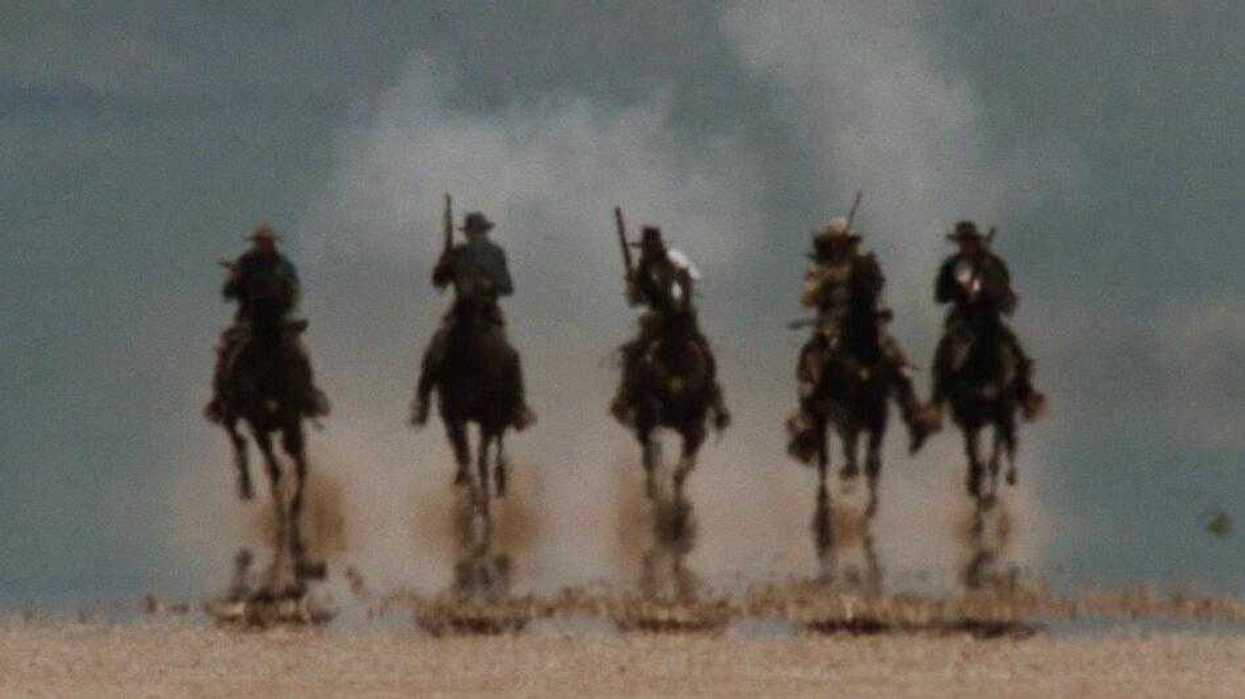
‘Tombstone’ (1993)
Among other things that make Westerns a stand-alone genre, the standoffs, duels, and gunfights are the central ones. They actually form the genre’s heart. These elements are the carriers of tension, style, and mythic heroism, and that makes them one of the most enduring cinematic rituals.
Nowadays, a superhero lands on Earth in a crater, and we don’t even bat an eye. But long before we developed this inertia towards over-the-top action, there was a time when a lone drifter, squinting into the sun, would ride into a lawless town, carrying nothing but a gun and a score to settle, and the audience would act like they had ants in their pants.
It’s essentially about the walk-down, a highly choreographed dance of ego and iron. It must create tension so thick that you could cut it with a knife. If you think the modern action-drama is intense, these classic standoffs will show you how much drama you can really fit into just a hand hovering over a holster.
This line-up is meant to give you a glimpse into this iconic Western ritual that represents the high-water mark of tension and style.
10 Greatest Gunfights in Western Cinema
1. The Final Showdown (High Noon, 1952)
Written by: Carl Foreman | Directed by: Fred Zinnemann
The scene shows a lonely marshal, Will Kane (Gary Cooper), gearing up to face a gang of outlaws arriving on the noon train while the townspeople abandon him. The scene deserves a special mention because of two things: 1. It shows the hero genuinely scared, and 2. It shows the messy, tactical nature of a real gunfight. Stripping away the invincibility from the hero was quite uncommon in the Westerns of the ‘50s, but that’s why this duel seems grounded in raw, pulsating suspense.
2. The Saloon Duel (Shane, 1953)
Written by: A. B. Guthrie Jr. | Directed by: George Stevens
Shane (Alan Ladd), a mysterious drifter, steps up to protect a small town of homesteaders from a cattle baron. In this scene, we see him dueling with a cold-blooded professional killer hired by the cattle baron. This duel stood out at the time because its quick-draw felt impossibly fast, which also made it loud and jarring. This is a quintessential example of a “mythic hero” trope, which acknowledges that violence leaves a permanent mark on one’s soul.
3. The Man With No Name vs. Ramón Rojo (A Fistful of Dollars, 1964)
Written by: Adriano Bolzoni and others | Directed by: Sergio Leone
An unnamed drifter (Clint Eastwood) visits a lawless town in search of work and plays two rival families against each other before facing the villain on a dusty street. The hero famously uses a hidden piece of an iron plate as a shield against bullets and survives to win the duel. This movie is famous for its morally gray antihero, whose sharp wit is highlighted in this final showdown.
4. The Pocket Watch Duel (For a Few Dollars More, 1965)
Written by: Luciano Vincenzoni and Sergio Leone | Directed by: Sergio Leone
An aging bounty hunter, Colonel Douglas Mortimer (Lee Van Cleef), faces a sadistic bandit leader, El Indio (Gian Maria Volonté), to settle a deeply personal family debt. The centerpiece of this scene is a musical pocket watch; its chiming dictates the choreography of the duel by creating a rhythmic tension that explodes only when the music stops. The scene’s integration of music and sound design into the life-and-death stakes is what makes the duel iconic.
5. The Mexican Standoff (The Good, the Bad and the Ugly, 1966)
Written by: Luciano Vincenzoni and Sergio Leone | Directed by: Sergio Leone
Three men, the unnamed hero (Clint Eastwood), Tuco (Eli Wallach), and Angel Eyes (Lee Van Cleef), lock each other in a Mexican Standoff in a cemetery. The last man standing will have a claim on the hidden gold. Arguably one of the most well-known standoffs in cinema history, this scene carries the tension solely on the backs of extreme eye close-ups and rapid-fire editing. This three-minute standoff is an agonizingly tense experience because it turns a simple shootout into a high-stakes psychological triangle.
6. Harmonica vs. Frank Duel (Once Upon a Time in the West, 1968)
Written by: Sergio Donati and Sergio Leone | Directed by: Sergio Leone
The film follows a mysterious stranger, Harmonica (Charles Bronson), who seeks out a ruthless corporate assassin, Frank (Henry Fonda), to avenge a childhood trauma. The reason behind Harmonica’s hunt is held back for the entire movie and is revealed only in the end, after the shots are fired in this slow and atmospheric scene.
7. William Munny’s Saloon Showdown (Unforgiven, 1992)
Written by: David Webb Peoples | Directed by: Clint Eastwood
An old, reformed outlaw, William Munny (Clint Eastwood), returns to his violent ways to avenge the murder of his only friend. The aspects that stand out in this scene: Aging Munny’s single-handed, methodical elimination of the group of armed police proves that experience beats quickness. Also, the scene (actually the entire film) rejects the myth of a noble gunman and highlights how brutal and chaotic the Old West really is.
8. The O.K. Corral Showdown (Tombstone, 1993)
Written by: Kevin Jarre | Directed by: George P. Cosmatos
The movie is based on the heroics of the famed lawman Wyatt Earp (Kurt Russell) as he neutralizes a notorious gang of outlaws. The scene sees him, his brothers, and his friend, Doc Holiday (Val Kilmer), marching into a vacant lot to tackle the gang. This frantic sequence is basically a close-quarters blast of gunpowder and smoke. Despite the spectacular violence, the scene is believed to be closer to historical accounts than most other cinematic versions. The scene gives a visceral 3D-like feeling of being in the middle of the fight, which is what makes it unforgettable.
9. Ellen vs. Herod: Final Duel (The Quick and the Dead, 1995)
Written by: Simon Moore | Directed by: Sam Raimi
Ellen (Sharon Stone), the only female gunslinger, enters a dangerous tournament to kill the corrupt tyrant who rules the Old West town of Redemption. For the ‘90s, the camerawork for this scene was extraordinary, e.g., zooming through bullet holes and using comic-book-style angles to heighten the drama. The scene’s stylized, almost supernatural energy makes it stand out.
10. Dan Evans vs. Ben Wade: Main Street Duel (3:10 to Yuma, 2007)
Written by: Halsted Welles and Michael Brandt | Directed by: James Mangold
Dan Evans (Christian Bale), a Civil War veteran turned rancher, must escort Ben Wade (Russell Crowe), the ruthless leader of the outlaws, to a prison train. Ben’s gang wants to stop Dan because he is endangering their leader’s freedom and their own livelihood. The final shootout is a chaotic run-and-gun battle that tests the morality and courage of both men. What makes this scene special is its focus on the mutual respect between the leads, which turns the final frames into a tragic statement of honor.
- 75 Western Writing Prompts ›
- What Are The Best Western Movies of All Time? ›
- The Western Genre in Film and TV (Definition and Examples) ›
- The Top 10 Best Western Gunfights of All Time ›
- Story of the Rise, Fall & Wild Comeback of the Western Genre ›
- 10 Best Westerns of the 1970s: Ranked ›
- 14 Iconic Mexican Standoffs in Cinema ›
- When Silence Speaks Louder Than Bullets: The Genius of Leone’s Opening Sequence ›
- 5 Greatest Charles Bronson Lines Of All Time - Ranked ›
- The Brutal Truth Behind Wyatt Earp’s Classic ‘Doc’ Quote ›
- 8 Westerns Films That Proved You Don’t Need a Traditional “Gunslinger Hero” ›
- Western Duos ›
- The Most Devastating Line in Charles Bronson’s Action Career Was Actually This Unspoken Gesture ›