
With cynicism and deception at an all-time high, trust is definitely a luxury, and unconditional love is a dream come true. We look for a real bond in life, but, more often than not, are disappointed, even by our kin—particularly why, I think, the found family trope will always be relevant.
These stories of unconditional bonds explore hope and love with versatility. To me, these stories are like a mug of warm hot chocolate with marshmallows on a cozy winter evening.
But how do you incorporate the found family trope in your stories? Let’s understand everything about this screenwriting trope, and also look at some examples for a complete understanding.
What Is the Found Family Trope?
The found family trope is a narrative structural premise in which the protagonist forms familial bonds with individuals who are not their biological family.
In most cases, they are estranged, outcast, or share an obligatory or abusive relationship with their own bloodline and therefore seek out meaningful relationships outside their kin.
Found family narratives celebrate relationships marked by choice and commitment. Characters care for, love, and support someone without obligations or personal gain.
Highlights of a Great Found Family Narrative
1. The Strangers-to-Family Arc
Ideally, the protagonist and the chosen family members should be strangers who stumble into each other, and in no way should they be related, especially by blood.
Their relationship may begin as mere acquaintances or casual friends, then evolve into a familial bond over the course of the story. If their found family relationship is already established at the beginning of the story, their moments of friendship and love as they navigate their conflicts become the narrative's highlights.
2. Contrasting but Complementary Characters
Contrast is always interesting, and when it is featured within found-family members, it acts like seasoning. No two people are alike (they could also be polar opposites), and yet they need each other for growth and to balance their vices with their virtues. Think of it like yin and yang.
3. Conflicts That Strengthen the Bond
Conflicts test the real strength of any relationship. Life works in ebbs and flows, and so do relationships.
Therefore, if your characters lack conflict, their relationship loses relatability and its touch with reality. When your characters go through meaningful conflicts and come out stronger together, it’s extremely rewarding for the audience and builds their trust and connection with them.
4. Chosen Commitment
The main difference between loving your biological family and your chosen family is that the commitment to the latter is a choice. No social or interpersonal expectations can be imposed on those in a found family relationship, yet it is characterized by purity, loyalty, and love.
5. Shared Traumas or Experiences
It is imperative to highlight what brought these individuals closer to one another emotionally. While their personalities may be contrasting, it is important to focus on their commonalities.
Factors such as a troubled childhood, loss of loved ones, or low self-esteem are among the most common and effective ways to bring people together.
6. Shared Rituals or Identities
Once their bond is strong enough to constitute a found family, it is important to provide them with shared rituals and identities.
For instance, the entire friend group hanging out in the coffee shop together in Friends is a recurring motif that represents their friendship and found family bond. That’s why, when we go back to that spot to wrap up the season finale, it hurts so bad. Joey and Chandler’s foosball table is another prop that represents their shared ritual.
Why Do We Love Found Family Narratives?
Like Jay rightly says in the season finale of Modern Family, when the entire family finally parts ways, “It's hard to say goodbye, but not everyone gets to have what we have.”
Here’s why the trope resonates so much with the audience:
The Need to Belong
Some understand what it feels like to be an outsider or unwanted. It especially hurts when it comes from your biological family. To witness people form meaningful bonds outside blood relationships is extremely satisfying and restores our faith in humanity.
They Promote Inclusivity
For those who are regularly made to feel that they don’t belong, the idea of “chosen family” is grounded in inclusivity. These narratives often mirror real-life experiences in which people have successfully sought community beyond blood ties.
They Explore Insecurities
The found family trope explores insecurities and growth with emotional intimacy and compassion. They align us with the good in life, encourage us to value relationships, and remind us to remain true to ourselves, especially when maintaining relationships.
Examples of Found Family Narratives
1. Friends
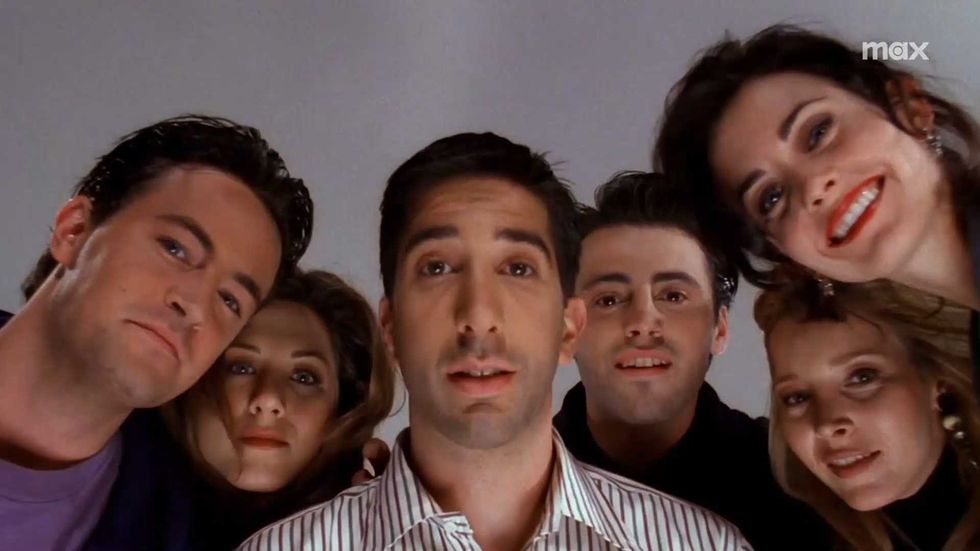 FriendsSource: Warner Bros. Television Distributor
In Friends, three out of six friends share strained relationships with their parents, and the fourth, Phoebe, is an orphan. The show highlights how they’re healing each other’s inner children with their love and friendship.
Monica is the “mother” of the group, while the rest are the weird kids in this family!
2. Harry Potter
 Harry Potter and the Sorcerer's StoneSource: Warner Bros. Pictures
Orphaned as an infant and then raised by relatives who resent his existence, Harry found a family in his friends, Ron and Hermione. At the same time, Ron’s family accepted him as their own.
Harry’s relationship with his friends and the Weasley family is a classic example of the found family trope, where the characters start as strangers and then quickly become a chosen family.
3. Toy Story
 Toy StorySource: Walt Disney Studios Motion Pictures
The toys in Toy Story find each other when Andy brings them home one by one, over the years. Living together in one room throughout Andy’s childhood, they are basically one big family.
4. Naruto
 NarutoSource: Studio Pierrot (Aniplex/ TV Tokyo)
Orphaned at birth and shunned by his village after being tagged as a monster, Naruto earns his found family through sheer dedication and effort. He cares deeply for his teammates, Team 7, and goes above and beyond for anyone kind to him, building relationships as he navigates life and his missions.
He inspires people with his simple love marked by sacrifice, and by the end of the series, the entire village becomes his found family.
5. Shoplifters
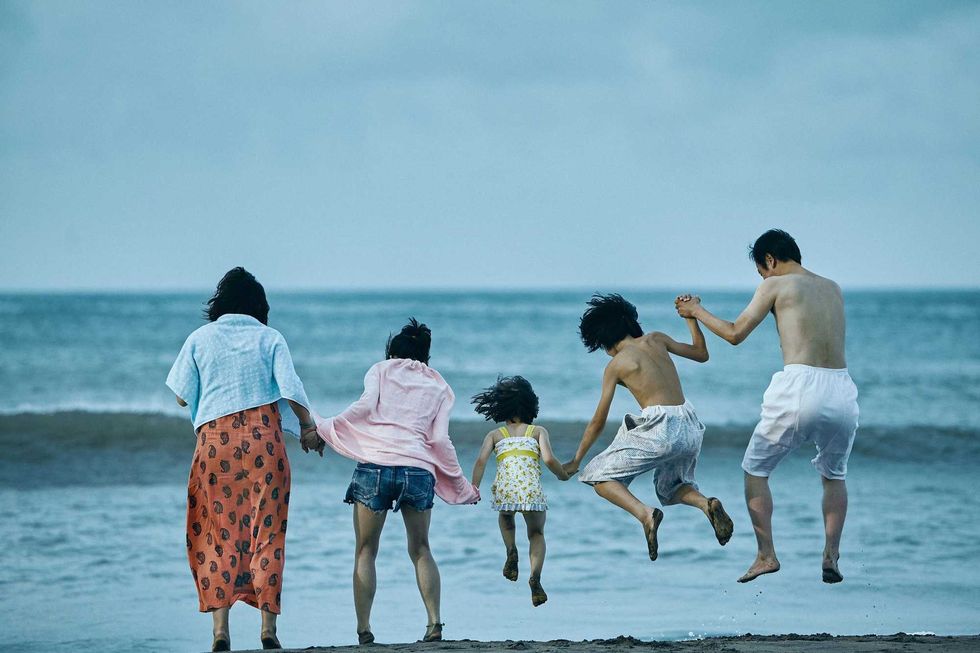 ShopliftersSource: Magnolia Pictures, Thunderbird Releasing, Rialto Distribution
We see a makeshift family in Shoplifters. The film features Hatsue and four others who are getting by on Hatsue’s deceased husband’s pension, with Hatsue routinely shoplifting to contribute to the household.
Their family gets another addition when the shoplifters bring home a little girl from their neighborhood, after discovering that she is being abused.
The found family trope sets the stage for both tranquil dramas as well as kinetic thrillers—it all depends on how you want to use it. Make sure that when you do, you explore the relationships intimately and back them up with conflict that leads to a stronger bond.
Which is your favorite found family story?
- How to Avoid the 'White Savior Trope' ›
- How To Avoid the Manic Pixie Dream Girl Trope (For Men!) ›
- The Heather Trope—What Is It, and How Do You Write This Character? ›
- What is the "Chosen One" Trope? ›
- The 'Cool Girl' Trope ›
- What Are Movie Tropes? ›
- The Most Memorable Movie Friendships | No Film School ›