How Hannibal Lecter Made Movie History in Just 16 Minutes
Anthony Hopkins appears for just 16 minutes in The Silence of the Lambs, but his chilling performance defines the entire film. Here's how.
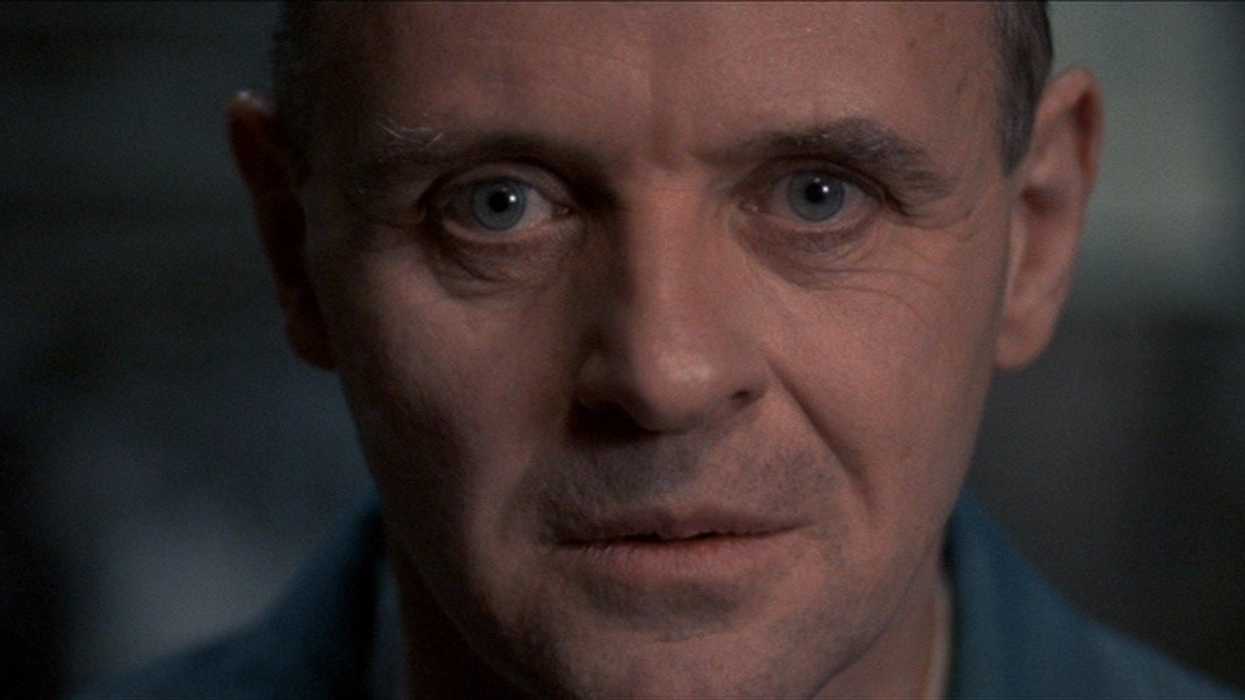
The Silence of the Lambs (1991)
How does a character with less screen time than a sitcom cold open become the most unforgettable part of a Best Picture winner?
That’s the question The Silence of the Lambs (1991) forces us to ask every time Hannibal Lecter glides onto the screen—and somehow takes over the whole movie. While Clarice Starling, played with raw vulnerability by Jodie Foster, is present for almost the entire runtime (109 minutes to be exact), Anthony Hopkins' Lecter is only there for a sliver—just 16 minutes. And yet, he’s the first thing most people remember.
That’s because that tiny sliver is a masterstroke in restraint and precision. Hopkins doesn’t dominate by volume, but by his mere presence. The film builds him up through whispers, shadows, and the wary glances of those around him.
When he finally shows up, he’s already living rent-free in your head.
The Power of Presence: Why Less Screen Time ≠ Less Impact
The "Jaws" Effect: Fear of the Unseen
Steven Spielberg’s Jaws (1975) taught us something crucial: what you don’t see can terrify you just as much—if not more—than what you do. The shark barely appears in full, but its threat shapes every beat of that film. The Silence of the Lambs pulls a similar trick with Lecter. For long stretches, he’s off-screen, but the tension he creates never leaves.
Characters talk about him in hushed tones. They fear him, avoid him, tiptoe around the very idea of him. Even before we meet Lecter, we’ve been told enough to feel the chill. Director Jonathan Demme uses silence, reactions, and tightly framed conversations to keep Lecter’s presence looming over every scene, even when he's miles away in a cell.
The Myth of the Monster
Demme once described Hopkins’ Lecter as a “human dragon”—a phrase that says it all. There’s something mythical about Lecter. He’s highly cultured, disturbingly calm, and unnervingly polite. He doesn’t snarl; he observes. And that stillness? It’s hypnotic. When he finally does speak, it’s with the weight of a man who already knows what you're thinking.
But part of what makes him so effective is how sparingly he’s used. There’s no overexposure. No filler scenes. Every moment with Lecter is designed to leave an impression—sharp, calculated, and impossible to shake off.
Narrative Alchemy: How the Script Elevates Lecter
The "Hannibal Heist" – Stealing Scenes Structurally
Ted Tally’s script doesn’t waste Lecter on scattered appearances. It gives him four major scenes—his eerie introduction, his chilling escape, his cryptic phone call, and his haunting goodbye. Each one is strategically placed and loaded with narrative weight.
Whenever he is in the scene, he is the scene. His first appearance redefines Clarice’s arc. His escape sequence is a mini horror film in itself. His final conversation with Clarice doesn’t resolve anything, but it leaves a lasting mark. It’s not just what he says, but what his presence unlocks in her. The story uses him like a scalpel, slicing through the plot at just the right points.
The Devil in the Details
Thomas Harris' novel gives us plenty of material, but the film trims and tightens it into something razor-sharp. Tally’s adaptation keeps Lecter’s most quotable and unsettling lines intact—lines like “A census taker once tried to test me…” and “quid pro quo.” These lines are creepy as hell, and yet, layered with meaning, character insight, and foreshadowing.
The script, instead of glamorizing Lecter, weaponizes him. Every word feels loaded. Every exchange with Clarice serves a dual purpose: plot advancement and psychological peeling. There’s no wasted breath. Just psychological chess.
Acting Mastery: Hopkins’ Chilling Choices
The Silence Before the Storm
Hopkins made bold decisions—and they paid off. The stillness, the posture, the unblinking eye contact—he treats Lecter not as a madman, but as a predator who doesn’t need to chase. He waits. And that infamous mouth-click? Improvised. Minimal, but deeply unsettling.
Even his voice does the work. Hopkins leaned into his native Welsh accent but dialed it up to sound clinical, elegant, and just... wrong. There’s a weird formality to how he speaks. It’s not how people talk—it's how they analyze you before eating your liver with some fava beans and a nice Chianti.
The Legacy of the Performance
Hopkins won Best Actor for this role—despite being on screen for just 16 minutes. That was a record at the time. The award was basically for how intensely every second of his performance landed. Hopkins didn’t chew the scenery (okay, maybe metaphorically). He carved it up with precision.
Lecter redefined what a cinematic villain could be. No theatrics. No gimmicks. Just pure intellect, eerie control, and the ability to make you feel like you were the one being examined.
Psychological Dominance: Lecter as the Film’s Hidden Protagonist?
The "Anti-Hero" Arc
It’s wild to think about, but Lecter actually follows a kind of character arc. We meet him locked up, get glimpses of his intellect, see him manipulate his surroundings, and then watch him escape. And weirdly? We kind of want him to.
That’s the mind-bending part. He’s a literal cannibal, yet he feels more grounded than most villains. Maybe it’s the calm. Maybe it’s the wit. Or maybe it’s because we see him through Clarice’s eyes—not as a monster, but as someone terrifyingly useful.
In many ways, Lecter functions as a true antihero—morally repellent, yet undeniably captivating, and oddly aligned with the protagonist’s goals.
The Clarice-Lecter Dynamic
The Lecter-Clarice relationship is the real engine of the film. There’s no traditional romance here, but there is intimacy—deep, strange, and unsettling. He gets under her skin, challenges her, helps her... and haunts her.
Their conversations feel like therapy sessions with a knife under the couch cushion. She brings vulnerability. He brings intellect. Together, they create the film’s most magnetic scenes. Even when he’s not there, Clarice carries his shadow with her.
Cultural Impact: Why Lecter Still Haunts Us
The Birth of the Modern Movie Villain
Before Lecter, villains were often theatrical or cartoonish. He flipped that. He wore tailored clothes—when he wasn’t in his orange prison jumpsuit. He quoted art. He didn’t need to raise his voice to scare you—he just needed to look at you. That blueprint shows up everywhere now, from the Joker in The Dark Knight to Moriarty in Sherlock.
Lecter didn’t only grow up into an iconic villain, but into a brand—Intelligent, charming, and endlessly unnerving.
The Franchise Paradox
Lecter’s later appearances in Hannibal (2001), Red Dragon (2002), and the Hannibal TV series tried to expand the mythology. And sure, they had moments. But there’s a reason none of them quite match the impact of The Silence of the Lambs.
When you overexpose the monster, it stops being a myth. The more Lecter talked, killed, or plotted, the less mystique he had. That first film nailed the ratio: just enough to terrify, not enough to exhaust.
Conclusion
Hannibal Lecter’s 16 minutes in The Silence of the Lambs are memorable and surgical. Every second is designed to linger. Every line, look, and breath feels intentional. His presence is felt even when he’s off-screen because the film builds him into a legend before we ever meet him.
So rewatch his scenes. Count the seconds. Feel the dread build. Then ask yourself: could more Lecter have made him less terrifying?
Maybe sometimes, less truly is more lethal.
- This Tasty Doc on 'The Silence of the Lambs' Shows the Roots of A Modern Horror Classic ›
- AI Says My Screenplay is Better Than 'Silence of the Lambs' and 'Schindler's List' ›
- How to Write a Thrilling Horror, from 'Silence of the Lambs' Screenwriter and More ›
- Why is 'The Silence of the Lambs' So Good? ›
- Did You Notice? 'The Silence of the Lambs' Is Basically Clarice's POV ›
- “A Nice Chianti”: 8 Iconic Anthony Hopkins Quotes That Define His Legacy ›
- “Cruelty is a Gift” - Decoding Hannibal Lecter’s Social Philosophy ›
- Iconic Villain Introductions: Hannibal Lecter's 'Silence of the Lambs' Debut Still Brings Chills ›