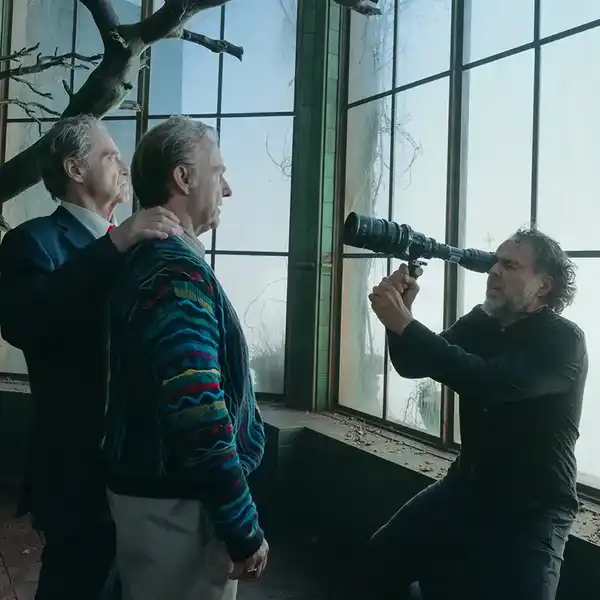
Anthony Hopkins is one of those transformative actors whose performances carry precise, and quite chilling, intensity, which he combines with controlled stillness and with a subtle emotional range. The result is authentic and commanding characters on screen.
While not a method actor—calling it a “waste of time” and a form of “insanity”—he pretty much condenses his process to “learning the lines.” That’s it! Over 60 years of legendary performances made possible by simply learning the lines.
But of course, if (only) that were true, anyone with a decent memory could be a great actor. Memory, in my opinion, is secondary. Marlon Brando famously struggled with memory, and he was pretty much the reigning monarch of acting.
What Hopkins means is that he parallels “learning the lines” to systematically taking apart his character’s psychology and emotional life to create an authentic performance. Let’s call it a “mechanic’s approach.” If he simply imitated behavior, his performances wouldn’t have the edge that we see in his characters. Instead, he uses sensory memory and personal experience to build the characters from the inside out.
The art of the pause and the power of soft-spoken threat are the defining characteristics of his delivery. And we have selected eight such examples where this man can make a grocery list sound like prophecy.
8 Iconic Anthony Hopkins Movie Quotes
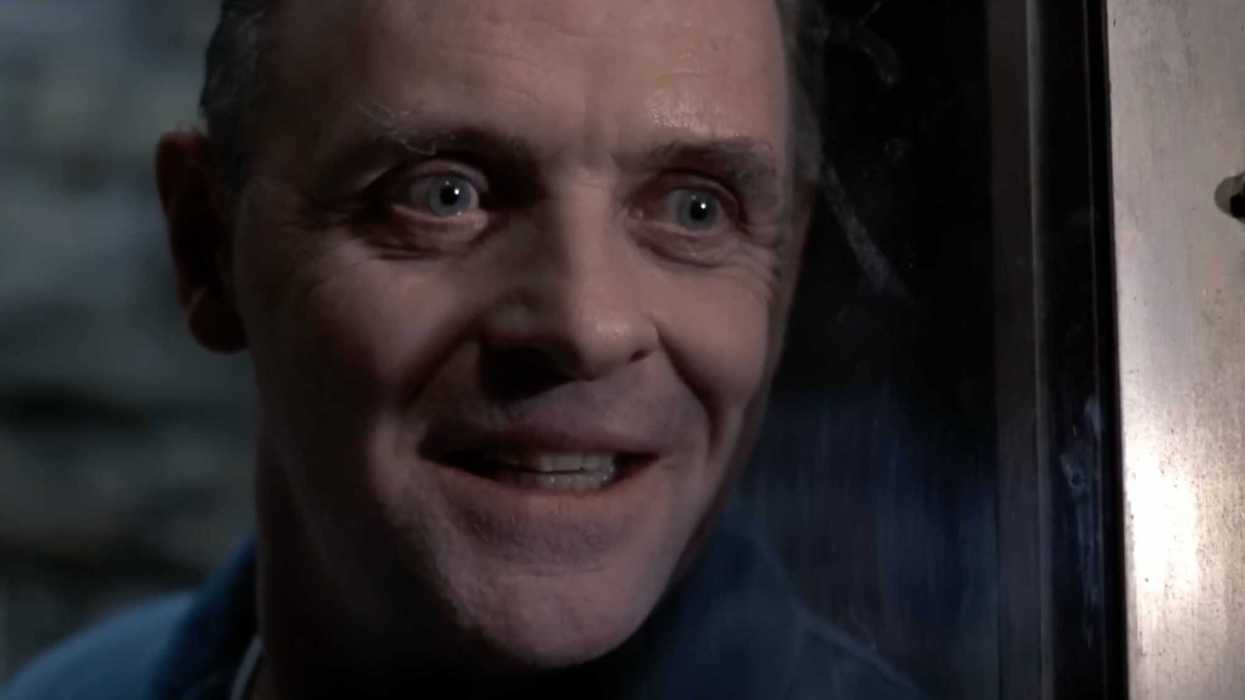
1. “I ate his liver with some fava beans and a nice Chianti.” (The Silence of the Lambs, 1991)
Written by: Ted Tally | Directed by: Jonathan Demme
The total 16 minutes of Hannibal Lecter are perhaps the centerpiece of the movie’s legacy. “A census taker once tried to test me. I ate his liver with some fava beans and a nice Chianti.” And then that iconic hiss, “Tsss Tsss Tsss.” Hopkins’ horrifying nonchalance while describing such a gruesome act turned a meal into a psychological weapon. It’s dangerous and primal, of course, but strangely, also elegant. Perfect for a sophisticated cannibal.
2. “I’m having a friend for dinner.” (The Silence of the Lambs, 1991)
Written by: Ted Tally | Directed by: Jonathan Demme
Hannibal Lecter’s exit is as iconic as his introduction. This scene can attest to that. Having escaped, Lecter calls Clarice (Jodie Foster) from an unknown location, and after a decent conversation, ends it by saying, “I wish I could chat longer. But I’m having an old friend for dinner.” Seemingly a casual line, it becomes extremely horrific if you know who and what Lecter is. It’s a perfect example of double entendre, and it blends dry humor with a menacing threat. Hopkins’ eerie casualness makes it even more disturbing.
3. “We learn from failure, not from success!” (Bram Stoker’s Dracula, 1992)
Written by: James V. Hart | Directed by: Francis Ford Coppola
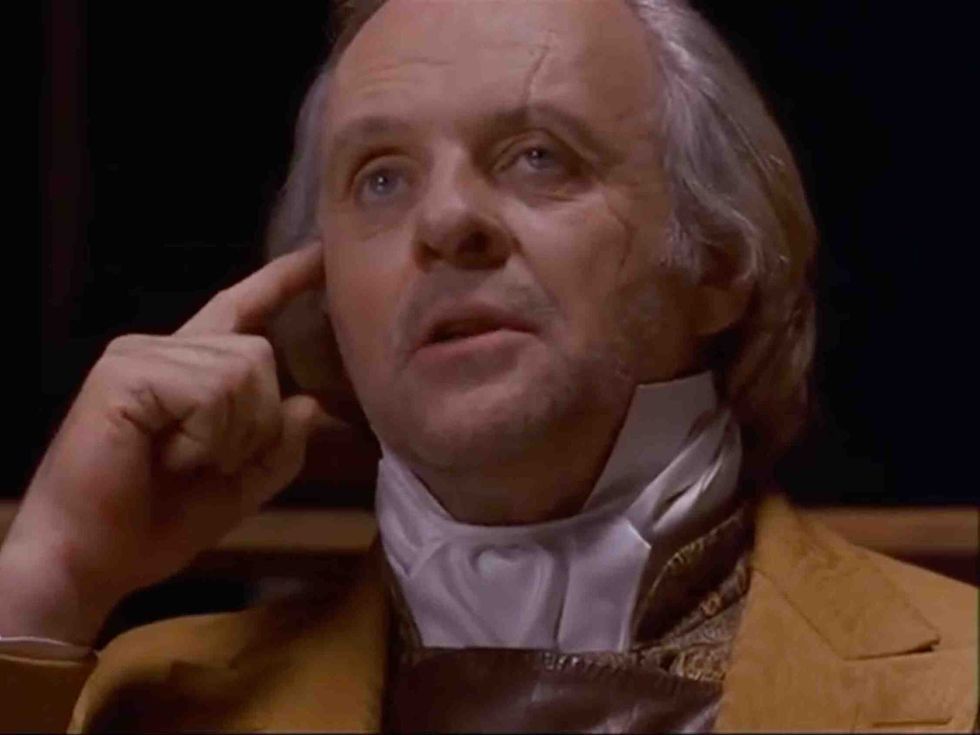 Bram Stoker’s Dracula (1992)Credit: Columbia Pictures
Like The Silence of the Lambs, Hopkins has quite a small amount of screen time in Dracula, but he leaves behind a memorable performance anyway. Here, he plays Abraham Van Helsing, an eccentric expert on the supernatural. He delivers this line with particular energy, which serves as a philosophical pivot for the story, emphasizing the necessity for struggle. The sharp, staccato delivery reveals the character’s urgency and his deep knowledge.
4. “Love is passion, obsession, someone you can’t live without.” (Meet Joe Black, 1998)
Written by: Bo Goldman, Kevin Wade | Directed by: Martin Brest
In a bit of a contrast to his usual headstrong, eccentric characters, Hopkins plays Bill Parish, a wise, dignified, and composed media mogul. Here, he delivers this line with a fatherly warmth that feels genuinely sincere. You can see, though, there is not a trace of sentimentality. He chooses a grounded and persuasive tone. Keeping in perfect sync with his character, Hopkins explains romance that prioritizes intensity over fluff.
5. “If you don’t follow your dreams, you might as well be a vegetable.” (The World’s Fastest Indian, 2005)
Written by: Roger Donaldson | Directed by: Roger Donaldson
 The World’s Fastest Indian (2005)Credit: Magnolia Pictures
Here, Hopkins plays a 67-year-old Burt Munro, famous for his friendly disposition and for having the fastest bike in Oceania. Clearly, the guy who is obsessed with speed at an advanced age will not be a worn-out, feeble man. He will be in high spirits. And that exactly is the tone in this line’s delivery. Hopkins uses a simple, direct cadence to convey a profound life philosophy. And all that without sounding preachy.
6. “A wise king never seeks out war, but he must always be ready for it.” (Thor, 2011)
Written by: Ashley Edward Miller, Zack Stentz | Directed by: Kenneth Branagh
As the iconic celestial king Odin, Hopkins brings a real weight to this piece of political advice. This lesson in balanced leadership serves as the foundation of Thor’s (Chris Hemsworth) benevolent heroics. Hopkins delivers this line with a booming resonance fit for the king of all Norse gods. His voice is ideal for commanding respect, and, at the same time, for making the tension between peace and preparedness feel like a heavy reality.
7. “Dying is easy. Living is hard.” (Transformers: The Last Knight, 2017)
Written by: Art Marcum, Matt Holloway | Directed by: Michael Bay
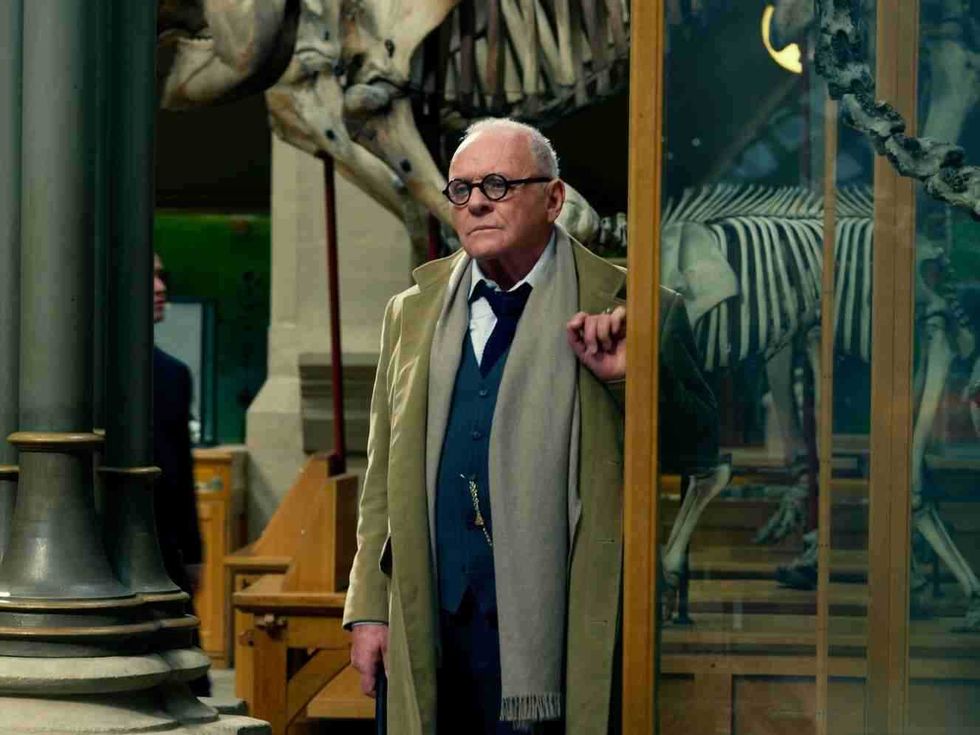 Transformers: The Last Knight (2017)Credit: Paramount Pictures
This line supplants typical action-movie bravado and focuses on the endurance, stamina, and willpower needed for a long life. In an otherwise blockbuster setting, his delivery with a weary, knowing smile adds depth to the narrative. This concise piece of dialogue heavily relies on Hopkins’ natural gravitas and makes the short sentence feel incredibly significant.
8. “Do you know the Beatles?” (The Two Popes, 2019)
Written by: Anthony McCarten | Directed by: Fernando Meirelles
 The Two Popes (2019)Credit: Netflix
Featuring two popes, this movie is essentially heavy with dialogue and philosophy. Regardless, this question from Pope Benedict (Hopkins) to then-Cardinal Francis (Jonathan Pryce) creates a humorous and humanizing bridge between the two traditional figures. Hopkins delivers the line with a curious inquisitiveness and a bit of playfulness. This momentary stripping of the formality of his station highlights his ability to find humor and connection in the smallest moments.