Martin Scorsese is one of the most widely beloved film directors of all time. The 16-time Oscar nominee (and one-time winner: Best Director for The Departed) has five movies in the National Film Registry, three movies on the most recent Sight & Sound Top 100, and three on the American Film Institute’s Top 100 list. While classics like Taxi Driver, Raging Bull, and Goodfellas have cemented him as a towering icon of cinema, not all of his movies have been commercially successful.
In fact, 2011’s Hugo in particular was a startlingly massive flop when it originally debuted.
What Happened With Hugo?
First, we need to establish our terms. A movie is only a success or a failure at the box office based on its budget. For instance, the 2026 horror movie Obsession has earned a reputation as a megahit after earning more than $400 million worldwide. Meanwhile, the 2022 DC movie Black Adam is known as a huge flop, but it earned $393 million. The difference? Obsession cost less than $1 million, whereas the superhero movie cost something between $190 and $260 million (depending on who you ask).
Because theaters keep half of ticket sales and marketing costs are not factored into production budgets, major studio movies often need to earn back two and a half times their budgets in order to break even in theaters, which explains why Black Adam lost more than $100 million in theaters in spite of the fact that it technically earned back more than what it cost.
Hugo’s fate turned out to be very similar to Black Adam’s. The movie, which is based on the Brian Selznick book The Invention of Hugo Cabret and follows an orphan (Asa Butterfield) living in the walls of a Paris train station who crosses paths with former silent film director Georges Méliès (Ben Kingsley) while trying to solve a mystery involving an automaton, actually made a decent amount of money in theaters. It grossed $185.8 million worldwide, which is more than its fellow 2011 movies War Horse ($177.6 million), The Muppets ($165.2 million), Midnight in Paris ($151.5 million), Source Code ($147.3 million), and Crazy, Stupid, Love ($145 million).
That worldwide haul (when adjusted for inflation, which puts it at around $257.3 million) is enough to make Hugo the seventh highest-grossing Martin Scorsese movie of all time, behind only Gangs of New York, The Aviator, Cape Fear, Shutter Island, The Departed, and The Wolf of Wall Street.
However, it still wasn’t enough to prevent it from being a complete failure at the box office. The movie, which was shot in 3D and featured a star-studded cast (beyond Butterfield and Kingsley, the ensemble featured Chloë Grace Moretz, Sacha Baron Cohen, Jude Law, Emily Mortimer, Michael Stuhlbarg, Ray Winstone, Richard Griffiths, and Christopher Lee), ended up being quite fabulously expensive.
With a reported budget between $150 and $170 million, Hugo’s $185.5 million gross fell terribly short, resulting in the movie losing $91 million in theaters, which amounts to roughly $130 million when adjusted for inflation. This makes it one of the 75 biggest box office bombs of all time in terms of money lost, with its inflation-adjusted total making it more of a money-loser than notorious bombs like 2011’s Green Lantern, Gigli, Gods of Egypt, 2025’s Snow White, Borderlands, and Ishtar.
Hugo Still Became An Instant Classic
Even though Hugo was a financial disaster, it was instantly beloved by critics. In addition to earning a near-perfect Rotten Tomatoes score of 93%, it hit No. 1 on the year-end Top 10 lists published by The New Yorker, The Oregonian, New York Daily News, and Ain't It Cool News, landing elsewhere in the Top 10 in lists published by more than 20 other critics and publications (including Roger Ebert, who placed it at No. 4 behind The Tree of Life, Shame, and A Separation).
It also cleaned up at the Oscars, earning more nominations than any other movie at the 84th Academy Awards with 11 nods in various categories. It ultimately took home five trophies (Best Cinematography, Best Sound Mixing, Best Sound Editing, Best Visual Effects, and Best Art Direction), tying as the most-awarded film of the evening with the year’s Best Picture, The Artist.
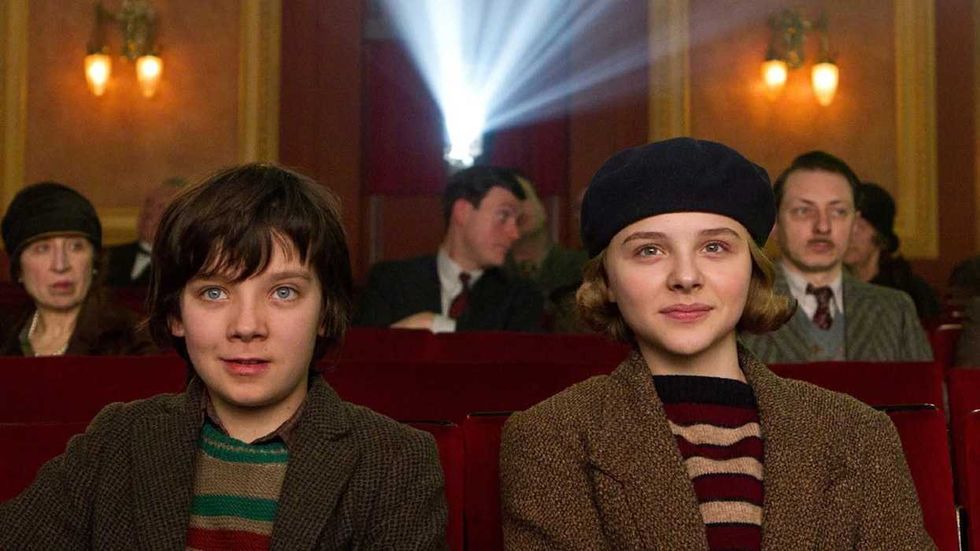 ‘Hugo’ (2011)Credit: Paramount Pictures
While it is harder to directly track how Hugo has been received by audiences, all signs point to it also becoming a respected entry in the director’s canon, more or less instantly. In addition to earning a Rotten Tomatoes Popcornmeter score of 78% and an IMDb score of 7.5 out of 10, it is Martin Scorsese’s 15th most popular movie on Letterboxd, ahead of established classics including The Aviator, Mean Streets, and The Last Temptation of Christ.
Hugo’s Performances Teach Some Important Lessons
First and foremost, the lesson that can be learned from Hugo is the fact that a movie’s quality is never directly proportional to its box office performance. Sure, plenty of movies perform poorly at the box office because of bad word of mouth, but there are many factors that can go into a movie failing in theaters.
In addition to budget, these mitigating factors can include theatrical competition (Hugo opened opposite The Muppets, just one week after the debuts of The Twilight Saga: Breaking Dawn - Part 1 and Happy Feet Two), weather (a major blizzard struck a large portion of the U.S. earlier this year, putting a damper on new release movies like Mercy), current events (the 2001 Mariah Carey flop Glitter opened 10 days after 9/11), and global catastrophes (the COVID-19 pandemic shutting down theaters worldwide caused many movies to join the list of the biggest bombs of all time, including Mulan, Onward, Soul, and Wonder Woman 1984).
However, those grim numbers don’t in any way prevent Hugo from being an entertaining, well-crafted movie that won over both general audiences and the critical establishment.
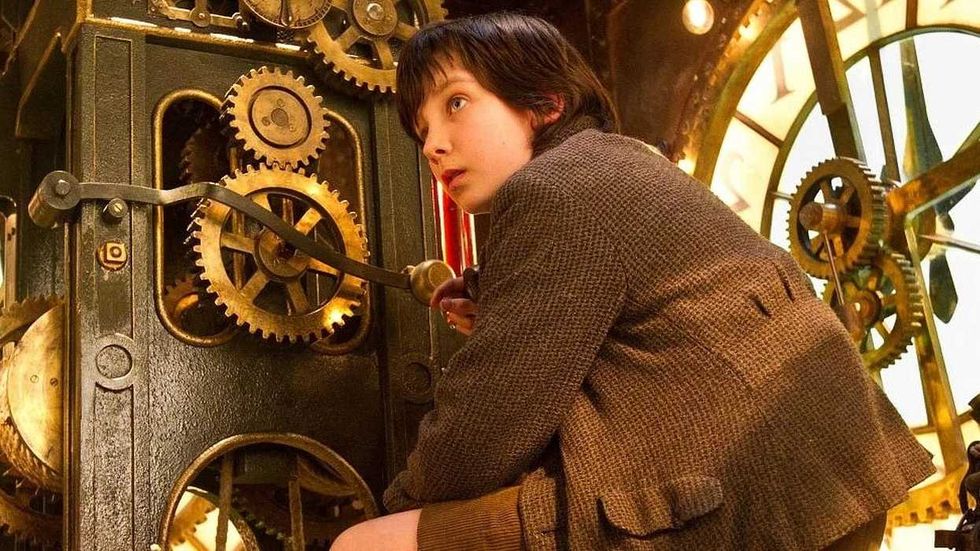 ‘Hugo’ (2011)Credit: Paramount Pictures
Another lesson is that, if one’s career is not as rock solid as Martin Scorsese's (who was able to dig out of the Hugo hole quickly and follow it with the megahit The Wolf of Wall Street in 2013), it is important to make sure that a feature’s budget matches its potential to connect with audiences. Even though Hugo is very well-loved, it was unlikely that its historical setting and focus on silent cinema were ever going to make it a smash-hit blockbuster, as those topics don’t necessarily perform well with wide release audiences.
So what are your thoughts on Hugo as a film, and are you surprised that it didn’t perform better at the box office? Sound off in the comments below!