You've probably noticed in your daily life that your conversations are not always tidy. Voices overlap, people interrupt others or change the subject, or sometimes you have to backtrack and repeat yourself.
As we write our scripts, most of the time we're aiming for natural-sounding dialogue that reflects a version of reality. Not always, but a lot of the time.
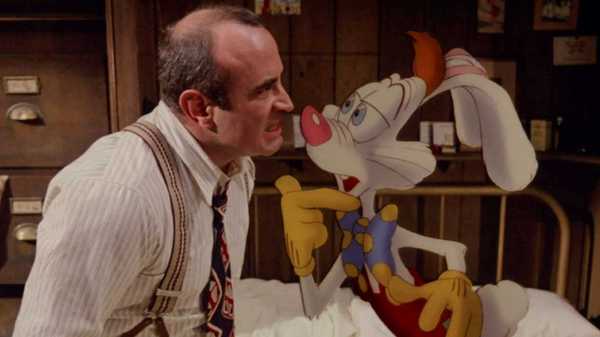
One way to accomplish this is to have characters interrupt each other.
When one character cuts off another, it reveals power dynamics, emotional states, and relationships in ways that perfectly structured exchanges probably wouldn't. It helps the audience understand what matters to a character, can show character growth, or lead to a big climactic showdown.
Two screenwriters who have done this very effectively are Aaron Sorkin and Greta Gerwig.
Sorkin told Q with Tom Power, "I like when people interrupt themselves. I love overlapping dialogue. I love the sound of two people talking at once. So, I script all of it."
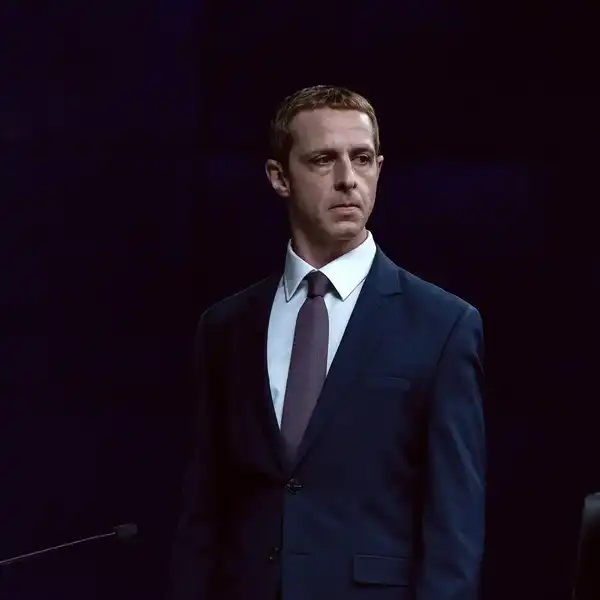
Sorkin's dialogue is known for being snappy and clever, with actors like Jesse Eisenberg having to maneuver through his use of derailments or interruptions. In The Social Network, for example, many characters don't politely wait for responses.
The opening scene demonstrates how Sorkin uses misunderstandings to drive scenes forward, with Mark dispensing facts in a rhythmic concatenation of non-sequiturs, interrupted only by his date's confused questions.
- YouTube www.youtube.com
On the page, he uses em dashes to show broken dialogue, like this:
 An exerpt from the script for The Social Network
Sorkin has also famously talked about dialogue being like music.
He told Q with Tom Power, "Anytime that you're speaking out loud for the sake of performance, those words, what you're saying have all of the properties of music—rhythm, beats, rests."
In an orchestra, the instruments are often in a conversation with each other, playing at the same time, sometimes in a counter-rhythm.
Like music, dual dialogue techniques can make conversations more realistic and engaging.
If two characters are in a heated argument, they're not going to wait for the other to finish their sentence. If they're excited to see each other, that eager energy will leak into their conversation.
Gerwig utilized this technique uniquely in Little Women, formatting her script with slashes to signify interruption points. Her dialogue formed a rhythm that indicated specific moments of interruption to keep the story on beat.
- YouTube www.youtube.com
On the page, it can look like this:
 An exerpt from the script for Little Women
Gerwig spoke to Scriptnotes about this technique in 2020.
"The slash is sort of a 'don't make,' and then there's a slash, 'fun,' and then Laurie is, 'I'm not!' So the word that overlaps is 'fun' and 'I'm.' So 'don't make/I'm not.' That's the way it's supposed to sound. I took that from playwrights. Caryl Churchill does it all the time in her plays. And Tony Kushner does it in his plays. And it's something that I find really useful because if you want to specifically hear certain words, but you like a controlled cacophony, it's very helpful because it makes the actors know it's not talking over each other. It's like a madrigal or a round or something."
Obviously, you don't want to overdo this. You don't want characters interrupting each other all the time. Just like in reality, the audience will want a break from crosstalk now and then, so don't take it to the other extreme.
Just remember, unless you want a specific, formal style of dialogue, you don't have to follow a statement/response formula where Character A makes a statement, prompting Character B to respond. Instead, Character B can change the subject, interrupt Character A, or not respond at all.
Whatever choice you make, that choice should reflect the character's mood and motivations. The way people compete for conversational space can also reveal character. So don't be afraid to make your dialogue a little messier.
- Dialogue Does Not Have to Sound Natural... It Has to Sound Good ... ›
- 3 Ways Aaron Sorkin Writes 'Musical' Dialogue | No Film School ›
- How Do You Balance Dialogue and Action in Screenwriting? | No ... ›
- This Is Why Dialogue Has Gotten Harder to Understand and How ... ›
- Robert Altman’s Secret Weapon: Dual Dialogue in ‘Nashville’ | No Film School ›
- Why Aaron Sorkin Acts Out Every Scene Before He Begins Writing (And Why You Should Too) ›