Robert Altman’s Secret Weapon: Dual Dialogue in ‘Nashville’
The technique where nobody waits for their turn to speak.
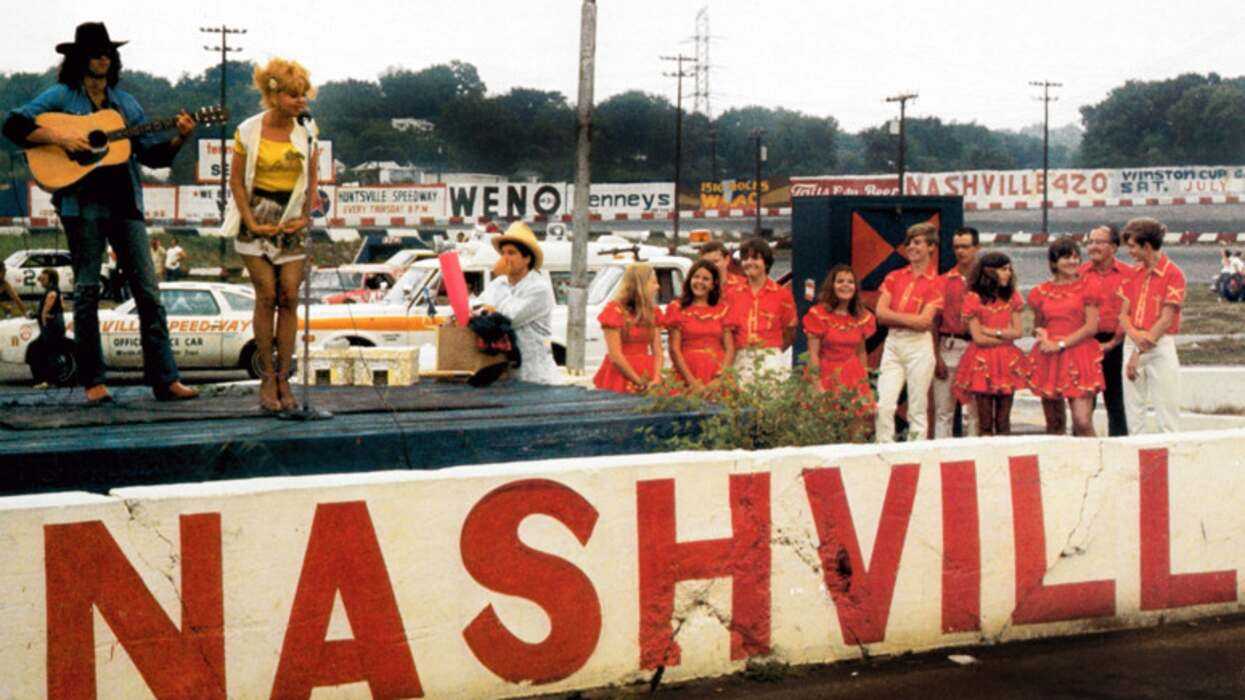
Nashville (1975)
Correct me if I’m wrong, but I think that while we filmmakers are focused on grounding our narratives in reality, many times we sort of take dialogue for granted and forget its contribution towards realism. Other times, we’re so hypervigilant about sync sound and clarity that we tend to miss out on capturing the natural essence of the words or their delivery. As a script supervisor, even I'm guilty of the same crime.
While filmmakers will always be guilty of trying to organize chaos, Robert Altman is quite the anomaly, especially when it comes to capturing dialogue in his films.
Unlike in films, humans in real life do not wait for another human to finish their sentence (or care if a different conversation is in its full swing) before they jump in with their two cents (not unless you’re in a work conference, and even then, I’ve seen chronic interruptors). What we consider the enemy of sound clarity in filmmaking, Altman leveraged to his advantage to heighten realism in his narratives.
In this article, we’re examining Altman’s ultimate trick for realism — dual dialogue, and its use in his movie Nashville.
What is Dual Dialogue?
Normally, for dialogue, it is expected that actors do not talk over each other. Altman flips the technique and encourages dual dialogue, or lines that are delivered at the same time — overlapping. While you hear multiple streams of conversations going on all at once, for example, during a dinner party, the important conversations are adjusted slightly over the irrelevant ones, to ensure that the audience doesn’t lose the story. Interestingly, since we are so used to chaotic conversations in real life, overlapping dialogue on screen, although trickier to execute, is not distracting—rather, it elevates the realism of the scene, acting like ingenious foley.
The Use of Dual Dialogues in Nashville and Its Impact On The Visual Language
Right after the opening credits, which feature a bold patriotic song, “We must be doing something right to last two hundred years,” Altman throws us into the narrative with a dialogue-heavy scene, where the actors are seamlessly talking over one another. In the control room, full of people including the recording engineers, Haven Hamilton’s wife Pearl, his son Buddy, onlookers, and a woman who has just entered, all break into a cacophony of conversations. Every individual is interested in a different part of the situation and is voicing their concerns in a cacophony of chatter.
While it may sound seemingly chaotic and even confusing, dual dialogue triggers a certain curiosity in the viewers about the constitution of soundtracks— “Which sounds do we hear prominently?” “What are the characteristics of the speech and dialogue?” “What dictates their choice?” This means that variation in the presentation of the sound draws attention to its source, quality, and mediation. At the same time, dual dialogue makes it feel unscripted as actors are not really waiting for their turn to speak.
In addition to the overlapping, the soundtracks also feature improvisations in dialogue and a controlled use of secondary dialogue, mediated sound sources such as TV and radio, and sound effects, both on and offscreen, to further elevate the realism of the scene, through its soundscape.
Reportedly, Altman had a habit of recording the secondary dialogue and sound effects live, along with the primary soundtrack, and therefore, it was a tougher job for the sound technicians on his films. Back in those times, film productions used boom mics hardwired to a single channel, and while some level of isolation was possible on separate recording channels, the possibilities were limited. This is where the music industry came to Altman’s rescue.
Taking inspiration from an orchestra where every particular section or performer is given a dedicated mic, Altman allocated individual microphones for each character and sound effects source. This meant the sound team had individual tracks for everything on frame that contributed to the sound, be it in the form of dialogue or sound effects. Now all they had to do was adjust them to their heart’s content–I mean, to Altman’s heart’s content.
Dual dialogue has been Altman’s signature directorial style ever since he cemented his place in global cinema with the commercial success of M*A*S*H. His commitment to reinventing cinema sound began with McCabe and Mrs. Miller, pioneering a solid shift in how we perceive conversations and sound in cinema.
Would you use dual dialogue in your visual language?