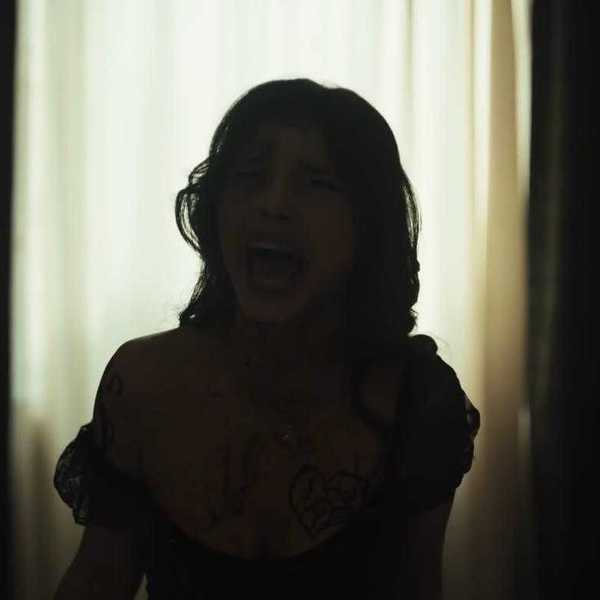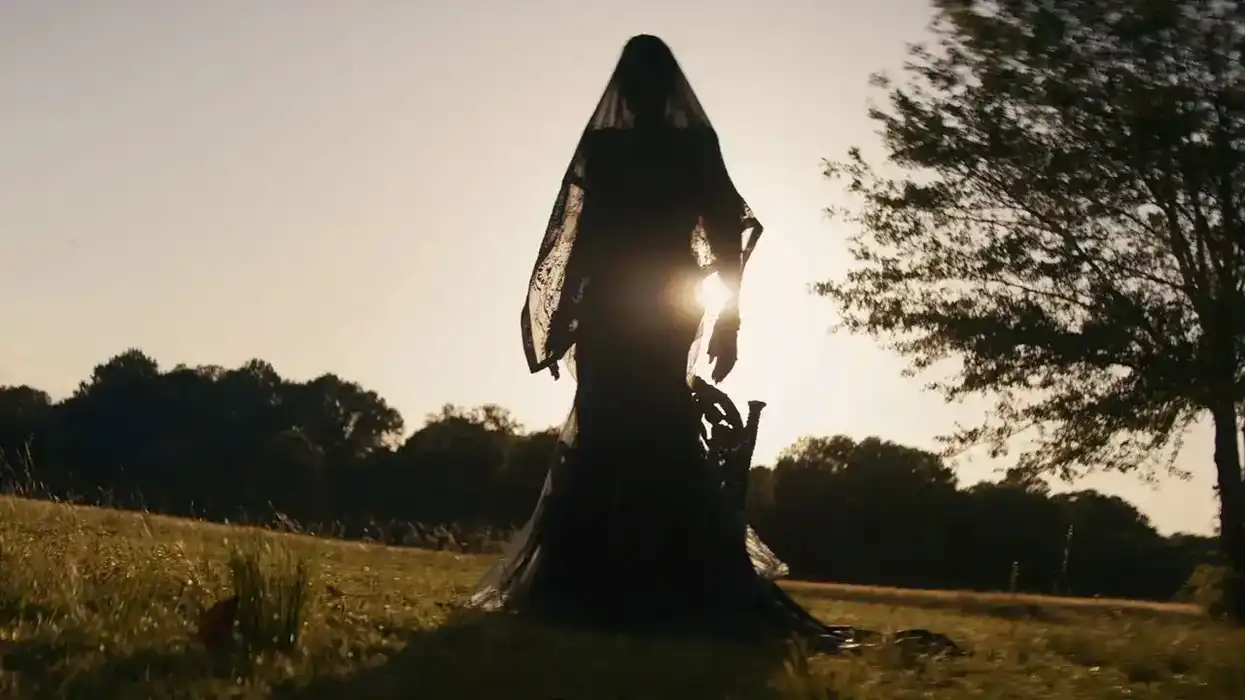
When a mysterious veiled figure appears in a sunny yard, the audience shouldn't be thinking about the challenges of shooting a horror film meant to unfold in real-time during a single bright, hot day.
That illusion is partly thanks to the work of digital imaging technicians like Justin Paul Warren, who spent his days on set manipulating exposure and color to maintain visual continuity even when Mother Nature refused to cooperate.
Warren is a Local 600 DIT based in Atlanta. His credits include major horror productions like M3GAN, The Exorcist: Believer, and Willy's Wonderland. Most recently, he worked on The Woman in the Yard.
We hopped on Zoom with Warren to discuss what a typical day looks like for a DIT, how the role shifts between big-budget and indie productions, and why horror films give him more room to get creative. He also shared practical advice for aspiring DITs and filmmakers working without one.
Enjoy!
- YouTubewww.youtube.com
Editor's note: The following conversation has been edited for length and clarity.
No Film School: I'd love to learn from you just what a typical day looks like for you on set as a DIT.
Justin Warren: A typical day would be a series of getting with the camera department on the truck, and unloading all of the gear, and getting ready to go to wherever set is.
Once you get there, you have to strike up the video village and the DIT cart and get everything set up, hopefully before the first rehearsal of the particular scene that you're about to shoot. And then when you are getting ready to go, once the video feeds are all going, you strike up the DIT cart and boot up live grade and boot up your router and all that stuff, and start setting your exposures and setting your looks with the DP.
Hopefully, he'll be either right next to you or, if he's operating, then he'll be in close communication with you, which is usually about a 50/50 chance. Usually, they'll either be with you, or if they're not, they're probably going to be operating a camera.
And from there, you would create the look of your first master for a scene and record that, and then continue on throughout the remaining setups, referencing your previous recordings and your previous looks to make sure that your continuity is matching.
And if you have a loader, then the footage would be sent to him for ingest, but if you don't, then chances are, you're going to be the one doing it. And so then you would be using either Silverstack or Hedge or something like that. In my case, Silverstack, to download the footage.
If this is something like a commercial, then you might be responsible for creating the transcodes, the dailies yourself, which would then be done in something like DaVinci Resolve or occasionally Silverstack.
You just have to be light on your feet and ready to go to whatever the next location you're going to be at, because it's a game of repetition at this point. You have to be ready to go to the next set, the next scene, the next location, whatever the case may be, whether or not that's just a push move or a truck move with the rest of your team.
No Film School: You mentioned the cart. What does a typical DIT cart have on it?
JW: A typical DIT cart would, of course, have the latest monitors. Typically, an OLED display. It would have a video patch bay on the back that would go to a router. Typically, you would have about a 32- or a 40-channel router somewhere on your cart. Some people get by on just a 20, but I have a 40.
You would have your LUT boxes, whether they're AJA ColorBoxes or BoxIOs from Flanders [Scientific]. You would need to have video capture devices for as many streams of video as you're going to be capturing at once.
It would be advisable to have, of course, a color controller to control your LUTs and your color grading. You, of course, need some kind of computer in there. I use a Mac Studio. A lot of people get by on laptops, but I do a lot of transcoding jobs, so I want the extra horsepower.
Those are the basics. Everything else is to the user.
No Film School: What are the main differences between working on a bigger-budget project or an indie project?
JW: That's a great question. The bigger the budget, the more room for extra hands on deck, and then you can split up responsibilities among multiple people.
So you would have a loader, a digital utility, and the DIT, and then you could even have a whole post facility, dailies house, creating the dailies for you. So if you were on a big basic agreement job, you would have a dailies facility getting the DIT's color grades, also known as CDLs, and the loader's footage and the audio mixer's sound files, and they'd be linking all of that up together.
But the lower the budget, the less room for additional personnel, and almost all of this falls exclusively on the DIT's shoulders. And this happens to me more often than I would even like to admit. I definitely have had to create the dailies on set. This happens in commercials all the time and in independent films often.
So the DIT would, in that case, be downloading the footage, downloading the audio, creating the color grades on set live, or if not live, after downloading, but most of the time live. [They] would then be creating the transcodes, the offline editorial proxies for the dailies facility or for the editor.
 The Woman in the YardCredit: Universal Pictures
No Film School: Is there a common technical issue that DITs meet on set, and how should they overcome it or troubleshoot it?
JW: The most common on-set shooting issue that DITs have to face every day is constant exposure control. It's always best to fix problems in camera rather than with post software or live grading software. It's always best for a DIT to either fix the exposure with either filters or iris control, or ISO changes, before changing it in the color grade.
The color grade changes are meant to be minimal and mostly just aesthetic and artistic decisions.
No Film School: Is there anything unique about working within horror?
JW: Yes. I work on a lot of horror projects. I've worked on about a dozen horror movies as the DIT, and you get to be more creative. You get to flex your creative muscles a little bit more.
When I was the DIT on The Exorcist: Believer, I had a lot of fun because the more the girls got possessed, the more I got to be expressive with the color. I added more contrast. I pushed more scary greens into the shadows and more sickly yellows into the skin tones.
I desaturated the film more when I was doing Willy's Wonderland. We got really creative with that one, too, just pushing a lot of extra vibrancy and everything to make those puppets look more alive and threatening.
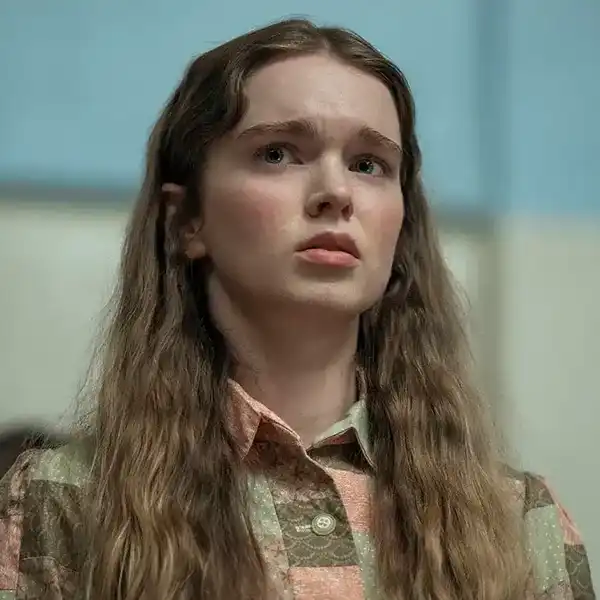
The Woman in the Yard was a really fun production. That one was done by Pawel Pogorzelski as cinematographer. And Pawel ... knows what he wants. He came in with a base look that was set by a colorist before I came in, so I didn't create the base look for The Woman in the Yard, but it was my job to maintain it throughout shooting.
And one thing that made The Woman in the Yard a challenge was that that film is supposed to take place in real-time, all in the same day, during a very bright, hot day. And we filmed it in Georgia when it wasn't bright and hot; it was almost always overcast and almost always a rainy day. And so we had to either wait for the clouds to blow away, or I had to creatively push the digital negative color timing to make it look like it was matching what we had before.
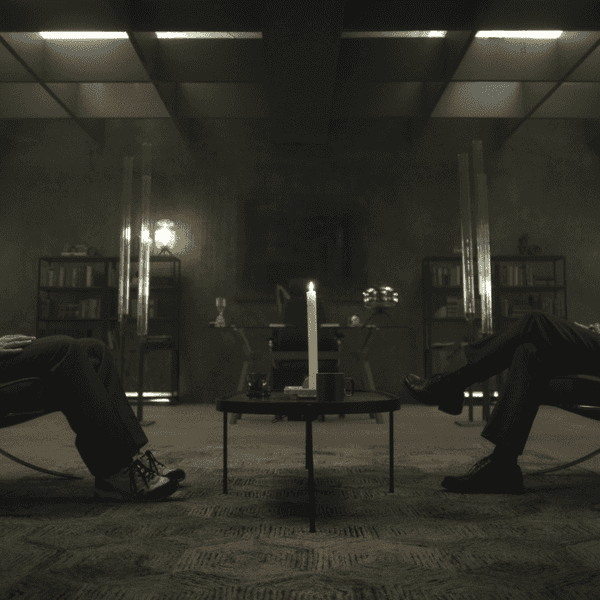
And also, just the environment that we were filming in was extremely high contrast because the power was out inside the house. It was supposed to be, in the story where we were filming, so it was dark inside the house, but we were supposed to be able to look out the window and, in the distance, see the woman in the yard sitting in the chair. And so I had to be able to hold a lot of detail and use just about all of the dynamic range of that Red Raptor that we used.
So it was really good that we had live grade on that show because we were able to preserve as much by pushing the "shoulder and the knee," we call it, of the LUT, to preserve as much dynamic range as we could see to see inside the house and outside the house at the same time.
I think horror is a genre that has so many different subgenres within it that are all expressive in their own ways. You have zombies and slashers and supernatural and all kinds of things, and each one of those tends to have a different, unique look to them.
But a DIT that knows those genres can assist with that. When I was doing the movie Hell Fest, that movie had everything but the kitchen sink in it, because it took place at a horror theme park on Halloween night in a series of haunted houses. And so every different set looked like something completely different. And that movie was an independent, fly-by-the-seat-of-your-pants production. We were just like, "Okay, well, did you see Hellraiser 10? How about I make a look that looks like Hellraiser 10?" And we just did that. We had fun with it. I was just like, "Okay, this one's going to be the neon room. This one's going to be the blacklight room. This one's going to be the Hellraiser 10 room." And we just had fun with that.
I think that a good DIT is also a good cinephile, someone who knows cinema and film stocks and the way that films in the past have looked, because a good DIT is also the bridge between what's supposed to be a traditional cinematographer, sometimes an old-school cinematographer, to the new post-production workflow. And we bridge that by helping create these newer cameras to look like something a cinematographer would want.
I get asked all the time if I can create a Kodak 5219 emulation look for whatever new camera is on the market, and the answer always has to be yes.
 The Woman in the YardCredit: Universal Pictures
No Film School: I'm sure that you get a ton of people wanting it to just look more filmic. More grainy. Make this look like it's old.
JW: Yes, that happens a lot. There are plugins and tools for DaVinci, like Film Box and Film Convert, and Dehancer, that work really well for film emulation.
And if you use DaVinci Live for creating a base look—I would never use DaVinci Live for on set, because there's a little bit of a latency issue—but it's perfect for creating a base look for a show when you're in a camera test. So that's a great way of doing that.
No Film School: What advice would you give to someone wanting to break into DIT work?
Justin Warren: The DIT is one of the upper positions in the camera department echelon. If you're going to be able to get into the camera department, the best way to start is working as a digital utility or a camera PA on a low-budget independent film.
And then you work your way up to the digital utility position. And then from there, you can work your way up to being a loader, and you get your own loader equipment, and you start outfitting it with more digital imaging technician equipment.
And eventually you can work your way up to a DIT position. That is more or less how I did it, and it's definitely the traditional way of getting there, but I also would highly recommend working at a camera rental house for a while, too, so that way, you can get to know the latest cameras and you can also get to know the local crew.
No Film School: Say someone's working ultra-low-budget and they don't have a DIT, is there advice that you could give them to avoid problems in post?
Justin Warren: If you don't have a DIT ... the chances are the problems that you're going to be running into are that you're probably going to be, if you're a low-budget production like you just described, running and gunning a lot.
And unfortunately, a lot of the time, that leaves DPs setting their own exposure, often with onboard monitors that aren't calibrated properly, and that can leave a film either very dangerously over or underexposed.
So, I would definitely recommend making sure that, before you've started your production, to calibrate whatever instruments you're going to be shooting with and judging exposure with, and also learn how to read a waveform monitor and have that on hand. Put that in the lower left corner of whatever display you're going to be judging exposure with, because sometimes just looking at an uncalibrated backlit LED display without any kind of guide can really set some big problems.
This article was brought to you by Blackmagic Design. For more horror filmmaking interviews and insights, check out the rest of our Horror Week 2025 coverage here!