How to Write an Epic Final Battle Like 'Dune 2'
If you're trying to write an epic fight, this is where to start.
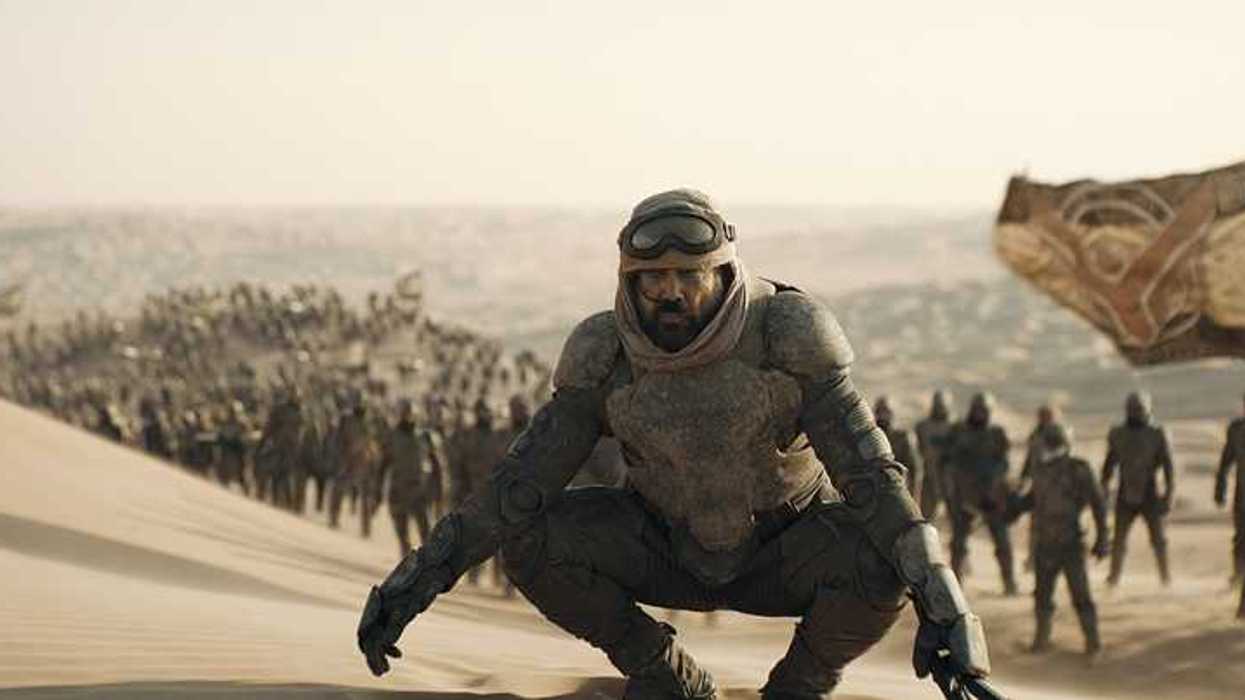
'Dune: Part Two'
Denis Villeneuve is one of my favorite directors. He seems able to capture the humanity and human experience even in his most outlandish and dark films.
And when it comes to his work on Dune, he never lets the pure spectacle overtake the heart at its center.
Even when there's a massive battle.
In his latest analysis, Alex from Savage Books breaks down why the final battle of Dune: Part Two is nearly flawless and what novelists and screenwriters can learn from it.
Let's dive in.
Writing That Final Battle
In Dune, we have a series that's basically about the indigenous people uniting with some benevolent tribes in order to protect their planet from evil invaders.
At the end of the second part, all these forces come together to fight to the death and to try to end their tyranny.
So what are some lessons writers can take away from how that movie handled this epic fight?
Well, a final battle's impact is defined by what happens before the first blow is struck. Dune 2 doesn't rush into the fray; it lets the audience "stew" in anticipation.
When it comes to your own script:
- Establish Perception: Don't just tell the reader how to feel; show it through imagery and symbolism.
- Divine Fanaticism: The film uses the "Quiet Before the Storm" to reinforce the theme of religious indoctrination. Paul is silhouetted and elevated, less a man and more an icon. That inspires his forces.
- Writer's Tip: Use specific language to mirror your theme. If your theme is "religious fervor," use words like congregation, heretics, and eternity to color your descriptions.
Spectacle, Novelty, and Culmination
Okay, so once you're done with the anticipation of the fight, you actually get to write a fight scene.
That can be overwhelming because there are so many moving parts. But I'm here to make it easy on you.
Once the battle begins, it must satisfy three technical requirements:
- Spectacle: This is about scale (the size of the fight) and scope (the consequences). In Dune 2, the environment itself is changed as the Imperial Fortress is breached.
- Novelty: Introduce something the audience hasn't seen before. This could be a new weapon, a hidden power, or a unique tactic, like Paul launching the Atreides atomics and fighting with a special force.
- Culmination: The battle should be a "crystallization of character growth." Every skill the hero learned. So, from riding sandworms to using "The Voice," it should come together here in a series of payoffs.
Telling a Story Within the Battle
Sometimes, I get so caught up in writing the fight that I forget the story that surrounds it. The biggest mistake a writer can make is letting the battle become a mindless sequence of events. A climax must function as a narrative within the narrative.
You are bringing your hero to make sure they are within the fight and that they finally learn what they need to be different after it ends.
- Intimacy over Scale: To make the conflict transparent, move from the "big battle" to an intimate one-on-one. The duel between Paul and Feyd-Rautha is a perfect example.
- The Narrative Arc: A great fight needs an introduction ("May thy knife chip and shatter"), a midsection that explores character skills, and rises and falls in tension.
- Character Revelation: By the end of the fight, we should learn something new about the protagonist's truest identity. For Paul, the duel validates his conviction, his pain, and the terrifying power of his foresight. And it sets up the third movie.
Summing It All Up
A great final battle isn't just about who wins; it's about the journey that came before it and paying off all the questions he has asked so far.
If you focus on the theme and scale the spectacle, you can ensure your epic ending sticks the landing.
Let me know what you think in the comments.