The Blue Box in ‘Mulholland Drive’ Isn’t What You Think
David Lynch’s most debated object isn’t a puzzle box but a narrative switch hiding in plain sight.
Mulholland Drive (2001)
Cinema history is riddled with MacGuffins—mysterious objects that drive the narrative. Take, for instance, the “Rosebud” from Citizen Kane (1941) or the “glowing briefcase” from Pulp Fiction (1994). It would be surprising if Lynchian cinema, the frontrunner of abstractionism, didn’t flaunt one of these in its filmography.
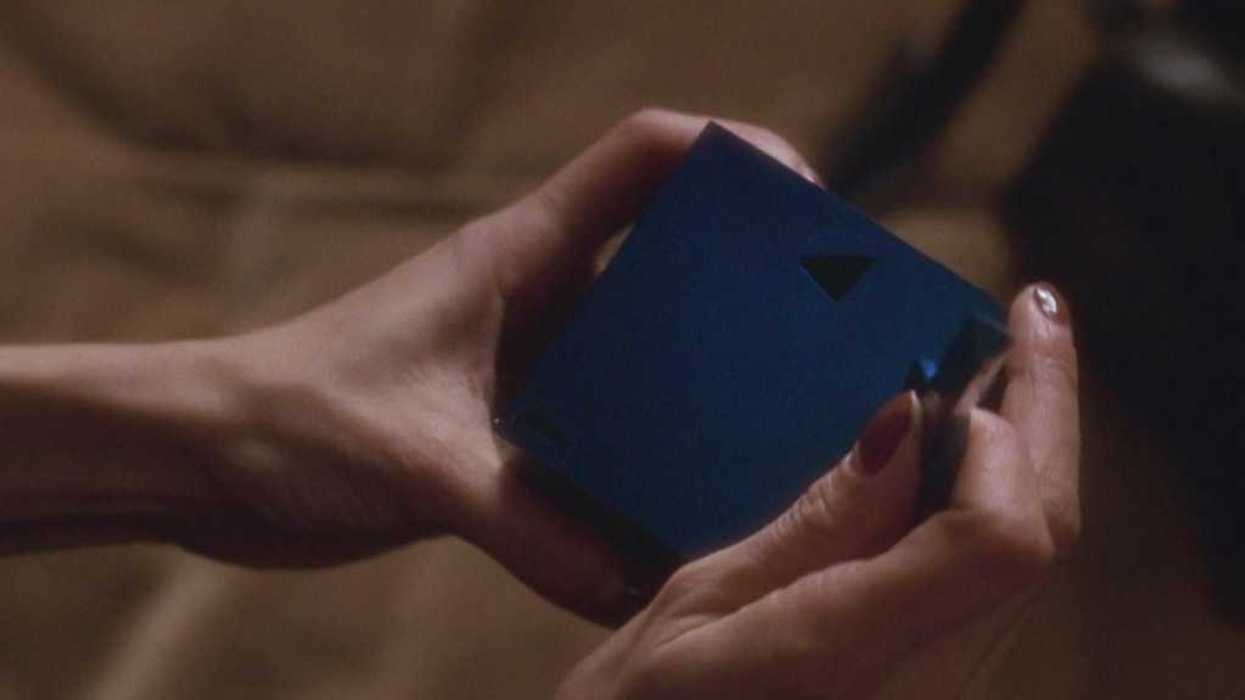
You may have come across a meme of a confused viewer staring at the screen as the Mulholland Drive (2001) end credits roll. Now that may be a common thing at the end of any David Lynch movie, but in this case, the reason is a blue box and a blue key.
The pair creates a typical intrigue. “What’s in the box?”
The audience has tried to work out a theory. Some assume it has some sort of power, some think of it as a teleporting device, and some others think something else. I mean, it’s a box; it should contain something, tangible or intangible. Right?
But think of it this way. It’s a “Lynch” movie. How wise is it to expect the box to have a literal purpose or to expect that it contains a literal secret?
Guys, Lynch doesn’t do “literal.” He is the man who exclusively operates from the basement of your subconscious, which is inhabited by the “vibes,” and where logic is not welcome.
What we mistake as a puzzle is actually a narrative switch. In simpler words, it’s Pandora’s Box. When it opens, the beautiful lie vanishes, and an unsavory truth is unleashed.
What the Blue Box Actually Does in the Story
From Betty to Diane: The Moment the Film Breaks
Up to the point where Rita (Laura Harring) opens the blue box, we follow her as a mysterious, amnesiac car-crash survivor who functions primarily as an object of desire, including that of the protagonist, Betty Elms (Naomi Watts). Betty, on the other hand, is a talented and emerging actress with a promising career ahead.
Just before Rita opens the blue box, Betty vanishes. No explanation of how. Just gone into thin air. Moments later, when Rita opens the box, she vanishes too.
As we watch the film ahead, we realize that the entire plot of Betty and Rita was a dream. Both were constructed identities in the fractured mind of Diane Selwyn (Naomi Watts). Diane is a failed actress and an embittered woman consumed by jealousy and her unrequited love for her successful ex-lover, Camilla Rhodes (Laura Harring). This wretched reality sends her spiraling into self-destruction, where she hires a hitman to kill Camilla. This is when she enters the rosy dream of wish fulfillment and flair, where Diane is Betty and Camilla is Rita.
The Void and the Vanishing Act
When Rita opens the box, and the camera dives into the dark void inside it, it signifies the total collapse of Diane’s safe mental space. In contrast to the intrigue and expectations (both inside and outside of the film), the box contains no treasure or surprise. What it contains is “darkness” and “nothing,” which is Diane’s reality. The act of opening the box is a symbolic mechanism that forces the dreamer to wake up and face the music.
Decoding the Box’s Real-World Connection
The Blue Key
Diane hires Joe Messing (Mark Pellegrino), a professional hitman, to kill her ex-lover, Camilla. Joe informs her that he will deliver her a blue key as a secret signal indicating the job is finished. When Diane assumes it must open something, Joe laughs as if she is silly.
When Diane asks, “What does it open?” she and the audience are expecting a literal answer. Joe’s laughter here is the ultimate vibe check for the audience. When he laughs, he (and by extension, Lynch) is telling us that the key doesn’t open a hidden room or a secret treasure trove, but it opens (or shatters) Diane’s psyche.
The laughter is aimed at the absurdity of seeking logic in a hit job. For Joe, the key is just a random object that is meant to convey the secret message—i.e., “Camilla is dead.” But, for Diane, the key opens the floodgates of her conscience.
In real life, when Joe actually kills Camilla and delivers the key to Diane, her manufactured reality (her dream) of a perfect life collapses.
Conclusion
The blue box is a plot device that acts as a boundary between Diane’s actual life and her imagined life. In the film’s first half, she is a talented and successful actress, which is a dream. The box opens, and the dream ends. From here on, Diane must face the reality: she has failed at acting, she has failed at love, she is a jealous, embittered mess, and to make everything worse, she has Camilla’s murder on her conscience.
The box is more or less just a reminder that Diane can no longer avoid the reality of what she is and what she did.
- The Pure Cinema Podcast Covers the Career of David Lynch ›
- This Video Essay Chronicles the Evolution of David Lynch ›
- What It's Like Working with David Lynch, According to Justin Theroux ›
- Rest in Eccentric Peace, David Lynch | No Film School ›
- The Best David Lynch Quotes of All Time - No Film School ›
- How David Lynch Uses Subversion to Elicit Catharsis in 'Mulholland ... ›
- How David Lynch Messes With Your Head in 'Mulholland Drive' ›