The Note Christopher Nolan Gave Gary Oldman to Change His Performance
How can you communicate just as efficiently to your actors?
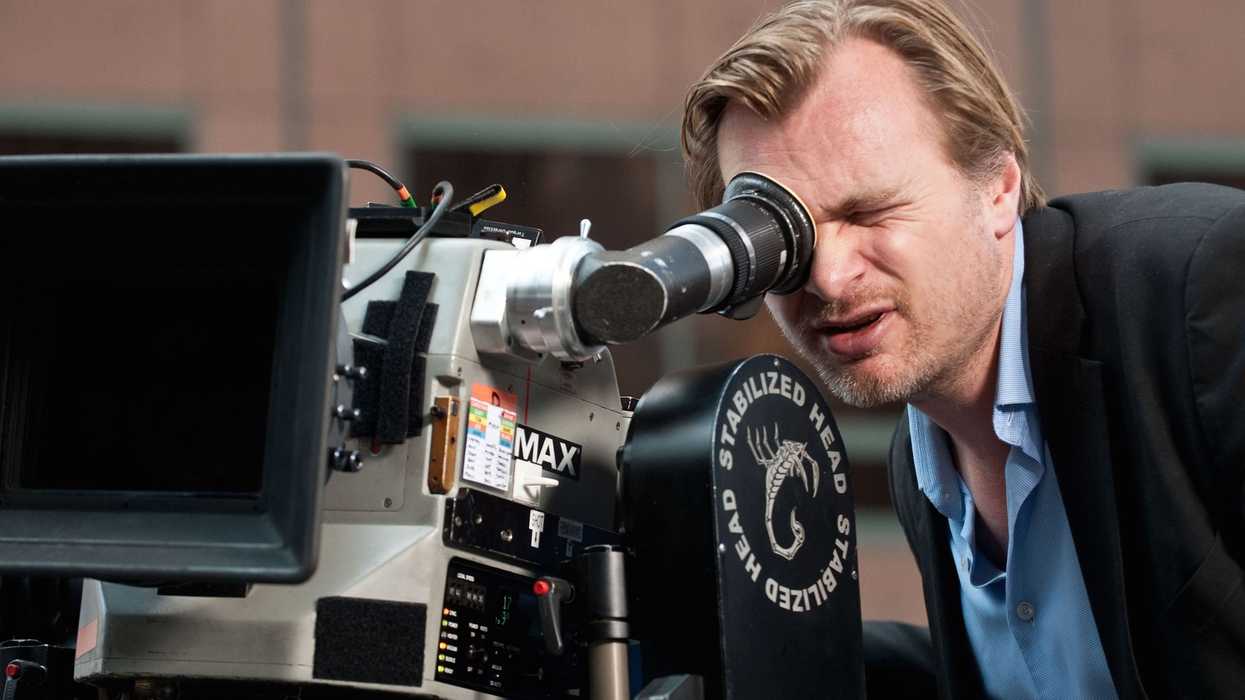
Christopher Nolan directing Dunkirk
Christopher Nolan has built a reputation as a director who commands respect through restraint. He doesn't rely on micromanagement. Famously, he prohibits the use of phones on set and favors working in close coordination with his actors, avoiding the use of video village.
And he's gotten some great performances from his casts over the years, so if we can dissect how he does it, we can all be stronger collaborators on set.
Actor Gary Oldman worked with Nolan for seven years across three Batman films, and in all that time, the director gave him maybe two notes total. That restraint teaches us something valuable about directing actors, but the content of one note Oldman remembers is important, too.
During an appearance at the 92nd Street Y, Oldman told host Josh Horowitz about one of the best notes he's ever gotten from the director.
- YouTube youtu.be
Oldman said that during one Batman scene, Nolan approached Oldman with feedback that was simple.
"Let's do that one more time. There's more at stake."
Just a few words, no long explanations or detailed breakdowns, which Oldman immediately got and implemented.
"I went, 'Yep, got it, all right, let's do one more,'" Oldman said. "That's a fantastic piece of direction. I don't need to know the ins and outs of the whole universe. I just need to adjust the volume on it—not vocally, right, but the energy or the dynamic of it."
Effective directing often uses concise notes. Nolan's "There's more at stake" gave Oldman a clear, economical adjustment for an elevated performance, conveying the scene's emotional temperature without overcomplication.
When a director constantly adjusts and micro-manages, they can undermine an actor's confidence and instincts. Nolan's approach suggests he casts actors he trusts, then gets out of their way unless a specific adjustment is needed.
Cillian Murphy has confirmed that Nolan is very present on set to foster stronger relationships with the actors, telling Collider:
"For him the performance is paramount. It’s the connection between the actors. He allows room for spontaneity. You know you would imagine spontaneity in a $200 million movie is not particularly high on the list of priorities but for Chris it is. And it’s really reassuring as a performer makes you feel really safe and it’s just a joy to work with him."
Directors often feel pressured to provide numerous notes to prove their worth, but this isn't always necessary. Strong direction can come from knowing when to jump in and when to just quietly watch. It means understanding the situation, knowing what each actor needs, and providing feedback that helps them excel instead of holding them back.
For emerging directors, this approach requires real confidence, both in your casting choices and in your ability to communicate clearly when direction is needed. It means doing the work beforehand to understand what each scene requires, so when you do speak up, those words land.
Check out our dos and don'ts of directing actors, according to actors.
Have you seen another example of economical directing like this? Let us know what it is.
- What Can We Learn from a Christopher Nolan Fanboy? | No Film ... ›
- Why is Christopher Nolan so Obsessed with Time? | No Film School ›
- How Did 'Heat' Inspire Nolan to Make Gotham a Character in 'The ... ›
- Zack Snyder and Chris Nolan Love to Show Each Other Their ... ›
- The Dark Knight Heat ›
- The Story Behind Gary Oldman’s Iconic Casting as Dracula ›