The Iconic Quote That Convinced Gary Oldman to Become Dracula
A line that reframed a gothic villain in our eyes.
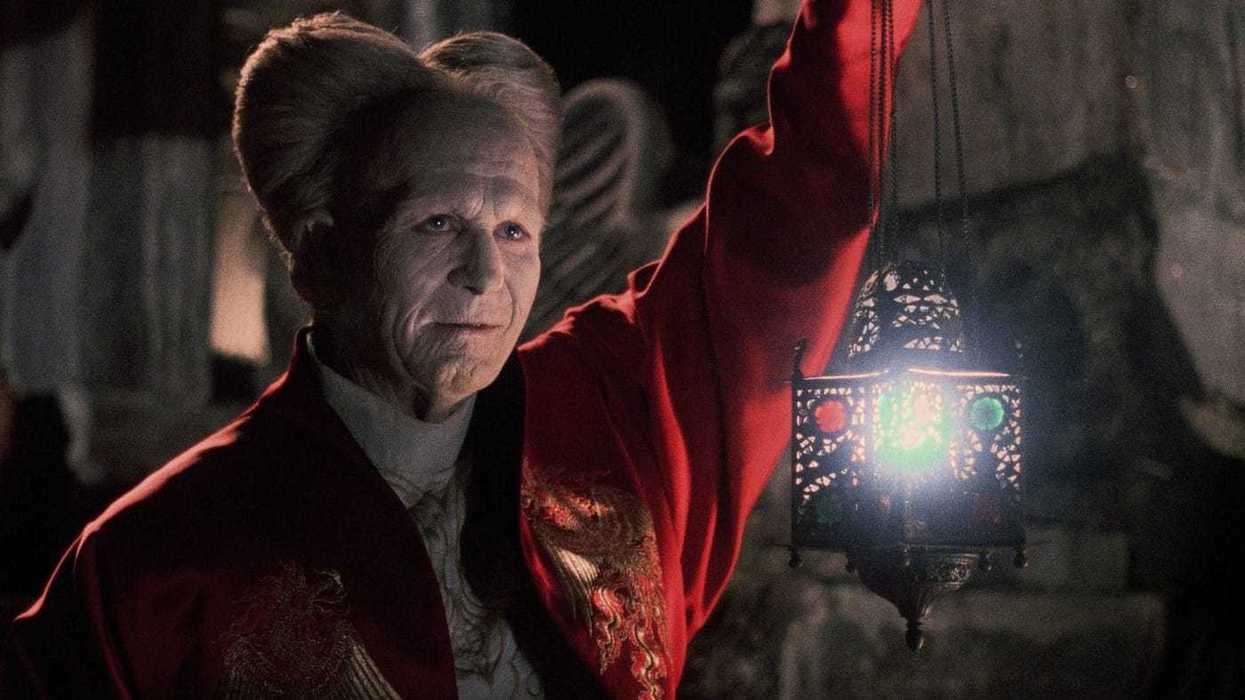
'Bram Stoker's Dracula' (1992)
Having a known actor associated with your script benefits its production in multiple ways. But you have to have a strong script, a great track record, or an attractive idea to draw that talent.
By the time Francis Ford Coppola took up Bram Stoker’s vampire novel to turn it into a film, he was a big name in the film industry, having won the Academy Award for Best Director for The Godfather Part II. Which actor or studio wouldn’t want to work with him?
But that’s not the only reason why Gary Oldman readily agreed to play Count Dracula in Bram Stoker’s Dracula, although it was definitely a major one.
So what actually roped him into the project? Let’s discover.
To Give You a Little Context..
Bram Stoker’s Dracula follows the Prince Dracula, who is forced to go to battle against the Turks, leaving behind his beloved bride, Elizabeta (Winona Ryder).
When the Turks are unable to overpower Dracula, they send a false message back to the castle about his death to spread chaos. Elisabeta succumbs to the grief and commits suicide by flinging herself into the river.
Her death scars Dracula, and he declares war against God and the Church, enraged that God didn’t save his bride even though Dracula was fighting for his cause.
400 years later, Count Dracula finds his lady love reincarnated in Mina Murray, another man’s fiancée. This time, Dracula is not ready to let go of her.
What Made Gary Oldman Say “Yes” to Count Dracula and Bram Stoker’s Dracula?
When Oldman was approached with Coppola’s gothic horror movie to play the lead, he was himself a star, having starred in critically acclaimed movies such as Sid and Nancy, The Firm, Rosencrantz and Guildenstern Are Dead, and JFK.
Oldman has said in multiple interviews how, as an actor, he wasn’t particularly keen on playing a 400-year-old blood-sucking protagonist.
Talking about his interests in the character and subject, Oldman said that as a child, he was one of those kids who had a new interest every week. He had once gone to a costume contest as a vampire when he was 5 years old, but that was it. Vampires intrigued him, but not to an extent that he was desperate to play one.
However, when he read Jim Hart's script for the movie, something shifted. In an interview with Entertainment Weekly, Oldman said a particular line in the script won him over.
The line is, “I’ve crossed oceans of time to find you.” The actor mentioned how, while auditioning for Coppola, that was the one line that he most vividly remembered, and he thought, “God, I’d really like to say that line.”
While that was the primary reason why Oldman said “yes” to the movie, Coppola being such a brilliant director only strengthened his belief in the decision.
“I felt safe. I felt carried by the master," said Oldman while talking about his decision to work with Coppola.
Oldman mentioned in an interview that Coppola gives the actors a big playground to play around in, and that’s what elevates the entire experience of working with him.
The actor also mentioned that the creative playground made his portrayal of Dracula even more interesting. While portraying a mystical character like a vampire, who’s 400 years old, there’s no right or wrong; only bad, good, or amazing.
“You know your character wouldn’t do that! Oh yeah, okay, when did you die and come back to life, you know?” explained Oldman.
For him, it was a rare creative space as an actor, where he could have fun with the character and their portrayal.
The Impact of the Line on the Narrative
Interestingly, the line, “I’ve crossed oceans of time to find you,” isn’t in the novel—it’s an original line written by Hart.
Traditionally, a vampire is a predatory Gothic villain, but Count Dracula is not. In the adapted story, he is an emotionally wounded man, grieving over his bride’s death even four centuries later. When Jonathan, Mina’s fiancé, meets him for the first time (400 years since Elisabeta’s death), Dracula is a complete wreck, living a secluded, forsaken life, tucked away in his castle. His bride’s death left him without a purpose.
But when he sees Mina for the first time, he sees light at the end of darkness. Thus begins his quest to win her back and never let her go.
This line humanizes the great vampire, Count Dracula, proving that his horror stems from longing. The fact that Dracula’s pursuit of Mina is motivated by love reframes the vampire in our eyes. As Dracula “finds” Elisabeta in Mina, the line and the moment mark an important emotional payoff and turning point in the film.
In a way, the line establishes Count Dracula and Elisabeta as gothic Romeo and Juliet—only Romeo can’t die, and so he decides to wait for Juliet, as long as it takes.
What do you think of Count Dracula’s tragic love story?