I love looking at successful movies and analyzing their genre and how they used it to amplify their message and the director/writer's voice.
And there's a recent trend in horror that has been really fun. The common denominator in some of the scariest and best films over the last five years, Barbarian, Weapons, The Substance, and many more, has been the "Psycho Biddie."
Today, we're diving headfirst into a horror subgenre that's deeply unsettling, and we'll define it, go over the tropes, and look at some historic examples.
Let's dive in.
Psycho Biddie Definition
A "Psycho Biddie" film is a subgenre of psychological thriller and horror that came out of the 1960s and early 1970s. It's also called the "Grande Dame Guignol" or "hagsploitation."
It commonly refers to movies or TV shows that feature once-glamorous, aging actresses in terrifying and often tragically campy roles.
These stories typically revolve around a mentally unstable older woman whose descent into madness leads to violence.
Psycho Biddie Tropes

'Ma'
Credit: Universal
As I said in the opener, this character and genre have become super popular in today's Hollywood. The reason why so that they're good stories to talk about so many themes like aging, relevance, feminism, and just to scare the crap out of people.
If you're embarking on writing or directing one of these kinds of films, you should be familiar with the tropes, so you can subvert expectations and find your own voice through all the details.
Character Tropes
- The Unhinged Former Star: The absolute centerpiece of the genre. She is an older woman, once a celebrated beauty or star (often a child star or actress), who now lives in seclusion. Her identity is inextricably linked to her past glory, and her inability to let go of it fuels her psychosis.
- The Captive Sibling: There is almost always another character trapped in the house with the protagonist, serving as the primary victim of her cruelty. This character is often physically disabled or emotionally fragile, making them dependent on their tormentor.
- The Outsider: A character from the outside world who senses something is wrong and tries to intervene. This is often a doctor, a nosy neighbor, a financial advisor, or an old friend. Their attempts to help often escalate the tension and put them in grave danger.
- The Grifter: A younger character who attempts to manipulate or exploit the wealthy, unstable older woman for their own financial gain, wildly underestimating how dangerous she is.
Setting & Prop Tropes
- The Gothic Mansion: The primary setting is almost always a sprawling, dilapidated house that was once a symbol of wealth and glamour. Its peeling paint, dusty interiors, and overgrown gardens serve as a physical manifestation of the protagonist's psychological decay and faded glory.
- The Shrine to the Past: Within the mansion, there is inevitably a room or space that serves as a museum to the protagonist's former self. It's filled with old movie posters, portraits, yellowed newspaper clippings, awards, and costumes. This space is where she retreats to live in her memories.
- Creepy Dolls: Life-sized dolls, mannequins, or other representations of people are frequently used to heighten the sense of psychological disturbance. They often represent a lost child or the protagonist's younger self.
- The Foreboding Staircase: A grand staircase is a classic set-piece, used to create suspense and symbolize the power dynamics within the house. It's often the site of a pivotal argument, a terrible accident, or a dramatic reveal.
Narrative & Thematic Tropes
- The Traumatic Past: The plot is driven by a dark secret from decades earlier—usually a murder, a tragic accident, or a betrayal—that has defined the characters' lives and relationships ever since.
- Gaslighting: The horror is often less about physical violence (though that exists) and more about cruel mind games. The protagonist delights in psychologically tormenting her victim, often through isolation, starvation, and making them question their own sanity.
- The Act of Violence: When violence does occur, it is often shocking, theatrical, and brutal. The "psycho biddie" might use an unconventional weapon, reflecting a twisted domesticity.
- The Shocking Twist Ending: A hallmark of the genre is a final-act revelation that completely re-contextualizes the entire story. The audience discovers that the truth behind the traumatic past event is not what it seemed, and the roles of victim and villain are often shockingly reversed.
- Camp and Melodrama: The performances are heightened and theatrical, the dialogue is deliciously dramatic, and the situations are often over-the-top. This intentional lack of realism creates a "camp" tone that makes the horror simultaneously horrifying and darkly humorous.
Psycho Biddie Examples
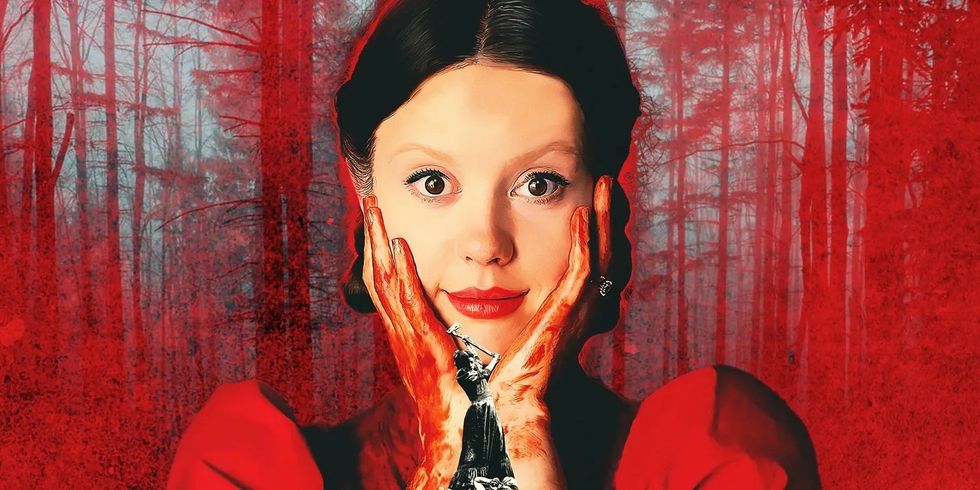 'Pearl'CREDIT: A24
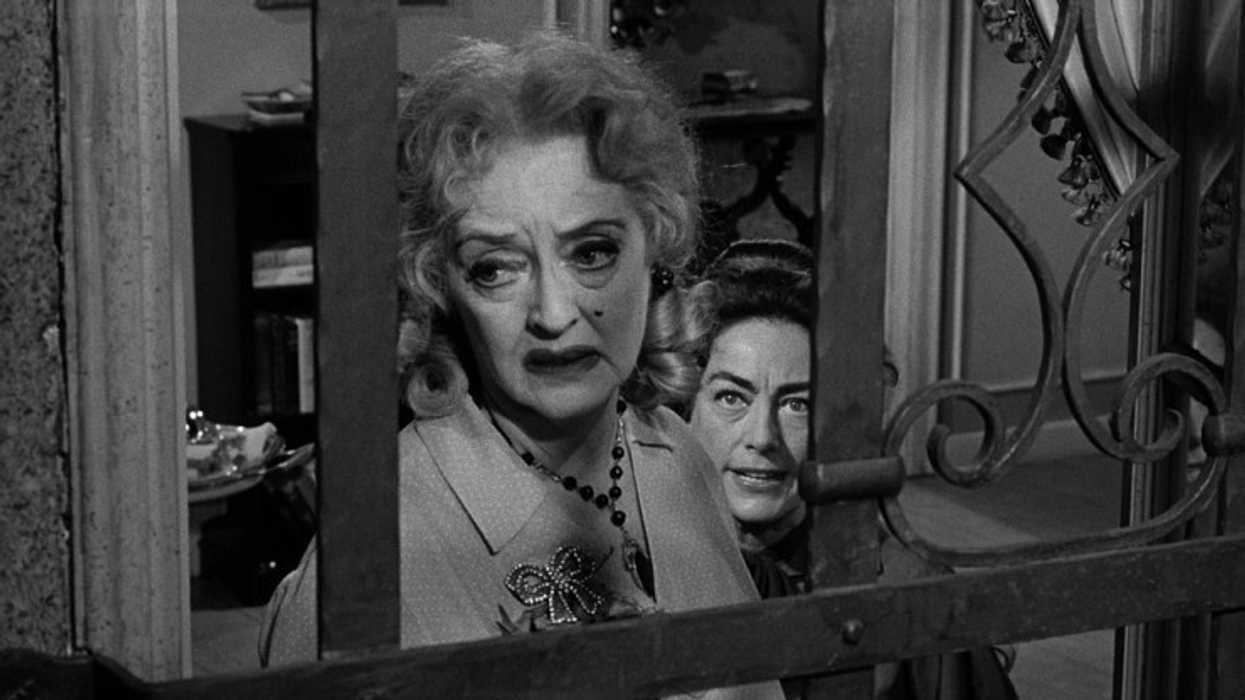
There is one movie that put the "Psycho Biddie" craze on the map: Robert Aldrich's 1962 masterpiece, What Ever Happened to Baby Jane?.
This is one of those movies I think everyone should watch.
It was a massive hit that has a cool story about how the stars Bette Davis and Joan Crawford hated one another.
But it also created a template for the subgenre that stands today. It has a claustrophobic, decaying mansion, a story steeped in past resentments and sibling rivalry, and a tour-de-force performance by a legendary actress reveling in a role that defied Hollywood's youth-obsessed standards.
Of course, after that movie became huge, the formula was used again and again. The fun part about these movies is that they can easily slip into any other genre, from Sunset Blvd. to Throw Momma From The Train.
Let's look at a few modern examples.
- Ma (2019): Octavia Spencer takes a dark turn in this Blumhouse thriller, playing Sue Ann "Ma" Ellington, a lonely veterinary aide who buys alcohol for local teenagers and offers her basement as a party spot.
- X (2022) & Pearl (2022): Director Ti West created a modern slasher franchise that is deeply indebted to the "hagsploitation" cycle. In X, a group of young filmmakers shooting a pornographic movie on a remote Texas farm are terrorized by the elderly couple who own the property, Howard and Pearl. The prequel, Pearl, delves into the title character's youth on that same farm, showing her desperate and bloody ambition to become a star.
- The Skeleton Key (2005): Features Gena Rowlands as a seemingly sweet Southern woman with a dark secret, employing gothic settings and a shocking twist ending reminiscent of the classic era.
- The Visit (2015): M. Night Shyamalan's found-footage film plays with the fear of aging and the unfamiliarity of one's own relatives, as two children visit their increasingly disturbing and violent grandparents.
Summing It All Up
You can see how this genre has survived all these years, like a decrepit evil old woman as well, it always stays relevant.
I love how many different directors and stars have put their own brand on this subgenre and how malleable it is for anything you're working in now.
Let me know what you think in the comments.