As anyone who has ever tried to take a video of a storm on their phone already knows, capturing rain onscreen is notoriously difficult.
Filming in the rain causes all kinds of problems. Just to have it appear onscreen, it needs to be carefully lit. The camera also needs to be protected so the electronics don’t get damaged, and so the lens doesn’t get splattered with water that ruins the image.
Plus, real-life rainstorms are finicky and can end long before the scene is finished. On the other hand, manufacturing rain for a scene requires expensive machinery. So, considering all of these massive headaches, why do we even bother putting rain in movies?
There are a multitude of reasons why rain makes a scene better, both narratively and aesthetically. This is why rain scenes show up so often in movies in the first place. The fact that they are so difficult to produce proves that they are almost always included in movies on purpose. While there are practically as many reasons to have rain scenes as there are filmmakers, there are a few types of rain scenes that are the most effective, and therefore the most common.
The Aesthetic Value of Rain Is Undeniable
One common reason that rain is included in a movie is more pragmatic than the rest. Simply put, water is a DP’s secret weapon. Rain can either jazz up a bland scene or elevate an already exciting one, putting motion and reflected light into the frame that would not have been there if not for falling water.
Even making it look like it has recently rained can add value to an image. By performing a “wetdown” (literally throwing water on the ground), DPs can make asphalt look less uniform and darken pavement so it is less likely to be overexposed.
Rain Is a Powerful Emotional Indicator
Another reason why rain can be important in a scene is a rhetorical device called “pathetic fallacy.” While the term may sound silly to modern-day readers, the root of the word “pathetic” goes back to the Greek term “pathos” (an appeal to emotions), which is the way it is being used here. Simply put, pathetic fallacy is when a character’s own emotional state is ascribed to the environment around them.
Rain makes many people feel sad or downtrodden, so it is most often linked with the emotion of sadness on-screen. There’s a reason the eternally depressed Eeyore from Winnie the Pooh is often depicted with a rain cloud over his head.
Filmmakers often harness this feeling by dumping buckets of rain on their characters when they are at particularly low moments. This is a common trope in live-action movies, but it is frequently most exaggerated and prominent in animation, as in a key rain scene from 2000’s The Emperor’s New Groove. The emperor Kuzco, recently having been transformed into a llama, finds himself alone and friendless in the jungle, at which point, in the space of a cut, he is instantly drenched in a pouring deluge.
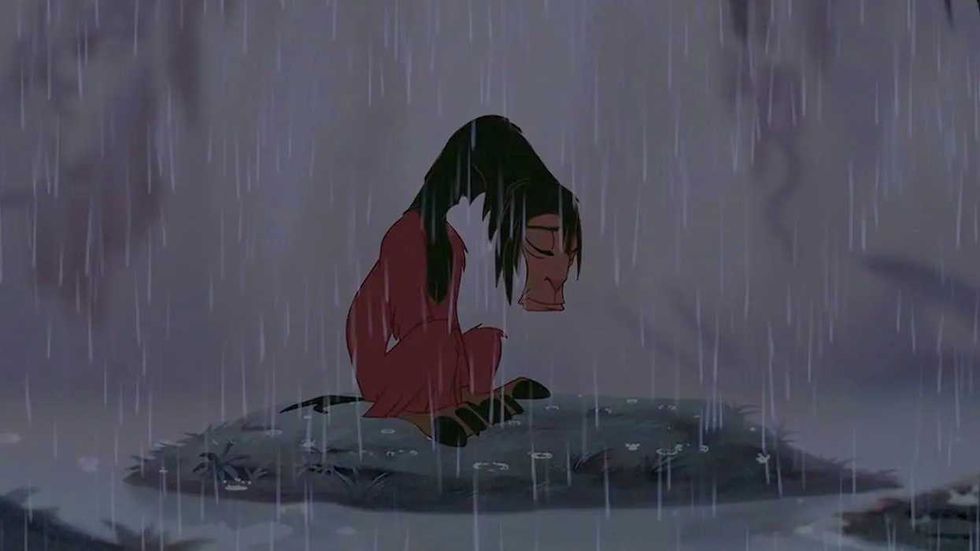 ‘The Emperor’s New Groove’ (2000)Credit: Buena Vista Pictures Distribution
Pathetic fallacy can also be reversed, with rain serving as an ironic counterpoint to highlight just how happy a character is. The idea that a character is so elated that even the rain can’t bring them down is literally the entire point of the lyrics and the staging of the iconic title number from the 1952 musical Singin' in the Rain.
Rain Can Herald Rebirth
Rain is also often used as a more abstract metaphor than simply representing sadness. As with any form of water onscreen, it is frequently used as a symbol for baptism, emphasizing a character’s rebirth.
While the baptism metaphor is more often used with standing bodies of water that more directly mimic baptismal fonts (like the ocean that Sandra Bullock crawls out of at the end of Gravity, during which she has had a powerful transformation from a mother overwhelmed with grief to a survivor with a new lease on life), rain can serve that metaphor just as easily.
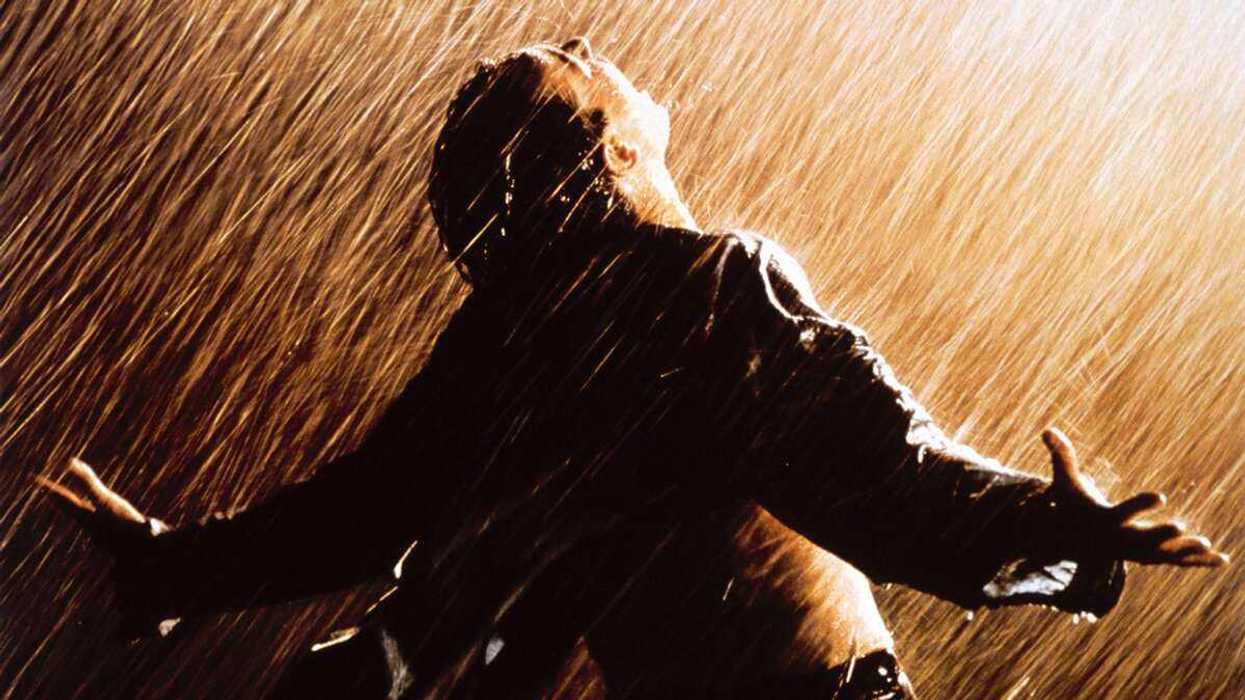
For instance, the rain falling during the prison escape at the end of The Shawshank Redemption underscores the titular redemption of Andy Dufresne (Tim Robbins), who rediscovers hope throughout his journey in the movie. The rebirth metaphor in that particular scene is made even more potent by the fact that he emerges into this rain via a pipe, which visually represents the birth canal.
Rain Wipes the Slate Clean
A similar metaphor that rain scenes can evoke is characters wiping the slate clear, rather than being fully reborn. As Hilary Duff sang in her seminal 2004 hit, “Let the rain fall down, I'm coming clean.”
In these scenes, the rain acts as a visual metaphor for the sins or mistakes in a character’s past being washed away.
This is a key component of the majority of the “kissing in the rain” scenes that have become an iconic trope in romance cinema. In addition to harnessing a bit of Singin’ in the Rain’s reversal of pathetic fallacy (the characters are so overcome with passion that even the rain can’t dampen it), this type of scene usually uses rain to highlight the fact that the characters have overcome whatever issues have prevented them from being together, washing away their pasts and allowing them to step forward into a brighter future.
That is true of many of the most iconic examples of romantic rain scenes, including The Notebook (Noah and Allie’s kiss in the rain comes after they have cleared away the misunderstandings that have prevented them from being together up to that point), 2005’s Pride and Prejudice (Mr. Darcy and Lizzie Bennet kiss in the rain when they finally overcome his pride and her prejudice), and Breakfast at Tiffany’s (where Holly Golightly and Paul Varjak passionately reunite in the rain after she rejects his proposal).
Rain As Release
Another effective use for rain scenes in movies is to represent a character’s relief. There can be something cathartic about rain clouds that have been gathering, finally releasing the rain that has been building up over the course of a scene or a story.
Here, we must once again look to our guiding light, Hilary Duff, because one of the best examples of this comes from her 2004 feature A Cinderella Story. Over the course of the movie, a drought in Southern California has been weighing on the characters. At one point, Duff’s character Sam even tells her love interest Austin (Chad Michael Murray) that “waiting for you is like waiting for rain in this drought. Useless and disappointing."
Her frustration in love is echoed by her ambitions of going to Princeton, being frustrated by the manipulative antics of her evil stepmother, Fiona (Jennifer Coolidge). However, her life begins to turn around when she finally begins taking her future into her own hands and stands up to Fiona. This culminates in a kiss with Austin, where the drought ends, drenching them with rain as relief washes over Sam after years of pent-up angst.
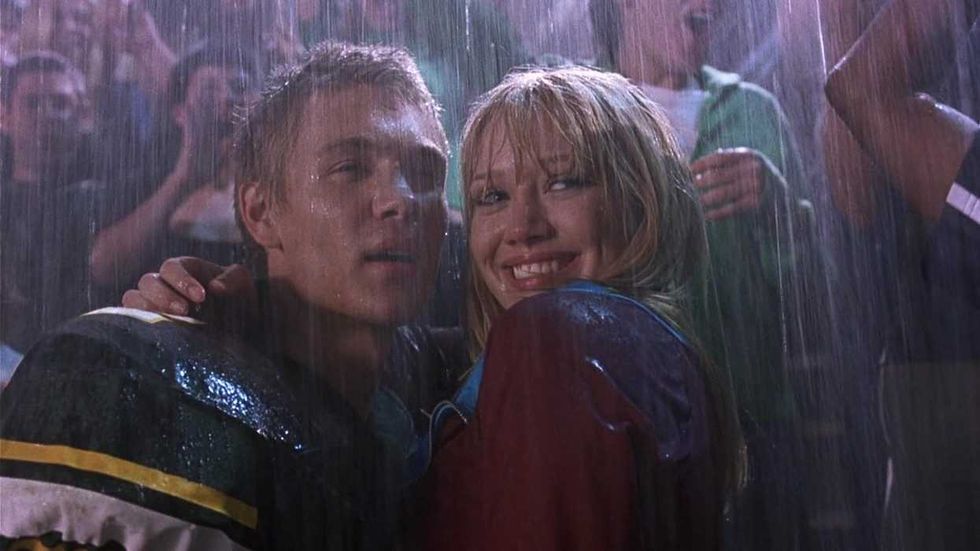 ‘A Cinderella Story’ (2004)Credit: Warner Bros. Pictures
Appropriately, this scene combines every one of the major uses of rain on-screen, including aesthetic value, a reversal of pathetic fallacy, rebirth, and slate-wiping. After all, when we let the rain fall down in our movies, magical things can happen.
Although we’re now armed with the knowledge of why rain scenes are so important, it’s important to remember that it can still be tricky to get them right on set. Luckily, the No Film School archives contain plenty of helpful information on how to shoot in the rain, how to make a cheap VFX rain shot, and more.