Film Festivals have gotten a little stale in recent years. I feel like they are still a good place to send your movie out into the world, but I've been craving for them to actually deliver measurable gains for filmmakers.
Enter The Rich & Successful Film Festival (RSFF), a fest in Los Angeles, I heard about from a couple of friends, and decided to investigate. The 2025 edition takes place September 10th–13th at Hollywood’s Egyptian Theatre (in collaboration with the American Cinematheque) and other iconic venues across Los Angeles.
I sat down with filmmakers and friends Nir Liebenthal, Page Brady, Jeremy Roth-Rose, Dylan Trupiano, and Noah Morse to talk about the idea behind the festival and what people who get in can expect.
Right off the bat, I heard something that made me feel excited:
“We wanted to create the kind of festival that would’ve changed our lives a few years ago,” says Festival Director of Strategy Nir Liebenthal. “Being an indie filmmaker in LA can be both exhilarating and isolating. Our festival ensures rising filmmakers never feel alone again in their journey towards success.”
Let's dive into the full interview below.
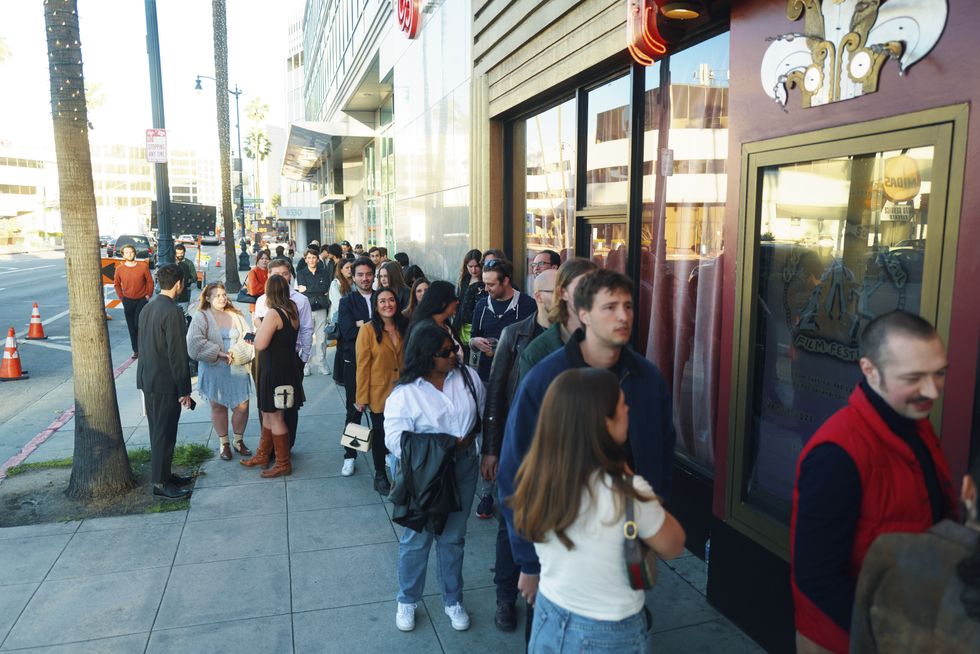 The Rich & Successful Film Festival (RSFF)Credit: Impact24
NFS: RSFF was founded in 2021 as a response to the challenges of being an indie filmmaker in Los Angeles. Can you walk us through those early conversations? What problem were you trying to solve for yourselves and your peers?
Jeremy Roth-Rose (Head of Operations): When we came together in 2021 to start this festival, we had absolutely no idea what we were doing. We had a film that we wanted to take to festivals, but didn’t know how to go about it, nor did we know many other filmmakers we could talk to who could help us navigate the process. So we thought, let’s create the kind of night we wished already existed — a place to show our work and meet others figuring it out too.
That first year made it clear we weren’t alone. Other filmmakers were craving the same thing: a space to show their work, talk to peers, and just have fun together. We realized there was a real demand in Los Angeles for a central event where people could rally around short films and have fun doing so. From the beginning, our goal was to make RSFF that space, welcoming not just the filmmakers in the lineup, but anyone who wanted to be a part of the community.
We also just wanted there to be a centralizing event where the larger community could come together to watch great shorts, have a party, and celebrate all the immense talent in this town (without needing an exclusive invite or shelling out a ton of money to afford tickets).
NFS: The name "Rich & Successful" is tongue-in-cheek yet aspirational. How did you land on that title, and what does it mean to you now, four years in?
Noah Morse (Creative Director): When we started this, we were 24 years old and would jokingly introduce ourselves as “very rich and successful.” It was our way of breaking the ice and poking fun at the industry’s obsession with status. Four years later, our sense of humor is still intact, but now we have a festival to propagate it.
At its core, the tongue-in-cheek spirit of our name is about reminding everyone not to take the glitz, glam, and the big show of this industry too seriously. We’re all trying to make it, so why not support each other and have a laugh at the industry’s obsession with that show while we do? True success comes from teamwork and mutual support; no one can do it alone. We want people to realize that lifting each other up is the most direct path to success.
We also don’t want people to think we’re too serious. We put immense effort and love into our work, but we never want to become inaccessible. That was our goal in the first year, and it remains true today. Even if we hit it big down the line, this spirit will stay the same... unless we get a star on Hollywood Boulevard. Then, everything will change for us.
In Hollywood – and really in any creative industry – people often lead with buzzwords and name-drops, telling before showing, as a way to prove they’re worth someone’s time. Rich and Successful is exactly that: if a group of nobody twenty-somethings back in 2021 could declare it with confidence, doesn’t that suggest anyone can do anything? We believe wholeheartedly that doors don’t just open…that sometimes you have to build the door and then break it down yourself.
NFS: You’ve emphasized accessibility and sustained year-round support, not just a one-off festival. How do you keep that momentum alive for your community outside of festival dates?
Nir Liebenthal (Director of Strategy): Our goal is for RSFF to exist year-round, not just for four days each September. The Festival itself is a celebration, but the deeper mission is about accessibility: lowering barriers to what it means to be an indie filmmaker in Los Angeles. We’re working on community initiatives to continue hosting networking events, workshops, and sponsor-led sessions throughout the year. Our goal is to make the life and career of indie filmmaking more attainable in this city. LA has the talent and the stories, but too often the infrastructure supports people once they’ve already made it, not when they’re just starting out. We want to shift that by providing up-and-coming filmmakers with consistent opportunities and mentorship throughout the year. Of course, this is aspirational, but we are working behind the scenes to continue figuring out ways to provide these offerings.
NFS: What’s your curatorial lens when programming films, and how do you balance prestige titles from SXSW or Tribeca with true discoveries?
Page Brady (Head of Programming): We pride ourselves on a programming process that is rigorous and transparent. Every film is viewed by three of our programmers – a unique team of alumni filmmakers, junior executives, and seasoned programmers – before we come together to deliberate. There are no shortcuts or backdoor entries—just careful consideration for every submission. Given the structure of our festival, we’re often faced with more excellent films than we can possibly program.
Many of the films we encounter have just as much – and sometimes even more – merit than the aforementioned “prestige” titles from festivals like SXSW or Tribeca. We want to feature the best films on the contemporary circuit, but to us, the best program isn’t about chasing what’s buzziest. It’s about curating the highest-quality storytelling across Los Angeles: films that push boundaries, reflect the city’s diversity, and showcase artists at every stage of their careers. Often, newer filmmakers lack the connections or guidance to navigate the festival circuit. We see it as our responsibility to spotlight these artists and help bridge that gap. By bringing them into the room with more established filmmakers, we hope to foster a more equitable and supportive community for everyone.
NFS: This year’s lineup features everything from animated meditations on grief to surreal coming-of-age stories. Are there any standout shorts you are especially excited to share with audiences?
PB: We have a super-tight, curated lineup of films, and the beauty of our program is that we feel excited about every single thing we are screening. Most festivals have a plethora of shorts blocks for audiences to choose from, all focused on a different genre or theme. We like to think of our festival as curating a ‘best of’, singular shorts block with films that would traditionally be scattered across all of these different blocks. Our lineup includes films helmed by filmmakers from all experience levels – we have an amazing short film, THE SINGERS, directed by Oscar-nominated filmmaker Sam Davis, and are also thrilled to be showcasing MADONNA MIA, which is the first short film from Valentina Garrett. It’s always a goal of ours to feature filmmakers from a range of experience levels, as well as films with varied levels of exposure. The throughline being: everything we program we genuinely adore – it's what we think is so special about our festival. The singular block also allows us to bring out a big crowd of excited and engaged audience members, and makes for a truly unmatched exhibition experience for short filmmakers. Check out the trailer of RSFF4 films here.
NFS: Your audience includes not just local filmmakers but also major players from talent agencies, as well as studios like A24 and Netflix. How do you balance creating an artist-centered space while also providing meaningful industry access?
NM: In the first two years we put the festival on, so much of our audience were industry folks that we’d come to know professionally through our own past jobs. Many of these folks would not normally come out to a type of program like ours because it wouldn’t be on their radar, but we were lucky enough to have enough friends (and friends of friends) to come and see what we were trying to accomplish that it created a really unique environment for our filmmakers to meet other industry folks organically.
This remains true in year four, and we’re super proud of it. We’re not trying to force any connections, but we want to create a space where folks can mingle and meet, and industry members can introduce themselves and connect meaningfully with the artists whose work they’d seen that night. We don’t want to feel like we’re forcing anyone to network, so we feel like it stays artist-centric because at the end of the day, the festival is about the films, and if you like someone’s film, you can just go talk to them about it afterwards. What makes this work is that we aim to give everyone — whether it’s a talent agent, a local filmmaker, or a friend — an incredible screening experience. It’s not about dragging people into the room; it’s about creating such a genuine, celebratory atmosphere that they want to keep coming back year after year.
NFS: RSFF alumni include Sean Wang and Jackie! Zhou, who have gone on to major acclaim. How do you see RSFF’s role in launching careers?
Dylan Trupiano (Director of Media): Right now, it feels like we’re in a position where RSFF is growing in tandem with our filmmakers. Some of our alumni, like Sean and Jackie!, had been working for years before they got the chance to make features and viral music videos, while others haven’t yet been given that kind of opportunity. But our version of being a launchpad isn’t just about platforming talent — it’s about giving them the best possible screening of their work and the chance to connect with people they might go on to collaborate with. For us, being part of our ecosystem means more than just getting an opportunity to screen in front of a great audience; it’s also about being welcomed into a community that champions your work and helps you find your own version of success.
NFS: The festival sponsors include such notable brands as Kodak, Shotdeck, and Seed&Spark. How do you decide which industry partners align with your ethos, and what do you hope filmmakers gain from these partnerships?
JRR: Our general rule of thumb is to make sure that our brand partners truly understand the spirit of our festival, and that they can give something back in a meaningful way to our community. Having financial support from them is tremendously important, but we also care very much about resources for our filmmakers and our audience.
When we work with partners, we’re often looking for something that is educational or practical in filmmakers’ career-building, whether that be memberships to relevant digital film tools or access to workshops where they learn how to load film or fundraise for an upcoming project.
NFS: What’s your vision for RSFF five years from now? Do you see it expanding geographically, or is staying rooted in Los Angeles essential to its identity?
NL: This is a great and exciting question! We talk all the time about how we can expand the festival, whether that be hosting year-round community events or expanding to other cities to create satellite fests. The trick is finding ways to continue to grow while also staying true to the communal spirit of what we do. For RSFF LA, it’s important that we stay grounded in community and focus on serving the people of this city.
We are working behind the scenes on some really exciting stuff that we’re really close to being able to share with the world. We know that life is really hard in the indie film scene right now, and we really think it doesn’t have to be. We hope that if you’re an indie filmmaker, work in the industry, or just a fan, you continue to follow along. Shoot us a follow at @rsffla on Instagram to stay up to date!
NFS: If you could give one piece of advice to a filmmaker submitting to RSFF – or any festival – for the first time, what would it be?
JRR: Be proud of your film and let the submission and screening process teach you. For every screening you have, you will learn something new about your film. Be open to letting new information guide your submission process because oftentimes you won’t know who is going to connect with your work until it’s already playing in the theater.