James Cameron's Advice For Surviving the Titanic Sinking
It's more than just climbing on the door with Rose.
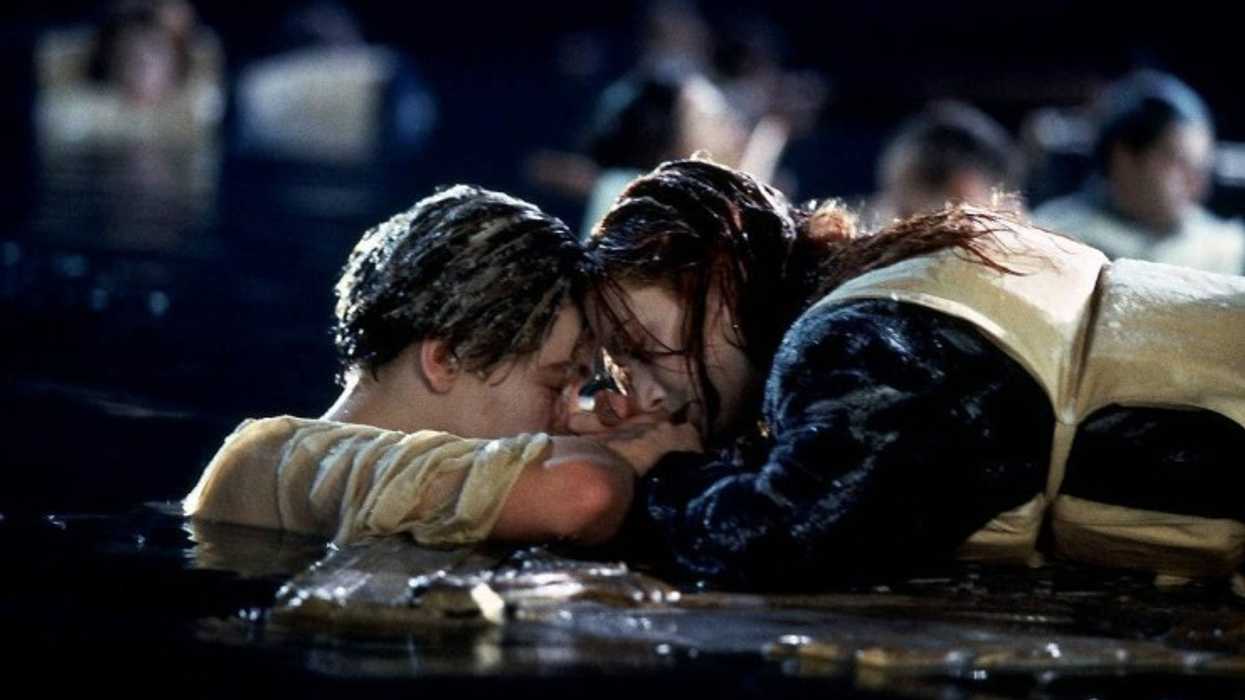
If you want to get in a fight with your significant other, watch Titanic and, at the end, blame Rose for Jack's death. It never goes over well.
The 1997 blockbuster was the biggest movie in the world for a very long time, and spawned a debate that has lasted since it came out: how can you survive at the end, and was there room on the door for both Rose and Jack?
There was even a Mythbusters episode about it.
In a recent interview for The Hollywood Reporter, James Cameron, a man who has spent more time studying the wreck than almost anyone alive, revealed his personal survival strategy.
Let's dive in.
Solo, Second-Class, and Out of Luck
James Cameron is a man of science. He's studied it for years, so when he makes a decision in a movie, you know it's usually based on fact. But if you ask him to theorize about what he would do in a specific scenario, he needs ot know the variables.
So, Cameron has a specific set of constraints to see how he would survive the Titanic wreck:
You are traveling alone in second class. You aren't tied down by the (noble) instinct to save family members. You aren't trapped behind the gates of third class, but you don't have the immediate "VIP" access to lifeboats that the first-class passengers enjoyed.
You’re in the middle of the pack, watching the chaos unfold.
This is a scenario Cameron has played out in his mind many times.
“I think there were interesting ways to what-if or second-guess the whole thing,” Cameron says. “One I like to play with my Titanic experts is — with what we know now, and if you had the captain’s ear — how could you save everybody? The other is: What if you’re a time traveler, you go back and want to experience the sinking, and your little time-travel thing that gets you back fails, and you’re like, ‘Oh f–k, I’m really on the ship, I’ve got to get off it.'”
The "Jump Early" Strategy
According to Cameron, the biggest mistake most passengers made was staying on the ship too long. As the story goes, many people simply couldn’t believe the "unsinkable" ship was actually going down. By the time they realized the danger was real, the lifeboats were gone or rowing away.
That was stupid, NFS got you killed.
Cameron’s move? You jump.
The trick is to stand on the side of the ship and wait for a lifeboat to be lowered during the early stages of the evacuation. As the boat hits the water and casts off, you take the plunge.
In Cameron's words:
“Most people wouldn’t have had the courage to jump into the water,” Cameron says. “They couldn’t quite believe that the ship was really going to sink. But if you knew for sure it was going to sink and you weren’t on a lifeboat, you jump in the water next to the boat the second it casts off. Once they rowed away, you were screwed. Are they going to let you drown when Titanic is still there and everybody is watching? No, they’d pull you in, and the officers would go, ‘Well, f–k, there’s nothing I can do about that.’ Boat four would be a good one for this.”
Why This Works (Psychologically)
You might think the people in the boat would push you away to avoid capsizing, but Cameron argues that social pressure is your greatest ally in those first few minutes.
Because the lifeboat is still close to the ship's rails, where hundreds of people are watching, the passengers in the boat are under a "moral spotlight."
They aren't going to let you drown while an audience of peers is staring them down. They’ll pull you in, and by the time the officers realize there’s an extra person on board, the boat is already rowing into the darkness.
That is sound logic, and if I ever find myself in a time warp, I'll do just that.
Jack Dawson’s Fatal Logic
Now, we know from Cameron's movie that Jack and Rose actually stay on the boat way too long. They're even on there when it breaks apart.
Cameron explains that while this was the "heroic" cinematic choice, it was based on the limited information Jack had.
Jack didn't know that rescue wouldn't arrive for hours. He was trying to minimize time in the 28-degree water, which makes sense until you realize that waiting means you’re fighting 1,500 other people for a spot on a piece of debris.
And that spot on the debris is what has launched a thousand think pieces.
Turns out jumping early may save you a fight with your spouse later.
- YouTube www.youtube.com
Summing It All Up
Here's the question you have to ask yourself now: Would you have the guts to jump into 28-degree water before the ship even looked like it was sinking?
Let me know your own "Titanic survival plan" in the comments.