“That’s All You Had To Say”: Breaking Down This 'Pulp Fiction' One-Liner
A line that presents brotherhood like no other!
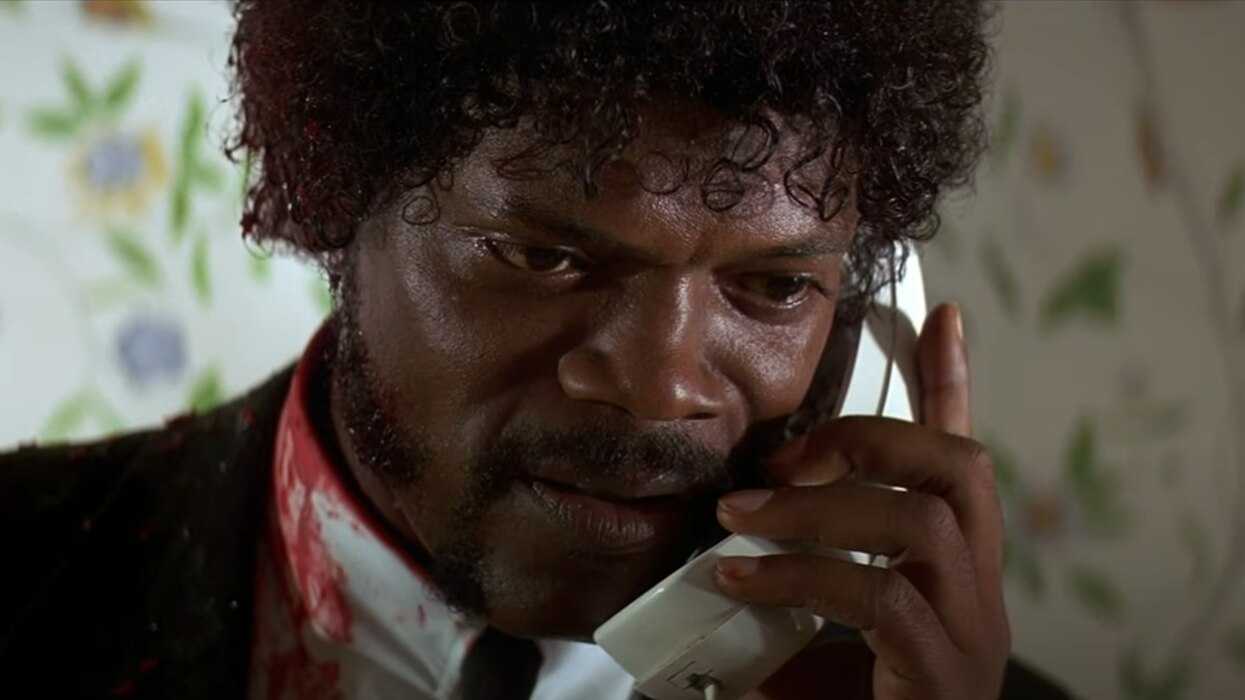
Pulp Fiction (1994)
“Trust works in a weird way,” my mom says all the time. I never quite understood what she meant by this. So you’re telling me, I’m supposed to believe that they’re going to come through just because they said so?
Then, when I saw Quentin Tarantino’s Pulp Fiction, those words started making sense. That scene in which Jules Winnfield (Samuel L. Jackson) calls up Marsellus Wallace (Ving Rhames), trying to get away with a blood-soaked vehicle and corpse. “That’s all you had to say,” Jules exclaims excitedly as he hangs up the phone, relieved that he will be able to evade the law, clean, once again.
In this article, we’ll analyze how “That’s all you had to say” is the purest show of trust between a hitman and his gangster boss.
The Story And Themes (In Context To Jules and Vincent)
A one-of-a-kind non-linear narrative, Pulp Fiction interweaves multiple stories centered around Los Angeles criminals, among whom hitmen Jules Winnfield and Vincent Vega (John Travolta) are one of the main focus threads.
Jules and Vincent are on a mission to retrieve a missing briefcase from their boss’ double-crossing business partner, Brett, which leads to accidental chaos. Later, Mia, Marsellus’ wife, who was being escorted by Vincent while he was out of town, meets with a near-fatal mishap after she overdoses on heroin while with Vincent.
Finally, the film culminates in Jules telling Vincent that he wants to quit the life of crime, after he defuses a robbery at the diner where he and Vincent are sitting.
The central theme of Pulp Fiction is nihilism and existential uncertainty. At the same time, I’ve always felt that it’s one of the best explorations of the “bro-code.” In Pulp Fiction, the relationship between two male characters is irrelevant when it comes to the “bro-code”. Be it Wallace cleaning up Jules’ messy act as if it were his own (okay, technically somewhere it was, considering he worked for him), or Butch saving Wallace despite their animosity, maybe real men, gangster or white-collar, are just simple creatures with compassion.
Here’s What Led To The Scene
Early in the film, Jules and Vincent were at Bret's apartment to retrieve the missing briefcase. The job was a cakewalk for these two seasoned hitmen, and things had wrapped up as expected—the briefcase was recovered, and they had taken one of Brett’s associates, Marvin, as their captive.
While on the road, the two hitmen are discussing their narrow escape when Jules declares that he is quitting for good. The narrow escape was a sign from God that it is time to quit. Vincent disagrees and turns to Marvin for his opinion. A gun in his hand, he is talking to him when BANG! There is an explosion of blood in the vehicle! Vincent has shot him, right in his face, accidentally. Jules freaks out, considering their plight, driving a bloody car with a corpse down the city streets in broad daylight. Vincent is equally baffled but continues to nervously defend the mishap as an accident.
Jules quickly calls up the only friend he has in the city to hide the car until they can find a way out of the predicament..
The Scene
At his friend Jimmy’s house, who’s terrified of his wife, Jules, with Vincent, stands in the kitchen, hearing an earful from Jimmy, who’s losing his mind at the dead man in his garage and his blood-covered friend in his kitchen. He clearly tells Jules that he has about an hour to get his act straight and leave.
Jules calls up Marsellus, the only one who can actually help him out with cleaning this mess.
When Marsellus gets his call, he is by the pool, chilling. Jules tells him about the situation, but Marsellus doesn’t look freaked out; rather, he engages in playful banter before saying what Jules was dying to hear.
How The Line Is All About Bro-Code And Trust
Jules does the dirty job for Marsellus for money and security in a line of work where life is uncertain. Although Jules is a hitman, Marsellus is his safety net against legal troubles. This is the understanding on which their professional relationship rests.
Therefore, it is only natural that Jules should seek Marsellus' help. At the same time, over the years of service, their bond is no longer transactional.
Jules' trust in Marsellus speaks of their closeness and brotherhood. It shows how they are dependent on each other. The informal conversation suggests that the trust between them is indelible.
Simultaneously, the line works miraculously well for building mystery around The Wolf (Harvey Keitel), the man who has a reputation for cleaning such messes. It highlights the trust that both men have in The Wolf. Jules’ relief is not only an amazing prologue to Keitel’s character entry in the narrative, but also shows the understanding between these men in crime.
If you think about it, at least at the grassroots levels, civilization practically runs on verbal commitments. I guess it must be a beautiful feeling to be able to trust someone enough that you wouldn’t think twice before betting your life for them. Thank you for rubbing it in our face, Jules!
- How Did Fellini's Influences Directly Inspire Tarantino's 'Pulp Fiction' ›
- Watch: If You Turn the Sound Off, 'Pulp Fiction' is Still Brilliant. Here's Why ›
- The Meaning Behind Pulp Fiction’s “Royale with Cheese” ›
- How Pulp Fiction Hacks the Three-Act Structure ›
- Everything You Can Learn From the 'Pulp Fiction' Script ›
- 'Pulp Fiction' Gets Deconstructed in This Full-Length Film Analysis ›
- Ezekiel 25:17: The Pulp Fiction Scene That Turned Samuel L. Jackson Into a Legend ›
- Unpacking the Dark Legacy Behind the Gold Watch in Pulp Fiction ›
- The Line in ‘All About Eve’ That Both Warns and Foreshadows | No Film School ›
- Chuck Norris Turned the Classic Western Into the Modern Actioner With This One Line from ‘Lone Wolf McQuade’ ›