The Meaning Behind Pulp Fiction’s “Royale with Cheese”
Tarantino transformed a casual chat about McDonald’s into film history. We look at how and why this moment endures.
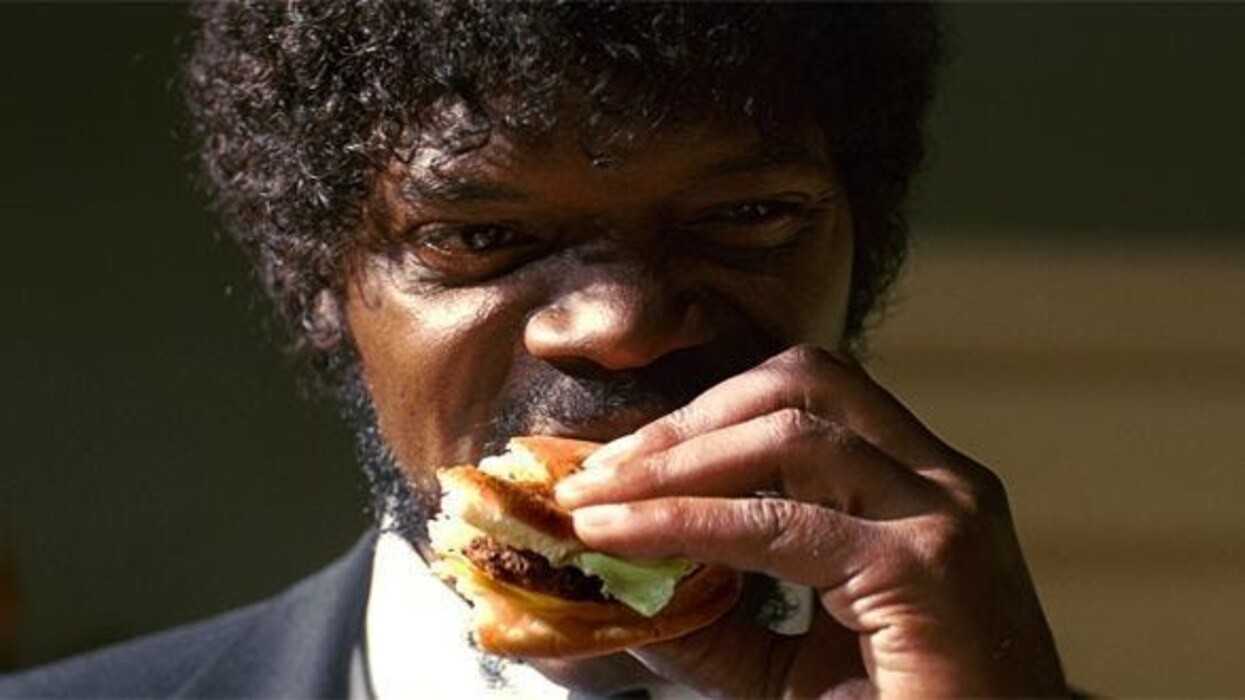
'Pulp Fiction'
In a Chevy Nova, two men in black suits cruise the streets of Los Angeles. Although they are currently just coworkers discussing McDonald’s, the world views them as hitmen. Vincent (John Travolta) informs Jules Winnifield (Samuel L. Jackson) that a Quarter Pounder with Cheese is known as “Royale with Cheese” in Paris. It’s the most ordinary conversation, but Quentin Tarantino makes it unforgettable.
The question is, why? Why has a throw-away fast-food observation become one of the most iconic and quoted movie lines of the last three decades? The answer lies not in the burger itself, but in how the scene is built, what it reveals about character, and how Tarantino redefined what movie dialogue could be.
The Scene: A Masterclass in Mundanity
The Calm Before the Hit
Nothing urgent is happening in the narrative. Vincent and Jules are en route to pick up a briefcase for their boss, Marsellus Wallace (Ving Rhames). Tarantino uses a subdued digression to postpone the violence, which we know is inevitable. They talk about the “little differences” Vincent observed in Europe rather than their strategy or goals. The contrast is striking: two men with the capacity for extreme brutality are calmly discussing the semantics of cheeseburgers. The scene really comes to life because of that dissonance.
The Dialogue Deconstructed
It’s not just the punchline that's magical. After explaining that “Quarter Pounder” has no meaning in other countries due to the metric system, Vincent quips nonchalantly, “They call it a Royale with Cheese.” Amused, Jules inquires as to whether they have another name for a Big Mac. “Le Big Mac,” Vincent responds. It has a loose, humorous, and meandering rhythm. With its inquisitiveness, pauses, and scathing little revelations, it sounds like authentic conversation. Tarantino masterfully captures the rhythm of ordinary conversation and transforms it into a film.
The Art of the Digression
Building Character Through Trivia
The conversation instantly strengthens Vincent and Jules’ bond. Not in a profound sense, but rather as a “guy who’s been abroad and won’t shut up about it” kind of way. Jules is genuinely intrigued, and his responses show that he is more than just a heartless murderer. In a few lines, we see them as coworkers making jokes on their commute rather than as hitmen. The scene lingers because of its relatability.
Creating Verisimilitude
According to Tarantino, characters should sound like actual people who exist outside of the story and not just discuss the plot. Exhibit A is this scene. He gives his characters a sense of realism by allowing them to indulge in digressions. It involves more than just conversation; it involves using words to create a world. For this reason, the exchange has endured longer than countless other “important” speeches in movies.
Cultural Archeology: Truth, Fiction, and the Metric System
Fact-Checking the “Royale with Cheese”
Yes, it’s real. Since “Quarter Pounder” has no metric meaning in France, McDonald’s does serve a “Royal with Cheese.” The name changes, but the burger remains the same. Similar modifications are found in other nations; for example, it was formally known as a “McRoyal” in Israel and a “Hamburger Royal Käse” in Germany. The line is effective because it is based on a real cultural oddity rather than a joke.
Observation or Inspiration
Did Tarantino discover this while traveling? Did he get it from his compulsive pop culture trivia or from a friend? It’s unclear exactly where it came from, but that’s not important. What counts is how he uses a small truth as a weapon to create tension, humor, and character. It’s typical Tarantino: take an ordinary detail and turn it into cinematic gold.
From Scene to Cultural Touchstone
Permeation into Mainstream
“Royal with Cheese” has been popular everywhere since 1994. It is parodied in TV comedies. Advertisements acknowledged it. In fact, tourists in Europe attempt to order it for the joke. As a shorthand for witty, pop-savvy writing, the term has transcended Pulp Fiction itself. Not many food-related movie lines have made it this far.
Why It Still Resonates
Since the line is unrelated to politics, technology, or current trends, it hasn’t aged. It’s about curiosity, travel, and the subtle cultural differences that everyone can identify with. It’s more than just trivia to viewers who grew up watching Pulp Fiction; it’s a common language used in the film industry. People immediately understand what you mean when you mention “Royale with Cheese.”
Beyond the Burger: The Scene’s Thematic Echoes
The “Little Differences” as Motifs
Tarantino doesn’t haphazardly drop phrases. Following a spiritual awakening, Jules considers “the little differences” in his life later in the movie. Vincent’s story about fast food seems to be a thematic echo all of a sudden. The conversation about the burger wasn’t merely a filler; it introduced a theme about perspective, change, and how minor adjustments can have significant effects.
A Moment of Normalcy in a World of Chaos
This conversation feels disarmingly normal in the midst of the accidental shootings, overdose rescues, and double-crosses. That’s its secret power. It makes the film’s world feel lived-in and real. Tarantino highlights the contrast with the ensuing chaos by grounding us in normal conversation.
Conclusion
The “Royale with Cheese” scene is surprisingly straightforward: two men discussing McDonald’s in a car. On closer inspection, however, it combines cultural trivia, comic timing, character development, and even thematic setup. Finding genius in the ordinary is the pinnacle of Tarantino’s talent.
The scene reminds us that speeches and explosions aren’t the only things that can create memorable cinematic moments. Sometimes, all it takes to make movie history is two guys in a car discussing hamburgers.
- Ezekiel 25:17: The Pulp Fiction Scene That Turned Samuel L. Jackson Into a Legend ›
- 'Pulp Fiction' Gets Deconstructed in This Full-Length Film Analysis ›
- Everything You Can Learn From the 'Pulp Fiction' Script ›
- The Grandeur of the 'Pulp Fiction' Dance Scene ›
- What’s in Pulp Fiction’s Briefcase? Nothing and Everything ›
- “That’s All You Had To Say”: Breaking Down This 'Pulp Fiction' One-Liner | No Film School ›
- Everyone Misunderstands the Hand-Drawn Joke in 'Pulp Fiction' | No Film School ›
- Unpacking the Dark Legacy Behind the Gold Watch in Pulp Fiction ›
- Clocks and Katanas: Breaking Down the Iconic Basement Sequence in Pulp Fiction ›
- 10 Coldest “Before I Kill You” Lines in Cinema ›
- The Secret Behind the Iconic “Walken Pause” in ‘Pulp Fiction’ ›
- The Iconic 'Pulp Fiction' Scene That Survived the Chopping Block ›
- The Foot Massage Power Play: Why Jules and Vincent’s Debate in Pulp Fiction Was Never About Feet ›
- The ‘Coach Carter’ Speech: Unpacking “Our Deepest Fear” ›
- The Wallet Test: How the Final Scene of ‘Pulp Fiction’ Flipped the Script ›