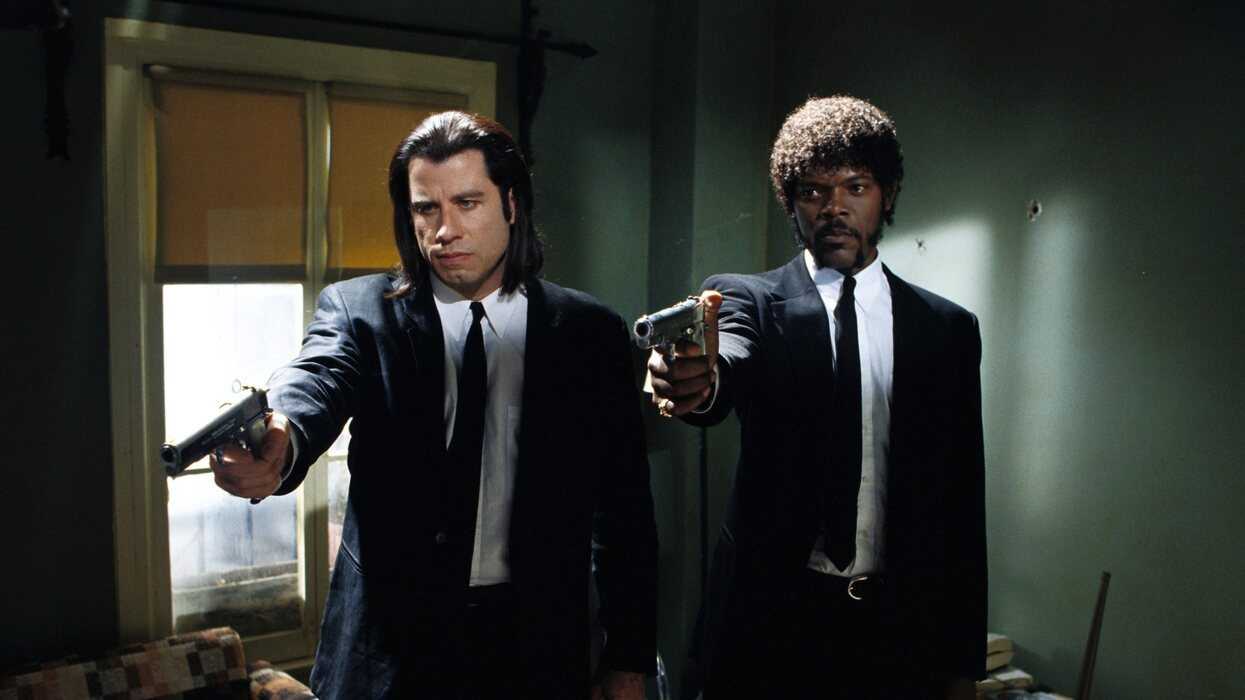
We have always seen Pulp Fiction (1994) as a proverbial rebel. It feels like it was built to defy structure. It drops you into a diner robbery, cuts to two hitmen in philosophical debate, throws in a golden briefcase, a boxer with daddy issues, and somehow ends on a burger sermon. It’s no wonder so many people think Tarantino just threw conventional narrative out the window.
But here’s the twist—he didn’t. He just disguised the structure so well that most people missed it entirely.
At its core, the three-act structure is screenwriting’s old faithful: Act One sets the stage, Act Two raises the stakes, and Act Three pays it all off. Even the wildest, most “rule-breaking” stories usually hang on to this framework.
The genius of Pulp Fiction is that it doesn’t reject this model—it hides it inside a puzzle of non-linear vignettes. And once you start looking closely, the pieces click together, revealing a complete picture that’s been there all along.
So, let’s pull this puzzle apart piece by piece. Because once you see how it fits, Pulp Fiction stops feeling chaotic—and starts showing itself as a meticulously assembled narrative with three deliberate acts.
The Three-Act Structure: A Quick Refresher
Here’s the quick-and-dirty on the three-act structure:
Act One is the setup. You meet your characters, get a feel for the world, and hit a turning point that kicks everything into motion.
Act Two is the confrontation—where stakes rise, plans go sideways, and your protagonists are tested. There’s often a “midpoint” twist that flips things around.
Act Three is the resolution. Whether it ends in victory, defeat, or something murky in between, the story finds closure.
Why does this model still matter in 2025?
Because it works. You can bend it, scramble it, even light it on fire, but the human brain still loves stories with a beginning, middle, and end—even if we’re not seeing them in that order. Most filmmakers (yes, even the weird ones) quietly use this structure as a foundation.
And Tarantino? Well, he also uses it—it’s just he hides it in plain sight.
Pulp Fiction’s Narrative Trickery
Let’s get one thing clear: non-linear storytelling doesn’t mean no-structure storytelling. Pulp Fiction may look like a collection of out-of-order short films, but if you line everything up chronologically, the classic structure jumps right out.
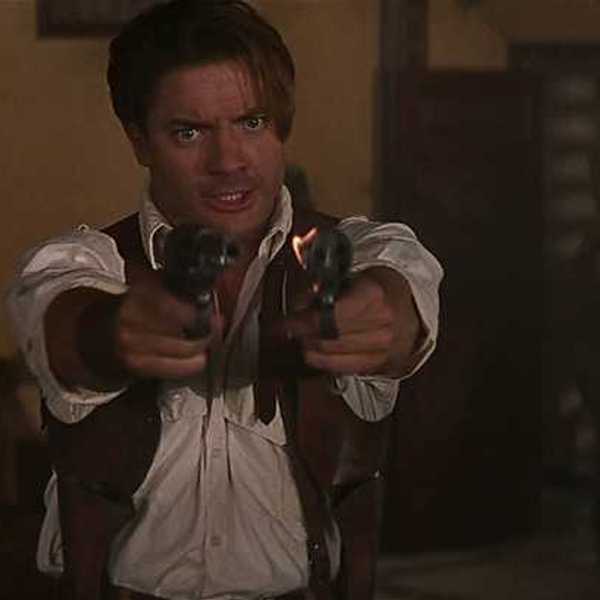
Tarantino gives us vignettes—Vincent Vega’s misadventures, Butch’s escape, Jules’ crisis of faith—but these aren’t aimless. They’re deliberately crafted to serve larger arcs. Vincent’s night out with Mia, is more than just a quirky filler—it builds tension, sets up consequences, and leads to a climax (hello, overdose scene). You may think these pieces are just floating and hovering. In truth, they are connecting.
And what’s wild is, even though the timeline jumps around, the emotional beats are placed exactly where they would be in a traditional three-act film. You just have to zoom out to see it.
Act 1: Hidden Setup—The Calm Before the Storm
Tarantino’s opening scenes may feel loose, but they’re quietly laying the foundation. We start with “Vincent & Jules’ Divine Intervention”—the banter, Big Kahuna Burger, the Ezekiel 25:17, the shooting. All this goes beyond flavor and sets up character dynamics, the mysterious briefcase, and Jules’ inner conflict, which becomes central later.
Then we jump to Butch (Bruce Willis), the washed-up boxer, being paid by Marsellus Wallace (Ving Rhames) to throw a fight. That scene? It’s pure setup. You meet Butch’s quiet resistance, Marsellus’ looming presence, and a conflict waiting to explode.
These early pieces don’t scream “Act One,” but they do exactly what an Act One should: introduce the players, the stakes, and the pressure cooker they’re all sitting in.
Tarantino’s just swapping out traditional exposition for hitman small talk and breakfast violence.
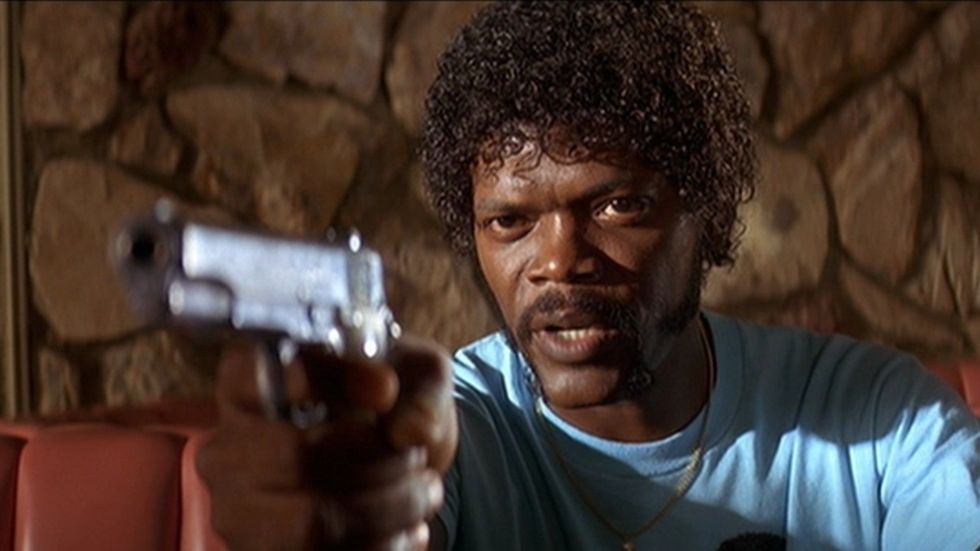 'Pulp Fiction' Credit: Miramax Films
Act 2: Confrontation—The Web Tightens
Now the pressure builds. Pulp Fiction’s Act Two is chaos in a suit—and yet, everything escalates with precision.
The midpoint shift is sly. It’s not a gunfight or a big reveal—it’s the diner. “Pumpkin” (Tim Roth) and “Honey Bunny” (Amanda Plummer) try to rob the place. It’s the same scene we saw at the start—but now, we return to it with new context. Jules (Samuel L. Jackson) is mid-philosophical awakening, and suddenly, this low-stakes robbery becomes a high-stakes moral test.
Elsewhere, Vincent (John Travolta) deals with Mia’s (Uma Thurman) overdose. Butch kills a guy in the ring, betrays Marsellus, and goes on the run. Every character is colliding with consequences. Every thread tightens.
The pacing might feel casual, but don’t be fooled. This is classic Act Two material—rising tension, converging storylines, and characters pushed to their limits.
Act 3: Resolution—The Hidden Payoffs
You might not spot it immediately, but Pulp Fiction’s third act delivers hard. Jules, after his “moment of clarity,” decides to walk away from violence. His monologue to Pumpkin—complete with a wallet labeled “Bad Motherf****r”—is badass as usual, but it’s also a closure.
Butch, after a gory chainsaw-style misadventure in the pawn shop, finds a way out from not only Marsellus’ vengeance but Maynard’s, Zed’s, and The Gimp's as well. His arc wraps up not with glory, but survival and redemption.
And then there’s the diner—again. This time, instead of shots fired, we get resolution. Jules lets the robbers go, sparing them in a way that mirrors his own turning point.
The structure is quiet, but airtight. By the time the credits roll, every major arc has been resolved.
Tarantino just makes you work for this resolution.
Why This Structure Works So Well
Here’s the trick: Tarantino keeps you guessing with structure, but grounds you with character. By rearranging time, he keeps the audience off-balance, but he never lets the arcs drift. Each lead—Jules, Vincent, Butch—goes through a complete transformation. You just have to untangle the timeline to see it.
What’s brilliant is how Tarantino uses structure like a sleight of hand. It’s there, but it’s not obvious. And that’s exactly why it works. You’re pulled in by the cool dialogue, the bizarre moments, the briefcase glow—but what keeps the story satisfying is that deep, invisible architecture.
The nonlinear approach, instead of replacing the structure, enhances it.
Key Takeaways for Writers & Film Lovers
Writers love to “break the rules,” but Pulp Fiction is proof that the real magic happens when you know the rules and twist them just enough. The structure isn’t a cage—it’s scaffolding. You can build something wild on top of it, as long as the foundation is solid.
Want to play with time? Sure. Mix genres? Go for it. But don’t forget to give your characters arcs, your scenes purpose, and your story some kind of payoff. Tarantino didn’t throw spaghetti at the wall. He only made it look like he did.
There’s a reason Pulp Fiction still hits thirty years later. And contrary to popular opinion, it has nothing to do with being cool. It hits the spot even today because it’s calculated. And that’s what makes it worth studying.
The Magic of Disguised Structure
Pulp Fiction couldn’t have abandoned the three-act structure—no good story does. It only hacked it. Tarantino reshuffled the deck but still dealt the same essential cards: setup, confrontation, and resolution. The movie feels wild, but lands clean. That’s no accident.
So next time you watch it, look past the Royale with Cheese and glowing briefcases. Underneath the stylish chaos is a blueprint—one that proves great storytelling doesn’t reject structure.
It bends it. It plays with it. And it hides it just well enough that we don’t see it until we really start looking.
- Watch: If You Turn the Sound Off, 'Pulp Fiction' is Still Brilliant. Here's Why ›
- Quentin Tarantino Reveals Why His 'Pulp Fiction' Prequel Never Happened ›
- Tarantino Explains Nonlinear Storytelling in this 'Pulp Fiction' Video Essay ›
- Everything You Can Learn From the 'Pulp Fiction' Script ›
- The Grandeur of the 'Pulp Fiction' Dance Scene ›
- How Did Fellini's Influences Directly Inspire Tarantino's 'Pulp Fiction' ›
- What’s in Pulp Fiction’s Briefcase? Nothing and Everything | No Film School ›
- “That’s All You Had To Say”: Breaking Down This 'Pulp Fiction' One-Liner | No Film School ›
- Everyone Misunderstands the Hand-Drawn Joke in 'Pulp Fiction' | No Film School ›
- The Wolf’s Goodbye in 'Pulp Fiction': One of The Coolest Exits Ever Written | No Film School ›
- Uncovering 8 Storytelling Secrets Pulp Writers Knew ›
- The Wallet Test: How the Final Scene of ‘Pulp Fiction’ Flipped the Script ›