Did You Know? The Icy Breath in The Exorcist Was No Movie Trick
A refrigerated set turned Regan’s bedroom into a horror freezer.
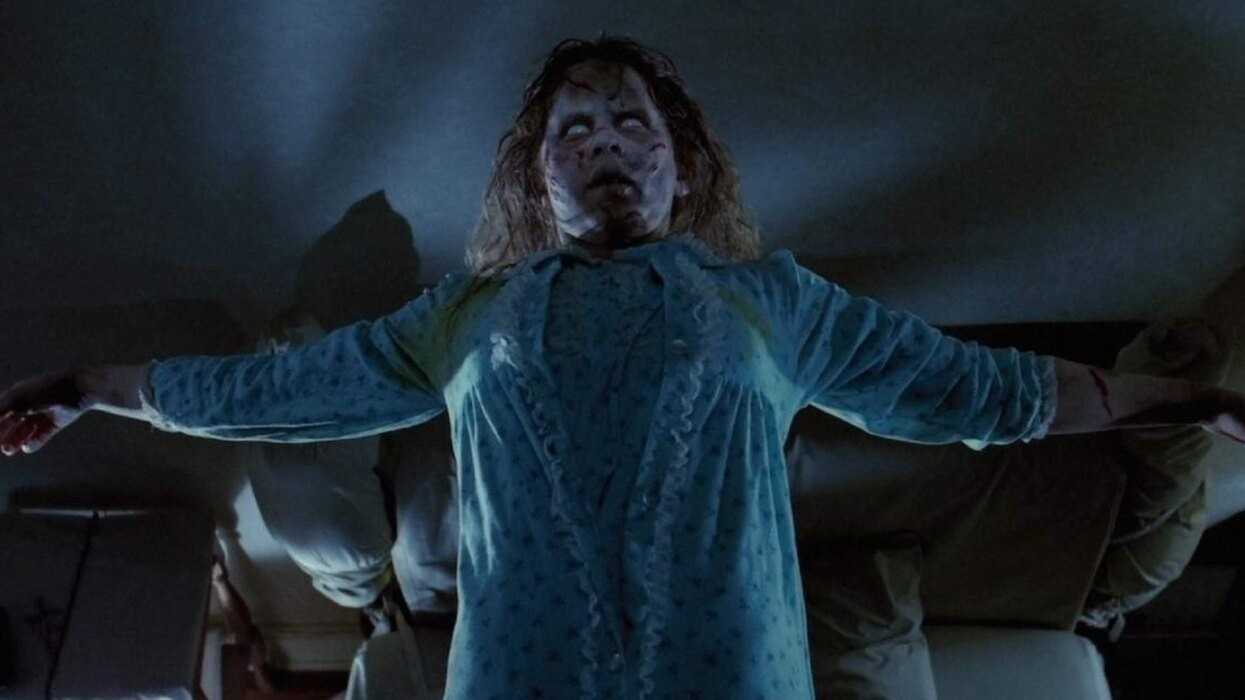
The Exorcist (1973)
The image is burned into horror history: Father Merrin (Max von Sydow) standing in the doorway of Regan’s (Linda Blair) bedroom, his breath visible in the dim, unholy light.
It’s a detail that feels almost too real, the kind of thing your brain clocks even if you don’t consciously notice it. And that was the point. In a film famous for spinning heads and projectile vomit, it was the small things—the human breath hanging in the air—that made The Exorcist (1973) feel like it was happening right in front of you. So, how did director William Friedkin pull it off? No smoke machines. No cheap visual effects.
The solution was as simple as it was punishing: turn a soundstage into a walk-in freezer.
This article dives into one of the most extreme filmmaking choices of the 1970s, unpacking the conception of the refrigerated set, the grueling production that followed, and the legacy of this chilling decision.
The Conception: Friedkin’s Obsession with Authenticity
A Director’s Vision
The idea in the story was that anyone who enters the possessed Regan’s bedroom instantly feels the horrid, bone-chilling cold. The only way to show the cold on screen was through visible breath.
William Friedkin was not interested in making a ghost story that felt like a campfire tale. He wanted The Exorcist to look like a documentary of a supernatural event, a film so grounded in physical reality that even the wildest moments carried weight. Let’s say little moments like these in The Exorcist could be the inspiration behind the genesis of the Found Footage genre.
Every choice came back to authenticity. If the audience bought into the environment, then the horror would feel less like fiction and more like something terrifyingly possible.
The Problem with Fake Breath
So, as the trouble started with something seemingly minor—cold breath—some standard Hollywood tricks were considered, like blowing menthol vapor or using chemical sprays. On a set flooded with hot lights, the artificial vapor dispersed too fast, hung unnaturally, or distracted the performances.
None of this aligned with Friedkin’s realistic vision. Below the par methods were a no-go; the effect had to be as real as the priest’s desperation on screen.
The Radical Solution
So, he made a decision that now sounds almost unthinkable: chill the set itself. Instead of faking it, the production team would transform Regan’s bedroom into an icebox, forcing real frost, real breath, and real shivers.
The idea wasn’t to trick the camera—it was to trap the actors in conditions so severe their bodies couldn’t help but reveal the truth.
The Production: Building a Freezer on Stage
Engineering the Chill
Turning a Georgetown bedroom into a meat locker wasn’t something a regular soundstage could handle. Friedkin worked with set designers and industrial HVAC specialists to install massive refrigeration units, the kind used in warehouse freezers. It cost $50,000 (almost $386,000 in 2025), but finally the set was carefully insulated so the cold air couldn’t escape, essentially creating a sealed box of icy dread.
The Temperature of Terror
The result was extreme: the room was kept as cold as -20°F to -30°F (-34°C), a far cry from the usual 70°F comfort zone of a soundstage. Crew members huddled in parkas and gloves just off-camera, their breath fogging up as they prepared to shoot.
Meanwhile, the actors had no such luxury—exposed to the chill in thin nightclothes, their visible shivering and pale faces were as authentic as the breath clouds swirling from their mouths.
The Filming: A Trial by Ice
The Actors’ Ordeal
For Ellen Burstyn (Chris MacNeil), the conditions were brutal. Dressed in nightwear, she had to deliver lines while her body fought the cold. Max von Sydow, though only in his mid-forties, was tasked with playing a frail old priest. The freezing air added a layer of exhaustion that no makeup could replicate. Even Linda Blair, bundled under layers of bedding, wasn’t entirely shielded from the chill during wide shots. Crew members were bundled up like they were working in the Arctic, but the actors had to endure it raw, their discomfort permanently captured on film.
Capturing the Authentic Moment
The gamble worked. When Merrin first enters the room, his labored breath fills the air like smoke from a dying fire. During his exchanges with Father Karras (Jason Miller), the breath hangs between them, turning dialogue into a battle fought in visible frost.
Beyond the breath, the cold lent the room an atmosphere of lifeless stillness—walls sweating frost, actors straining against discomfort. What could have been a gimmick became one of the most immersive textures in horror cinema.
Behind the Scenes: Trivia and Legacy
Unintended Consequences
The cold created as many problems as it solved. Camera equipment occasionally seized up, lights flickered, and actors had to fight chattering teeth mid-line. Crew members joked about working in a giant freezer, but Friedkin was relentless. His reputation for pushing boundaries—sometimes dangerously so—was already cemented, and stories like these fueled the mythos around The Exorcist’s chaotic shoot.
A Testament to Practical Effects
Looking back, the refrigerated set stands as a perfect example of practical effects doing what no CGI can. The authenticity was chillingly visual, and it seeped into the actors’ performances. The pain, the discomfort, the shivering—all of it was real. That’s why, fifty years later, filmmakers and audiences alike still feel the weight of that cold room pressing through the screen.
Would This Fly Today?
By today’s standards, this method would likely never make it past union safety regulations. Freezing cast and crew for hours on end would be considered reckless, if not outright dangerous.
But in the 1970s, when New Hollywood directors were constantly tearing up the rulebook, extremes like this were part of the job.
The Chill That Defined a Classic
The refrigerated set of The Exorcist was a bold experiment that shaped the film’s performances, atmosphere, and identity. By forcing actors into the same hellish conditions as their characters, William Friedkin ensured every shiver, every puff of frost, carried an edge of truth.
That’s why The Exorcist remains terrifying half a century later. As the audience watches possession unfold, they also breathe the same frozen air, feeling the same suffocating cold. It’s a reminder that sometimes, the scariest thing in cinema isn’t the demon in the room, but the brutal reality of how far filmmakers will go to make you believe in it.
- William Friedkin Opens Up About the Shocking Legacy of 'The Exorcist' and Its Production ›
- Watch: William Friedkin Breaks Down the Secrets of 'The Exorcist' on its 45th Anniversary ›
- You Can’t Unsee It: The Most Shocking Moment in The Exorcist ›
- Watch: Audiences Freak Out at Screenings of 'The Exorcist' in 1973 ›
- This Scathing Review of 'The Exorcist' Reminds Us How Scary the Film Really Is ›
- How 'The Exorcist' Changed the Sound of Horror ›
- We're Using Our Beat Sheet to Dissect William Friedkin's 'The Exorcist' ›
- Why Does 'The Exorcist' Have Such a Conservative Ending? ›