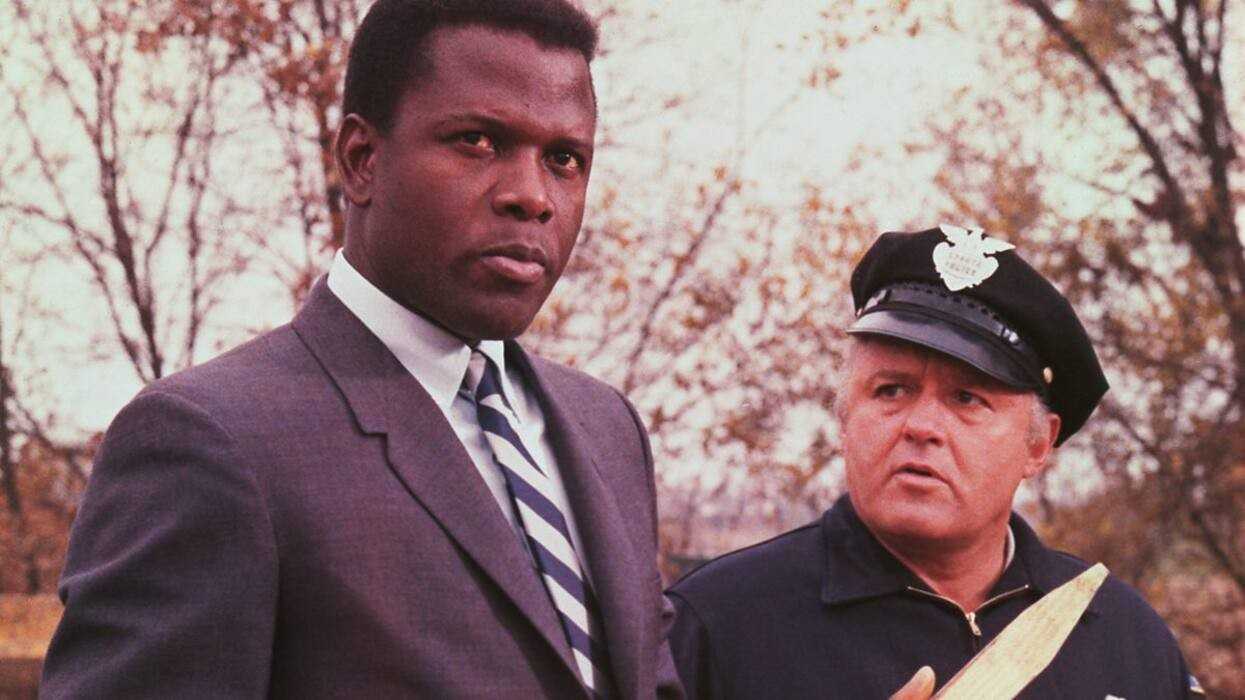
The Sparta, Mississippi precinct. The atmosphere is tense. Exasperated, Chief Bill Gillespie (Rod Steiger) has just taken Harvey Oberst (Scott Wilson) into custody as a suspect in the Colbert murder case. A Black detective from Philadelphia, Virgil Tibbs (Sidney Poitier), is called in—not as a visitor, but as a necessary threat to the town’s presumptions.
Tibbs finds an important detail: Oberst is left-handed, a “southpaw,” but the analysis of “the angle of the fatal blow” indicates that the blow came from a right-handed man. Gillespie is reluctant to accept a Black man’s analysis. That’s why it irritates and unsettles him even more when his deputees confirm the validity of Tibbs’ analysis. In that fit of frustration, and to ridicule Tibbs’ self-assurance, he says Virgil is a funny name for a “Negro” and asks what people call him in Philadelphia.
Tibbs stops, meets Gillespie’s gaze, and shoots back with a restrained anger:
“They call me Mister Tibbs!”
It may sound like a simple answer to a twisted question, but it’s so much more than that. In the middle of a conversation, it deals with racism, demands respect, and declares identity.
How that moment came to be, and why it still has resonance decades later—that’s what we are going to find out here.
The Crucible: In the Heat of the Night and a Nation on Edge
A Story for Its Time
In the Heat of the Night was released in the midst of the Civil Rights Movement. Everywhere, racial violence, voter suppression, and segregation were headlines. It was revolutionary for Hollywood to focus on a story about a Black detective who was not only involved in but was essential to solving the murder of a white man in the Deep South. The layers of racism in small towns—legal, personal, and institutional—were not held back in the movie.
Virgil Tibbs: A New Kind of Hero
Tibbs is not merely the “outsider” or the “Black helper”; Poitier’s character is well-educated, rational, and systematic. He challenges presumptions by using forensics, witnesses, and scientific perspectives. Instead of getting carried away by the anger, he exposes the truth.
The prevalent stereotypes of Black people as emotional, submissive, or comic relief were in contrast to that strategy. Tibbs is adamant about being a complete person, with dignity that no man—particularly a racist chief—can take away.
Crafting the Line: From Script to Cinematic History
The Screenwriter’s Intent
The screenplay by Stirling Silliphant puts Tibbs in a situation where disrespect is unavoidable, but he is compelled by reason and proof—left hand vs. right blow.
The statement, “They call me Mister Tibbs!” comes across as a sharp reaction to a racist provocation rather than an impetuous insult. Since Tibbs won’t settle for anything less than what a man deserves, the setting demands formality (“Mister”). He is given the opportunity to say his name in the script.
Norman Jewison’s Direction
Jewison meticulously sets up the scene of Harvey Oberst’s arrest, revealing one by one the angle of the blow, the locals’ testimonies, and the physical inspection of Oberst’s hands. In order to create a tense situation when the insult is delivered, he frames Gillespie’s uneasiness, the deputies’ anxiety, and Tibbs’ poise.
Before the verbal altercation, Jewison uses subtle visual cues, such as Gillespie’s expression—tightening jaw and body language, the officers’ shifting eyes and uneasy silence, and Tibbs’ composed demeanor and upright posture.
The Actor’s Ownership: Sidney Poitier’s Power
Poitier doesn’t overdo it when delivering the line. He doesn’t yell, his eyes are firm, and his body in control. He is pushed to a corner by an insult rather than force after being baited, and he responds with precision.
The understatement creates the effect: a Black man from Philadelphia is mocked for his name—but he doesn’t recoil; instead, he asserts his respect.
The moment is electrified by that act of ownership.
Impact Within the Film
Power Dynamics Shift
The argument against Oberst breaks down after Tibbs calls attention to the angle of the blow and left-handedness. Gillespie acknowledges that he erred in assuming guilt because of his position and race. Gillespie and the town have to deal with Tibbs, who used to be an outsider. It tilts the balance.
Change in Gillespie’s View
Gillespie, who is firmly rooted in prejudice from the start of the film, is shaken. He and the other white characters have been compelled by Tibbs to accept the importance of reason, proof, and dignity. Their initially tense partnership starts to change. Although Gillespie isn’t completely changed, this sure is a moment of reflection.
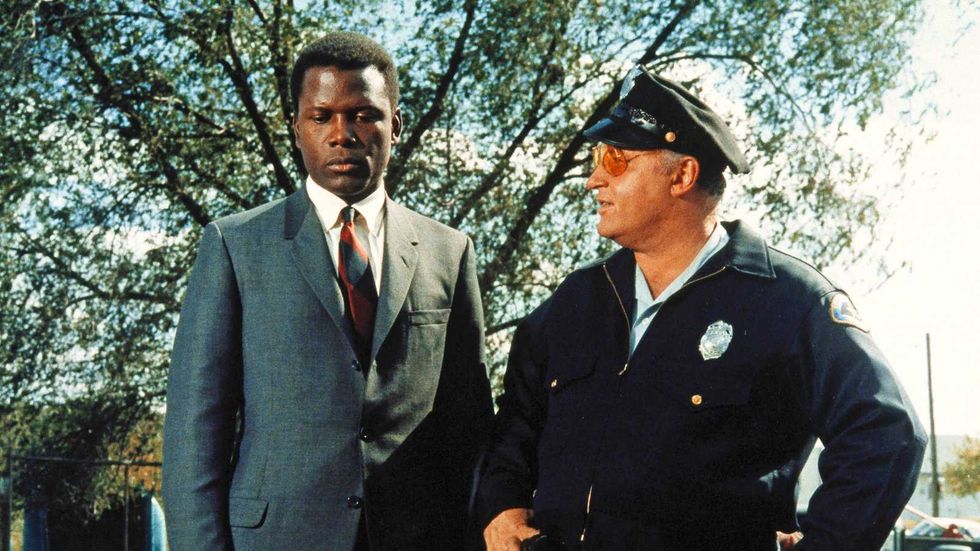 'In the Heat of the Night'Credit: United Artists
The Enduring Echo
A Rallying Cry Beyond the Screen
The phrase “They call me Mr. Tibbs!” became a catchphrase for protesting racism and disrespect after the movie’s premiere. It had ammunition for the emotions. People who felt they were robbed of their names, their value, and their dignity found resonance in it. When someone was insulted, ignored, or subjected to oppression, it became a phrase they could use.
Creating a Storytelling Generation
In the Heat of the Night demonstrated that you could build suspense and confront racism head-on. Black protagonists in new films didn’t have to follow clichés; they could be intelligent, self-assured, and nuanced. Filmmakers realized that the audience could respect characters who were more than their skin, more than their victimhood.
The Title of a Sequel and a Permanent Pop Culture Status
The phrase was taken directly from this scene in the 1970 sequel—They Call Me Mister Tibbs! The line has been referenced, praised, and parodied over time in TV series, comedies, and composer Quincy Jones even used it as the title for the sequel’s soundtrack album.
Even if they haven’t seen the movie, everyone understands what it means to be called “Mister Tibbs,” making it a cultural pillar
The Unwavering Demand for Respect
This goes beyond a murder mystery with a clever twist. It’s about what happens when bias and evidence collide, when someone doesn’t take insults lying down, and when a name turns into armor. The line endures because of the shift it symbolizes, not just because it is sharp. The world had to pay attention when a Black man on screen, for the first time in mainstream Hollywood, demanded not only basic respect but also insisted on its formal recognition. The wall of silence that had long barred such voices was broken by a cinematic crack.
“They call me Mister Tibbs!” was more than a dialogue—it was a declaration, and it continues to reverberate like a gavel hitting the table of American cinema.