“We Rob Banks”: The Bold Introduction That Changed Crime Films
A single line that shaped the film, its myth, and its legacy.
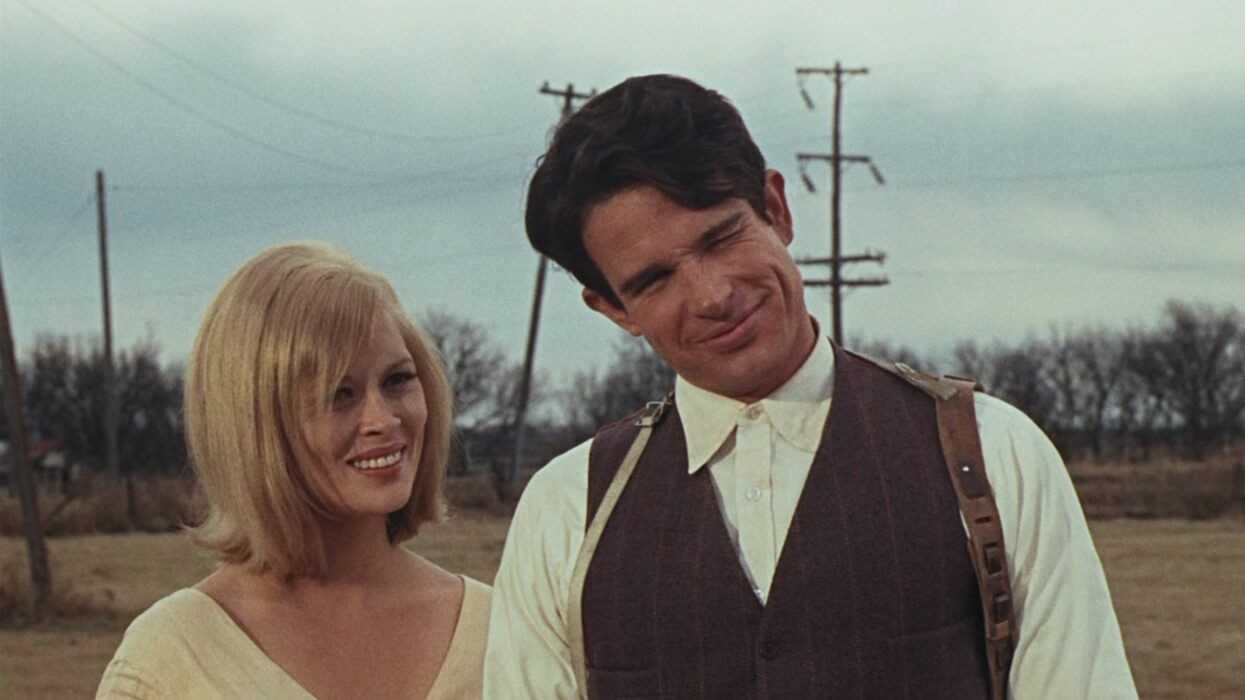
Bonnie and Clyde (1967)
“We rob banks.”
Just three words, but in Bonnie and Clyde (1967), the line lands twice and defines everything.
First, Clyde (Warren Beatty) says it to a wary farmer at a quiet homestead—calm, almost cheerful, as if he’s introducing a small business. Later, Bonnie (Faye Dunaway) repeats it to the gas-station kid C.W. Moss (Michael J. Pollard), recruiting him with the same dead-simple brand pitch.
Two speakers, same statement, doubled meaning: an introduction, then an initiation.
Plenty of movie quotes are famous. Very few are this lean, this defining, this ready-made for myth. You could see “We rob banks” as just a dialogue or as the film’s mission statement—a logo stamped on two characters who refuse to apologize for what they are.
In the pages ahead, we’ll break that moment down from every angle: the writing that forged it, the direction that framed it, the performances that sold it, the cultural nerve it hit in 1967, and the long shadow it still casts on movies and pop culture.
The Script: Forging an Identity in Three Words
David Newman & Robert Benton’s Intent
David Newman and Robert Benton avoided an old-school gangster yarn. What they wanted was a combination of modern antiheroes and a wicked sense of self-awareness. Hence the precision: not “We steal,” not “We’re crooks,” but the clean, simple, almost LinkedIn-worthy tag “We rob banks.”
The object matters. Bonnie and Clyde’s timeline is during the Depression era, and in Depression folklore, “banks” were the villains. So, naming that target turns criminal confession into folk branding. The specificity flips audience sympathy—and it does it in one beat.
Robert Towne’s Uncredited Polish
Robert Towne came in as the quiet fixer, tuning rhythms and sharpening exchanges across the film. You can feel that ear for natural, potent speech all over the dialogue—lean sentences, no fat, no throat-clearing. Whether or not he touched these exact two deliveries, his polish helped the movie speak in punchy declaratives that stick.
The Scene: Anatomy of a Cinematic Moment
Arthur Penn’s Direction: The Power of a Pause
Arthur Penn sets the farmhouse scene like a fuse: a quiet rural frame, curious locals, Bonnie and Clyde presented in a single, balanced composition.
He builds tension and releases it not with gunfire, but with a sentence. The pause before Clyde answers does the heavy lifting; the line arrives as both punchline and credo. Its staging as a statement—it’s danger delivered with a smile.
Beatty and Dunaway’s Performance: A Unified Front
Beatty’s delivery is easy, proud, unbothered—the swagger of a man who’s named his life and made peace with it. Dunaway’s response shot completes it: admiration, complicity, the “we” turning two pretty faces into one enterprise.
When she later gives C.W. Moss the same line, it functions like a password.
Say it out loud, and you’re in the club.
The Myth: Capturing the Spirit of Rebellion
1967 vs. The 1930s: A Mirror to Two Eras
In the 1930s, sticking it to banks had a built-in audience. In 1967, sticking it to The Establishment played even bigger. The movie channels both currents at once—period setting with contemporary voltage—so a simple confession sounds like a manifesto.
Critics clocked the shock: Bonnie and Clyde looked and felt new—sexier, bloodier, and morally slippier than the studio era allowed.
From Outlaws to Folk Heroes
That one sentence reframes the pair: not random thugs, but targeted rebels—romanticized, sure, but positioned. The line supplies a moral alibi and a brand identity in the same breath.
It’s why AFI later ranked “We rob banks” among the great American movie quotes: the phrase instantly conjures character, era, and attitude.
The Legacy: Echoes in Film and Culture
Influence on the New Hollywood
This film helped pry open the door to New Hollywood. Its blend of jagged violence, lyrical longing, and character-first cool signaled a shift: stories could be ambiguous, sexy, and stylistically bold—and still hit big.
You can trace a line from here to The Godfather, Taxi Driver, and Easy Rider—flawed anti-heroes, moral gray zones, and brazenly unapologetic style.
The Quote in Popular Culture
The sentence escaped the movie. It pops up in homage, parody, playlist titles, and think pieces. It’s become shorthand for stating your mission with no hedging—three words that announce intent and dare anyone to argue. AFI stamping it at #41 only cemented the meme before “meme” was a word.
Behind the Scenes: Trivia & Anecdotes
There’s more trickery behind that cool “We rob banks” line than meets the eye. Here's a little backstage tour of how this simple sentence earned its legend:
It Was Written, Not Improvised.
Turns out, Clyde’s crisp “We rob banks” wasn’t invented on set. The original Newman–Benton screenplay—viewable in archives like IMSDb—includes it word-for-word. So there's no accidental brilliance here, just intentional myth-making.
Penn Let It Play—Again
Arthur Penn wasn’t a micromanaging tyrant. When Faye Dunaway repeated the same line to recruit C.W. Moss at the gas station, Penn kept the camera rolling and let it fly. That second “We… rob… banks” has a spontaneous rush—like a verbal calling card—and it stuck, partly because Penn gave her space to make it feel real. Verified in Penn’s own production comments.
Shot on Real Soil in Texas
This isn’t some studio backlot. The farmhouse and the service station were filmed in North Texas, around Waxahachie and nearby rural spots. The genuine dust, the harsh sun—those visuals anchor the line in a specific, lived-in world. The Texan locations add texture to “We rob banks,” making it feel rooted rather than stylized.
It’s Iconic, But Not Historical
There is no record of the real Bonnie and Clyde puffing out their chests and saying, “We rob banks.” Their legend grew from a spree of real robberies—mostly banks, grocery stores, and quick-change schemes. This line is pure cinema. It’s the myth distilled, not the manhunts. The historical record backs the crimes; the line is movie magic.
More Than a Line: A Declaration
“We rob banks.”
The line works because everything around it works. Newman and Benton wrote it with ruthless economy. Towne’s polish tightens the screws. Penn frames the reveal like a joke that doubles as a thesis. Beatty and Dunaway play the words as identity, not excuse.
And the culture—1930s and 1967—does the rest—i.e., feeding the legend.
Two speakers, one sentence, a whole mythology. All this contributes to making these three words the brand mark of Bonnie and Clyde. It names the act, crowns the attitude, and turns a crime spree into cinema.