What Are the Need-to-Know Terms For Film Sets?
This glossary of lingo will make you fit in when you're on set.
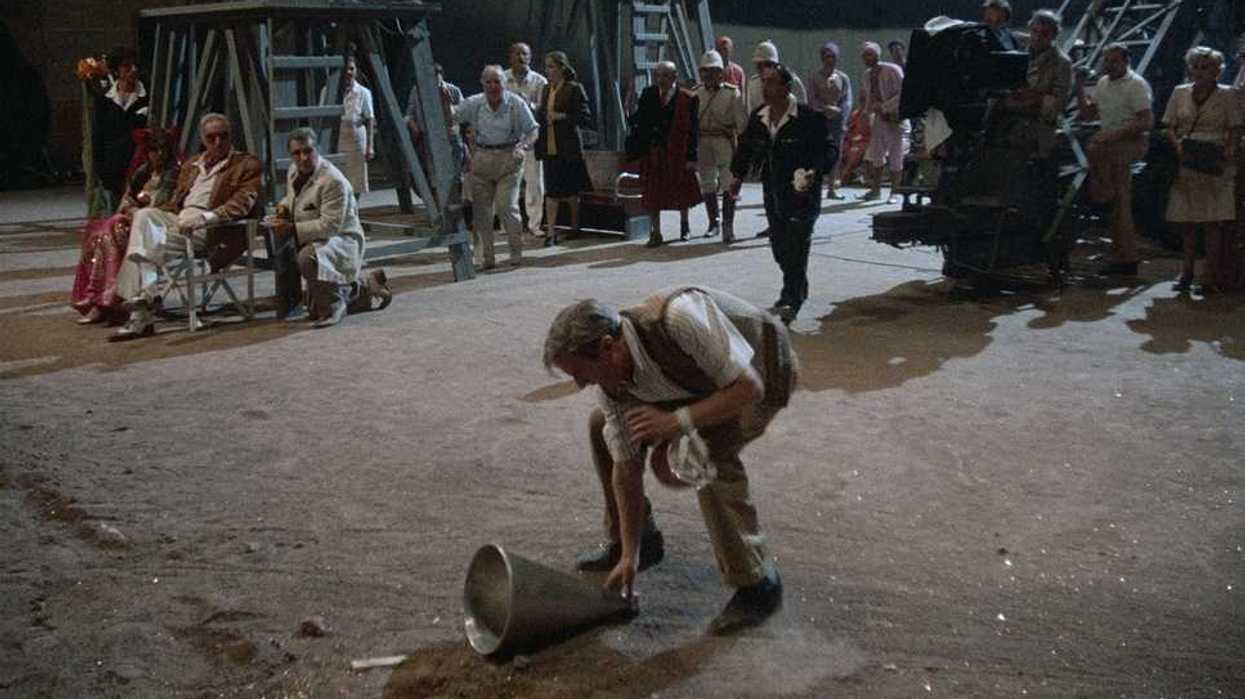
'Intervista'
Hanging out or working on set for a movie or TV show is so much fun and a privilege for all who get to do it. So when it comes time for you to visit or get your first job, you want to know all the lingo people use in order to fit in.
That's why I created this on-set lingo glossary to teach you all the things you might hear on set and what they mean.
Let's dive in.
The Glossary of On Set Lingo
🗣️ The Most Common On-Set Commands
If you only learn ten things, learn these. These are the commands that control the flow of the set.
- "Quiet on Set!"
- What it means: The 1st Assistant Director (AD) is calling for total silence. Stop moving, stop talking, and put your phone on silent. They are preparing to roll.
- "Roll Sound!"
- What it means: The 1st AD is cueing the audio department. The Sound Mixer will respond with "Sound Speed!" or "Speed!" once their equipment is recording.
- "Roll Camera!"
- What it means: The 1st AD is cueing the camera department. The Camera Operator will respond with "Speed!" or "Rolling!" once the camera is recording.
- "Slate In!"
- What it means: The 2nd Assistant Camera (AC) will bring the clapperboard (slate) into the frame, state the scene and take number, and "clap" the sticks. This is essential for syncing audio and video in post-production.
- "Action!"
- What it means: The Director's cue for the scene to begin. This is when the actors start performing.
- "Cut!"
- What it means: The Director's cue to stop the recording and the performance. Never call "cut" unless you are the director.
- "Back to One!"
- What it means: The 1st AD is telling all actors, extras, and camera operators to return to their starting positions (their "number one" mark) to reset for another take.
- "Checking the Gate!"
- What it means: After a take, the 1st AC will check the camera's sensor (or "gate," a term from the film days) for any debris like dust or a hair that might have ruined the shot. If it's clear, they'll call "Gate is good!" and the crew moves on.
- "Striking!"
- What it means: Someone is turning on a very bright light. It's shouted as a safety warning so people don't look directly into the lamp and damage their eyes.
- "Crossing!"
- What it means: A courtesy term someone calls out when they have to walk in front of the camera, especially when the crew is setting up a shot. You should always wait for the camera operator to give you a nod before you cross.
📦 Grip & Electric (G&E) Lingo
These two departments work together to shape the light. The Electric (or "Sparks") department handles power and sets up the lights. The Grip department builds everything to support the camera and, crucially, shapes the light (by blocking it, diffusing it, etc.).
- Gaffer: The head of the Electrical department; the Chief Lighting Technician.
- Key Grip: The head of the Grip department.
- Best Boy: The second-in-command for either the Grip or Electric department (e.g., Best Boy Grip, Best Boy Electric). This person is the department's lead logistician, handling gear, scheduling, etc.
- Apple Box: A simple wooden box used for a million different things: propping up furniture, adding height to an actor, leveling dolly track, or giving a crew member a place to sit.
- Sizes: Full (or "Tommy"), Half, Quarter, Pancake (or "Eighth").
- C-Stand (Century Stand): The most essential piece of gear on set. It's a heavy-duty stand used by grips to hold flags, nets, silks, and small lights.
- Flag: A solid black piece of fabric in a metal frame, used to "cut" light and create shadows.
- Stinger: An extension cord.
- Juicer (or Spark): An electrician.
- Sticks: A tripod.
- Dolly: A wheeled platform that the camera is mounted on. A Dolly Grip is the specialist who operates the dolly for smooth camera movements.
🎥 Camera Department Lingo
This team is responsible for everything the camera captures.
- DP (Director of Photography): The creative head of the camera and lighting departments. Responsible for the entire "look" of the film.
- 1st AC (First Assistant Camera): Responsible for pulling focus. This is a highly skilled job that requires keeping the subject in sharp focus as they or the camera moves.
- 2nd AC (Second Assistant Camera): Responsible for operating the slate (clapperboard), managing camera media, and keeping meticulous camera reports.
- DIT (Digital Imaging Technician): On a digital shoot, this person manages all the media (memory cards), backs up footage, and often does a first pass of color correction on set.
- Video Village: The area, usually a set of monitors, where the Director, DP, and other key creatives watch a live feed from the camera.
- MOS (Mit Out Sound): "Mit Out Sound" is a German-American director's phrase for "Without Sound." It means a shot is being filmed without capturing audio.
- Room Tone: The "sound" of an empty room. The sound mixer will record 30-60 seconds of this silence to use in editing, to smooth out audio tracks and cover edits.
📋 Production & General Lingo
These are the terms that keep the entire production moving.
- 1st AD (First Assistant Director): The boss of the set. They are responsible for safety, scheduling, and keeping the entire crew working on time. They are the one shouting most of the commands.
- 2nd AD (Second Assistant Director): Manages all the off-set logistics, primarily by creating the Call Sheet and coordinating actors, extras, and paperwork.
- PA (Production Assistant): An entry-level crew member who does whatever is asked of them. This can include "locking up" a set (preventing people from walking in), relaying messages, or getting coffee.
- Call Sheet: The daily schedule for the entire production. It tells everyone what scenes are being shot, where to be, and when to be there (the Call Time).
- Blocking: The first rehearsal of a scene, where the director and actors figure out all the physical movements (where they walk, sit, etc.) before the crew and camera are brought in.
- Crafty (Craft Services): The snack and drink table, available to the crew all day. (This is different from catering, which provides the main meals.)
- Martini Shot: The final shot of the day. (Because the next shot is in a glass).
- Wrap: The end of the shooting day. When you hear "That's a wrap!" it means you are finished.
Aside from these terms, make sure you're fluent in common walkie-talkie lingo, too!
Let me know what terms I should add in the comments.
- A Complete List of Hollywood Slang ›
- Hundreds of Hollywood Terms You Need to Know ›
- Watch: Basic Lighting Lingo for First-Time Filmmakers ›
- This Cheat Sheet Contains All the Walkie-Talkie Lingo You Should Know on Set ›
- A Guide to On Set Filmmaking Lingo [W/ Visual Dictionary] ›
- 100 Dramatic Principles All Writers Should Know ›
- Meet Martini: A Film Set for AI Video That Aims to Help Filmmakers Streamline Their Shots ›