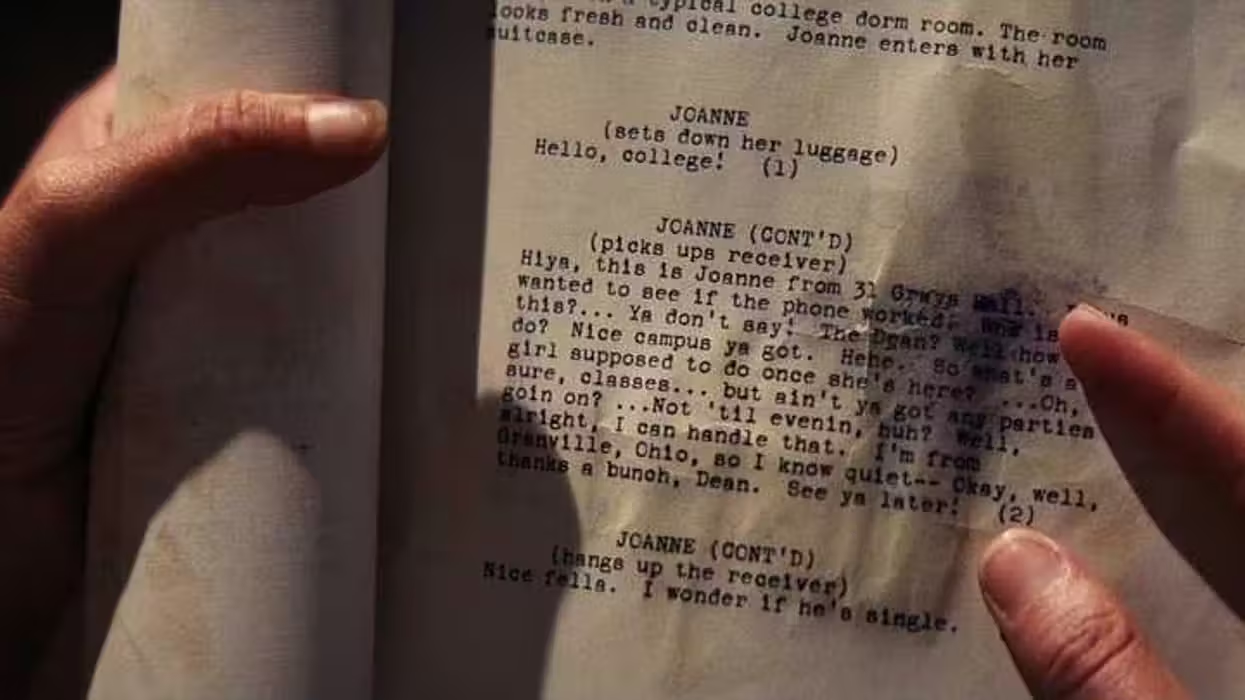
If you've ever written a script, you know what it's like to inhabit a world and its characters. You've basically lived inside the pages. You know every character's backstory, the way you'd like a line delivered and why and what it means and the reason it falls in a certain part of a conversation, and what every scene's setting looks like.
Almost none of that makes it onto the page, and the director has to build a physical world and direct performances from what's left. So how do writers and directors find that common ground without stepping on each other?
TV writer Steve Harper tackles that in a recent video for his channel, Your Creative Life. Harper has credits on Tracker, Stargirl, and God Friended Me.
- YouTube www.youtube.com
Whose Job Belongs to Who?
As we said already, writers picture everything from specific props to the rooms where action takes place. How does a character walk? The writer probably thought about that, too. But most of the time, the writer has no say in those kinds of things by the time a project moves to production.
"We know as writers that we've thought all sorts of things out," he says. "We've had a lot of different thoughts in our heads about character and circumstance and dramatic setups and tension. And we may have thought too about the physicality of the world, but the physicality of the world is the purview of the director."
Handing over the physical world doesn't always mean keeping your ideas to yourself. Hopefully your director wants input. Harper sees the writer's job at this stage as translation.
"The important thing is to translate some of our impulses, what we've conceived and thought about, to the director so that he, she, they can make some choices."
Speak in Comps
So how do you translate a feeling that lives in your head? You borrow a shared vocabulary. Directors think in images, so meet them there with references they can see. You can pull literal images from something like ShotDeck and create a document to convey your vision.
Or you can just tell the director about movies you both know that are similar. That's a comp.
"A great way to do this, particularly if you're pitching, is to come up with comps to be able to say, 'This show looks like X, feels like Y.' You might have photos that you show the director, or you might say, 'Take a look at this episode of such and such, or this thing that I've done before.'"
These discussions will help the director see your vision based on works that already exist. Easy peasy! It's all the stuff you can't do at this stage yourself but will be so helpful.
"Is there going to be quick cutting? Is it bright and colorful? Is it dark and creepy? And all of those things will not necessarily be your choice at the end of the day, but to communicate those with a director becomes super helpful as they begin to do their work on interpreting your piece in the physical world."
You'll want to think specifically for this to be helpful to the collaboration. Not just "vibes," and not just a mishmash of a bunch of different tones and styles and performances. Be deliberate so it's actually useful to the director.

Send the Email Before Prep Starts
Harper's experience is in TV, so he's talking about this bit from that perspective. Television adds a wrinkle. On a series, the writer may stay put while a rotating cast of episodic directors comes and goes. Some directors are with you for one episode and then gone. That's a lot of new relationships to build, fast.
"If you're working with a director on set, say for a show that you've been on, and this director is jobbed in, so not the producing director who you work with all the time, but somebody brand new, I think again the most important thing is communication."
Harper's fix is simple and costs nothing. He reaches out first, every time.
"I reach out always to the directors on any show that I'm on, and I send them an email prior to production saying, 'Hey, here I am. If you have any questions, if you need anything, if I can support you in any way or interpret anything that's there that might be confusing, I'm happy to do so.'"
In indie film, you're probably working with someone you know already. You've probably found each other and are collaborating closely.
On union features, the writer is often further from the process, which makes that first contact even more important. The WGA builds some of this in.
Once a director is assigned to a film based on an existing screenplay, the director is supposed to meet with the currently employed writer. The guild also says the preferred practice is for the director to invite the writer to the first cast reading. Writers can also request a set visit. The director may or may not want the writer's input, but typically, on a big film, you have to let go of any creative control fast.
On Set, Everything Goes Through the Director
When you're a writer on set, you don't really have any power. Being on set as a writer is a privilege, and it's easy to get wrong. You spot a line reading that's off, or a prop that doesn't match what you wrote, and the instinct is to walk over and fix it.
Do not do that. If you have the relationship, go to the director instead.
"When we're on set, the director is leading the team, right? So I am always communicating thoughts to the director. I'm not going to the actors. I'm not going to costuming. All of those things get interpreted through the space of the director."
Going around the director undercuts them in front of the crew and splits the chain of command. Instead, Harper says, The best thing that I can do is respect their authority, support them as a resource."
Harper aimed this video at writers, but directors, this one's for you too. Every tip he gives a writer is something you can ask for. If your writer isn't offering comps, request them. If they haven't reached out before prep, email them first.