Look, I have been admittedly freaked out since we heard WB was for sale. It marked one less buyer in the marketplace. And in the days since, even with theatrical promises from Paramount, it's still scared a lot of Hollywood.
And now, they're making their voices heard.
Today, an open letter signed by over 1,000 industry heavyweights, including Joaquin Phoenix, Kristen Stewart, J.J. Abrams, Ben Stiller, and Denis Villeneuve, was released to the public. Their message is clear: the proposed $111 billion merger between David Ellison’s Paramount-Skydance and Warner Bros. Discovery (WBD) must be blocked.
Especially if we want a robust Hollywood that employs millions of people.
But why should indie filmmakers and below-the-line workers care about a billionaire’s chess game? Let’s break down what this means for the future of the industry.
Let's dive in.
The "Four Studios" Problem
For decades, the "Big Six" studios provided a competitive landscape for pitching, selling, and distributing films.
Your favorite movies happened because there were competitions and daring, and lots of places for filmmakers to find their voice and their home.
When Disney acquired Fox in 2019, that number dropped to five. If this deal goes through, we are looking at just four major U.S. film studios: Disney, Universal, Sony, and the newly formed Paramount-Warner giant.
 What Paramount’s Warner Deal Really Means for Directors and Creators Credit: Paramount Skydance
Fewer places means we're going to find fewer people and have fewer movies.
It means fewer jobs for people in every union and C-suite and writer's room and commissary and everything in between.
The open letter was published on BlocktheMerger.com. It argues that this "unprecedented consolidation" will lead to:
- Fewer Greenlights: Fewer buyers in the room means fewer chances for original, mid-budget, or "risky" indie-style projects to find a home.
- Job Losses: Mergers are built on "synergies," which is corporate-speak for firing people in departments that now overlap.
- Streaming Monopoly: Combining the libraries of Max and Paramount+ creates a behemoth that could further dictate terms to creators and hike prices for consumers.
Why Now?
I feel like we've had a lot of voices all along worrying about this kind of stuff, but we didn't have one unifying some of the biggest names in Hollywood.
And now we do.
The deal follows a chaotic bidding war that saw Netflix almost take the crown before Paramount-Skydance swooped in with a superior $110.9 billion offer.
There was so much chaos there, really wasn't a time to mount an actual opposition, because it was such a switch between buyers.
While David Ellison has pledged to keep the two studios operating "stand-alone" and vowed to release 30 theatrical films a year, the creative community is skeptical.
Jobs will be lost no matter what.
History has shown us that when debt-heavy giants merge, the first thing to go is the "art." We’ve seen WBD's David Zaslav shelf nearly finished films like Coyote vs. Acme for tax write-offs. The fear is that a combined entity will be even more beholden to shareholders than to storytellers.
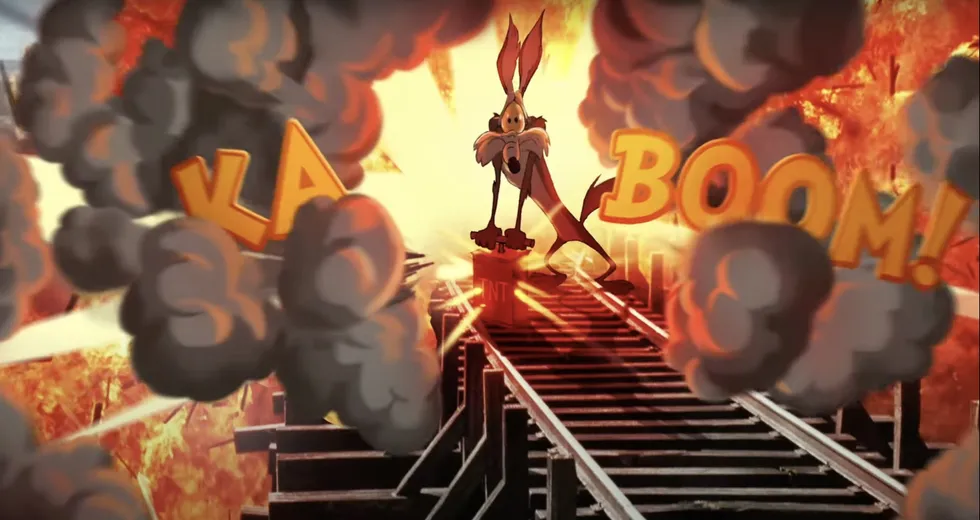 ‘Coyote vs. Acme’ CREDIT: Warner Bros.
The Letter
You can read the full letter below, which was housed here.
As filmmakers, documentarians, and professionals across the movie and television industry, we write to express our unequivocal opposition to the proposed Paramount-Warner Bros. Discovery merger.
This transaction would further consolidate an already concentrated media landscape, reducing competition at a moment when our industries—and the audiences we serve—can least afford it. The result will be fewer opportunities for creators, fewer jobs across the production ecosystem, higher costs, and less choice for audiences in the United States and around the world. Alarmingly, this merger would reduce the number of major U.S. film studios to just four.
Our industry is already under severe strain, in large part due to prior waves of consolidation. We have witnessed a steep decline in the number of films produced and released, alongside a narrowing of the kinds of stories that are financed and distributed. Increasingly, a small number of powerful entities determine what gets made—and on what terms—leaving creators and independent businesses with fewer viable paths to sustain their work.
Media consolidation has accelerated the disappearance of the mid-budget film, the erosion of independent distribution, the collapse of the international sales market, the elimination of meaningful profit participation, and the weakening of screen credit integrity.
Together, these factors threaten the sustainability of the entire creative community. That includes endangering the professional lives of the tens of thousands of workers who help make up that community in predominantly small businesses and independent companies embedded in local economies and communities nationwide.
We are deeply concerned by indications of support for this merger that prioritize the interests of a small group of powerful stakeholders over the broader public good. The integrity, independence, and diversity of our industry would be grievously compromised.
Competition is essential for a healthy economy and a healthy democracy. So is thoughtful regulation and enforcement. Media consolidation has already weakened one of America's most vital global industries—one that has long shaped culture and connected people around the world.
Fortunately, someone is doing something about all this. California Attorney General Rob Bonta and his colleagues in other states are reportedly scrutinizing the merger and considering legal action to block it. We are grateful for their leadership, and stand ready to support all efforts to preserve competition, protect jobs, and ensure a vibrant future for our industry, for American culture, and for our single most significant export.
The Fight for the "Production Ecosystem"
The signatories represent more than just "stars." They represent the "production ecosystem." When studios merge, bargaining power for unions like the WGA, SAG-AFTRA, and IATSE takes a hit.
There are fewer places to work, which gives the remaining studios more leverage to suppress wages and dictate working conditions.
It's already so hard to break in and make a living at this; imagining it getting harder is a huge burden.
What Happens Next?
The WB Paramount deal still faces a shareholder vote later this month and, more importantly, intense regulatory scrutiny from both California and the United States regulatory board.
California Attorney General Rob Bonta and several other state AGs are already looking into the antitrust implications.
It's hard to tell if the federal government will step in here or just leave it.
Summing It All Up
For filmmakers, this is way too much commerce, and not a single piece of art.
As the gates get taller and the number of gatekeepers shrinks, the importance of independent distribution and grassroots filmmaking has never been higher.
You can sign the letter here.
Let me know what you think in the comments.
- Who's Bidding On Warner Bros and What Do They Bring to the Table? ›
- Is a $71 Billion Paramount-WBD Merger Happening with Saudi Backing? Here’s What Filmmakers Need to Know ›
- Paramount Beats Netflix for WB: What It Means for Filmmakers ›
- Paramount Faces Lawsuit By Streaming Subscribers Over WB Merger ›
- Paramount Merger Rob Bonta ›
- The Paramount-Warner Bros. Megamerger Is Official: What Will They Call the New Studio? | No Film School ›