Look, we've all been there. We're all written something we think works, but when we send it around to friends and producers, we hear nothing back.
Now, the first gut reaction is just to blame them for not reading or not getting it, but if you want to mature as a writer, the first thing is understanding why something didn't work out.
And then combating that for the next one.
Writing a script that does not connect isn't a moral failing; it's a rite of passage. The only real failure is not recognizing the problems and fixing them. I've read a mountain of scripts in my career, from polished studio jobs to first-draft disasters. The bad ones almost always share the same fundamental flaws.
And today, I want to go over those flawed instances so you can avoid them.
So if that sounds good to you, then keep reading.
Let's dive in.
1. Your Protagonist Is a Passenger
 'Top Gun'Credit: Paramount Pictures
This is the number one killer of spec scripts and can be my ultimate enemy.
There's a chance your main character is just along for the ride and not active enough in their own story. Things happen to them. They get swept up in a plot cooked up by other, more interesting people. They float from scene to scene, complaining or looking confused, but never actually making a difficult choice that drives the story forward. They have no goal and nowhere to arc.
A reader won't follow a character who isn't fighting for something. We want to root for someone who is active, who makes bold (and even bad) decisions.
The Fix: Go through your script scene by scene and ask, "What decision does my protagonist make here?" If the answer is "none," you have a problem. Your character needs a clear, external goal stated early on (e.g., win the championship, stop the terrorists, get the treasure). Every scene should be a test of their will to achieve that goal. Force them to choose.
2. Your First 10 Pages Don't Grab Us
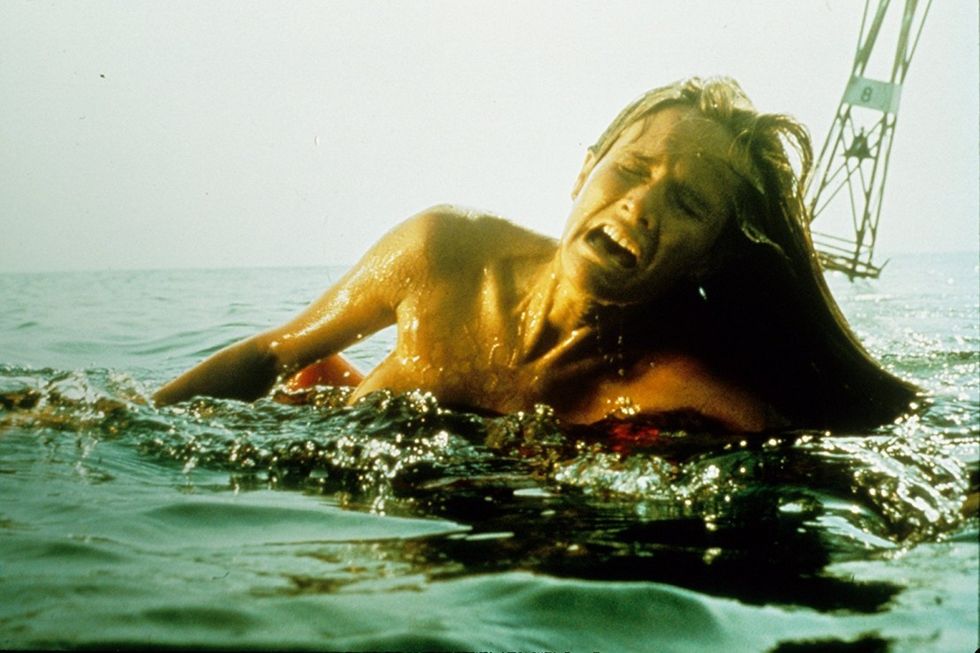 'Jaws'
Credit: Universal
The first ten pages are the most important in your screenplay.
But right now, maybe they're not working. Maybe you're just describing scenery or taking us through someone's day-to-day. Maybe you introduce seven characters at a boring family dinner.
But here's the real issue: nothing has actually happened.
An agent or producer might only give you 10 pages to hook them. If you waste that precious real estate on table-setting or fluff, they'll toss your script in the trash. Your opening pages are the most valuable part of your script.
The Fix: Start in the middle of the action (in media res). Introduce your protagonist and their central problem as quickly as possible. We don't need their entire life story upfront. Give us a dynamic, compelling scene that establishes the tone, introduces the character, and hints at the conflict. Think of the opening of Inglourious Basterds—it's just a conversation, but it's dripping with tension and sets up the entire story.
3. You Have No Voice
 'Singing in the Rain'
Credit: Warner Bros.
This might be hard to hear — it was for me when I was starting out. But people don't want to read something that feels like it has no point of view.
Maybe your characters all use the same vocabulary, your action writing might feel stale or bland, or maybe the dialogue has no pop.
This is all a dead giveaway that the writer hasn't dug deep enough into their characters and has no idea how to build the world. It pulls the reader right out of the story.
The Fix: Before you write, think about each character's background. Where are they from? What's their education level? What's their worldview? A cynical, college-educated cop from Boston will speak very differently from an optimistic high-school teacher from rural Texas. Read your dialogue out loud. If you can swap the names on the page and it still makes sense, you're in trouble. Give each character a unique voice and make sure your voice and ideas show through, too.
4. It's an "And Then..." Story
 'South Park'CREDIT: Warner Bros.
Plots need to have motivation behind them. You want a movie that feels like it's happening because of the choices the characters are making.
Your issue might be that your plot feels like a list of events rather than a story. "The hero wakes up, and then he goes to work, and then a weird thing happens, and then he goes home."
The scenes don't build on each other. There's no momentum. A strong plot is a chain reaction of things happening BECAUSE of the choices each character makes.
The Fix: Think in terms of "Therefore" and "But." This is a classic trick from the creators of South Park for a reason.. "The hero is late for work, therefore he speeds. But he gets pulled over by a cop, therefore he's going to miss the big meeting. But the cop is his estranged father..." See how each event complicates the next? That's narrative drive and what takes your story to something that allows you to connect.
5. You Have No Stakes
 'Nope'Credit: Universal
Stakes really matter. They don't have to be life or death or blowing up the world, but they do have to be tangible in a way that allows the audience to see what the protagonist wants and what they stand to lose if they don't accomplish it.
So your protagonist wants to open a bakery. Cool. Why should I care? If they don't succeed, what happens? They just… don't have a bakery? If the consequences of failure aren't devastating, there's no tension.
And you need that tension to get people to connect.
The Fix: The stakes must be clear, personal, and they must escalate. Allow things to go wrong early. We need to see the want early. Movies are all about narrative drive in accordance with desire. Why does this goal matter so much to this specific character? Maybe the hero needs to win the prize money to pay for their child's life-saving surgery, like in the new Running Man. Suddenly, it's not just a life or death for him, but also for his family. With every act, the consequences of failure should become more and more dire.
6. You're Characters Are Talking, Not Doing
 'Do the Right Thing'
Credit: Universal Pictures
One of my absolute first draft flaws is that I have characters talking a lot about things and not actually going out and doing them.
Your characters stand in a room and tell each other exactly how they feel. They dump exposition about their backstories or explain the plot to each other. This is called "on-the-nose" dialogue, and it's ruining your story.
Film is a visual medium. Your job is to tell a story with pictures, not just with words. The golden rule is, and always will be, show, don't tell.
The Fix: Turn exposition into ammunition. Reveal character and plot details through conflict and through action. Instead of having a character say, "I'm angry at my father for never showing up to my games," write a scene where the father arrives late to his son's championship game, and the son gives him a look that says it all. Subtext is your best friend. And so are having scenes with people doing things rather than people just chatting about doing them.
7. It Reads Like a Novel, Not a Blueprint
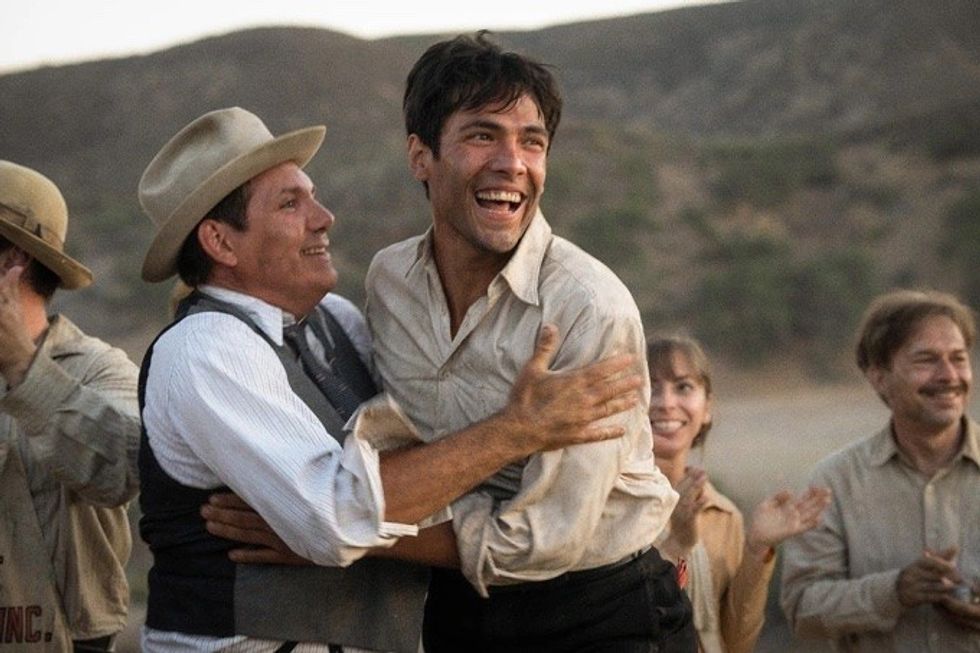
'Babylon'
Credit: Sony
I hate when I pick up a script and it's a slog to get through. Here's an issue I see all the time. Your action lines are dense, novelistic paragraphs describing a character's innermost thoughts, feelings, and memories.
Guess what? You can't film a memory. You can't film an internal thought.
Some of these little adises are great, but when you're writing dense pages, people are skimming and getting frustrated.
A screenplay is a blueprint for a movie. If it's cluttered with unfilmable direction, it screams "amateur," and it doesn't feel production-ready.
The Fix: Be ruthless. Keep your action blocks to 3-4 lines max. Use crisp, evocative language that focuses only on what we can see and hear. Maybe scatter in a little of your screenwriting voice to remind them, but don't overdo it. Your job is to give them a script that can turn into a movie. Make it leaner and easier to visualize.
Summing It All Up
If you recognized your script in any of these points, don't panic. Seriously. Identifying the problem is 90% of the battle. A messy first draft is a victory because it means you have something to rewrite.
Go over all of these before you send your next draft out. It doesn't ensure your script is perfect, but it ensures you're not making the common mistakes that get your idea tossed in the trash right away.
Let me know what you think in the comments.
- 8 Somewhat Unusual Excuses I Give for Not Working on My Screenplay ›
- 5 Steps to Murder Your First Draft ›
- 5 Ways to Crack Act Two in Your Screenplay ›