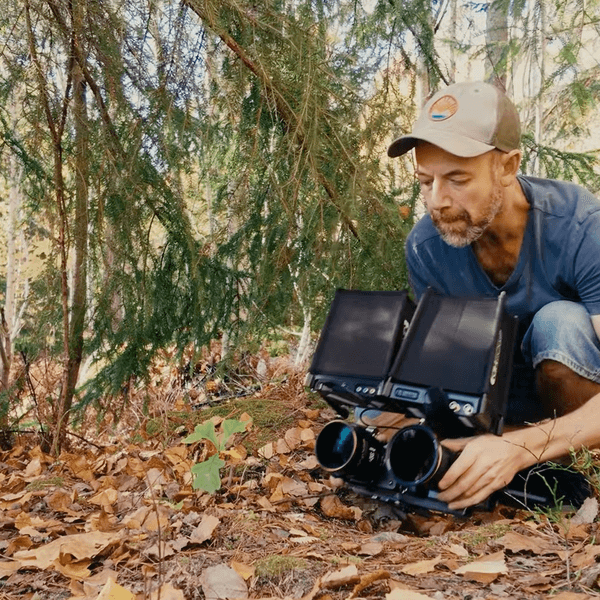
Amidst the absolute craziness of NAB yesterday, especially all of the major camera announcements, one announcement seemed to slip past the mass havoc created by Blackmagic and AJA. I'm talking of course about the fact that our friends over at Digital Bolex have just released a brand new black and white variation on their popular D16 digital cinema camera. Read on to see what the D16M is all about!
The idea for native black & white digital cinema cameras is not a new one by any stretch of the imagination, and companies such as Ikonoskop with their A-Cam DII Panchromatic, and RED with the EPIC Monochrome have crafted black & white cameras. The concept is a simple one; a native black & white sensor has no need for the complex debayering process that color sensors must undertake in order to output a properly colored image. Because of this, native black & white sensors are capable of higher sensitivity, slightly higher latitude, and a more nuanced tonal range, which can make for some stunning black & white photography.
With all of that in mind, Joe and Elle, alongside the engineers at Ienso, have thrown a brand new Kodak Monochrome sensor into the D16 and removed the OLPF in order to create the D16M, a native black & white version of the D16 with some unique advantages over its older brother.
Here are the new tech specs on the camera:
- Kodak native monochrome sensor
- Same resolution options as D16: Super 16mm (2K), 16mm (HD), and Super 8 (720p)
- No OLPF filter to further maximize fine details
- ISO 100, 200, 400, 800
- 500GB Hard Drive
And here's the first footage released from the new camera:
Much like the original D16, the D16M is going to have a very specific niche within the filmmaking world. However, with black & white filmmaking enjoying a slight resurgence of sorts thanks to films like Nebraska and Frances Ha, cameras such as the EPIC-M and D16M certainly have place in the modern filmmaking landscape. For discerning cinematographers who cherish the nuanced tonality of native monochrome sensors, these cameras will be a definite hit.
What do you guys think of the Digital Bolex D16M? Let's hear your thoughts down in the comments!
Link: The D16M Native Monochrome -- Digital Bolex
NFS's coverage of NAB 2014 is brought to you by My RØDE Reel and Limelite. Subscribe to the No Film School YouTube channel for the latest video updates direct from NAB, as well as filmmaker interviews, tutorials, and behind-the-scenes features.