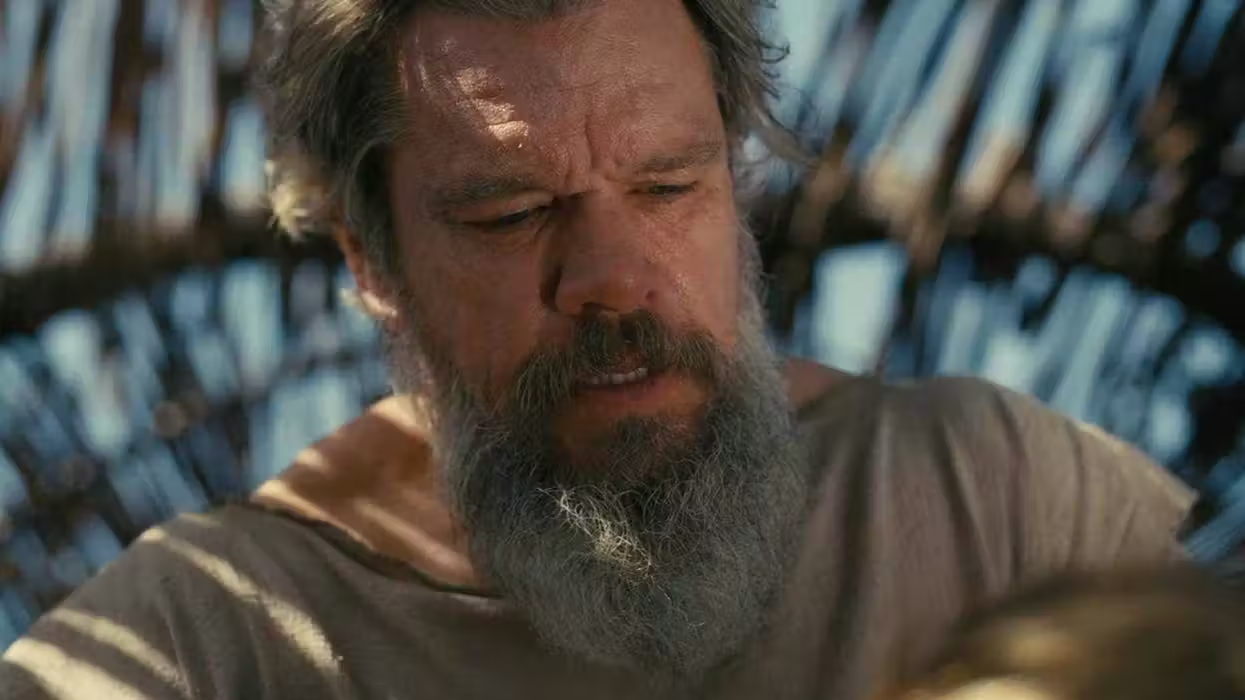
I have been watching pretty much everything that has to do with The Odyssey on this press tour because I feel like we're at this moment in time where we need a monumental movie to bring us all together, and this one did.
Now, I think a lot of people have clowned the press tour in America, because it's been pretty fun. And I'll say these actors sort of deserve it, being fun, after sacrificing 200+ days on hard sets to make this epic of a movie.
They talk about Uggs and how cold the water was inside the horse and all the other parts of making an IMAX movie at this level.
But with a movie as big as The Odyssey, they also did a world press tour, which brought Christopher Nolan to China, where a scholar asked him questions, and it went absolutely viral because it was incredible.
His interviewer skipped the fluff and engaged Nolan on classical philosophy, screenwriting mechanics, and civilizational collapse.
Check it out below, and let's talk after.
- YouTubewww.youtube.com
1. Are You a "Bard for a Civilization at Dusk"?
We open with this idea that Homer wrote The Odyssey in the 8th century BC, roughly 400 years after the events of the Trojan War.
While Homer wrote during an era of civilizational rise, Nolan's tone comes across as like post-apocalyptic. The interviewer asks whether Nolan's adaptation positions him as a "bard for a civilization at dusk."
This is the line that everyone was sending in group threads and that had conquered social media. I was genuinely in awe when I watched the video above.
Rather than dismissing the grand framing, Nolan leans in:
"Homer's writing about an era hundreds of years before his that his audience viewed as being more advanced than theirs... They were a civilization on the rise, but trying to get back to where they had been."
2. "Did You Christianize The Odyssey?"
Another sharp observation in the interview centers on the movie's worldview and how Nolan modernized it in a way that felt Christian rather than one that celebrates Greek gods.
We have this concept of atonement, which doesn't exist in ancient Greek mythology, but it's at the center of Nolan's story. There's guilt over Sinon, and the core of the movie is based on the ancient Greek concept of Xenia (Zeus's law of hospitality).
So the concept of Nolan maybe Christianizing The Odyssey comes up.
Nolan argues that stripping theology from Xenia reveals the universal foundation of human civilization: "Treat others as you would be treated... civilization depends on this rule."
That became part of Nolan's drive in this movie.
Now, the golden rule is the core of Christianity, but Nolan was upfront that religion wasn't his main goal here; rather, he leaned into the idea of Zeus's law, which is in the book, and honored what he saw as the audience's craving for repentance.
Maybe it's not even there, but we feel the catharsis of Odysseus coming home and punishing those who didn't honor this law, which maybe has led to the end of the Bronze Age.
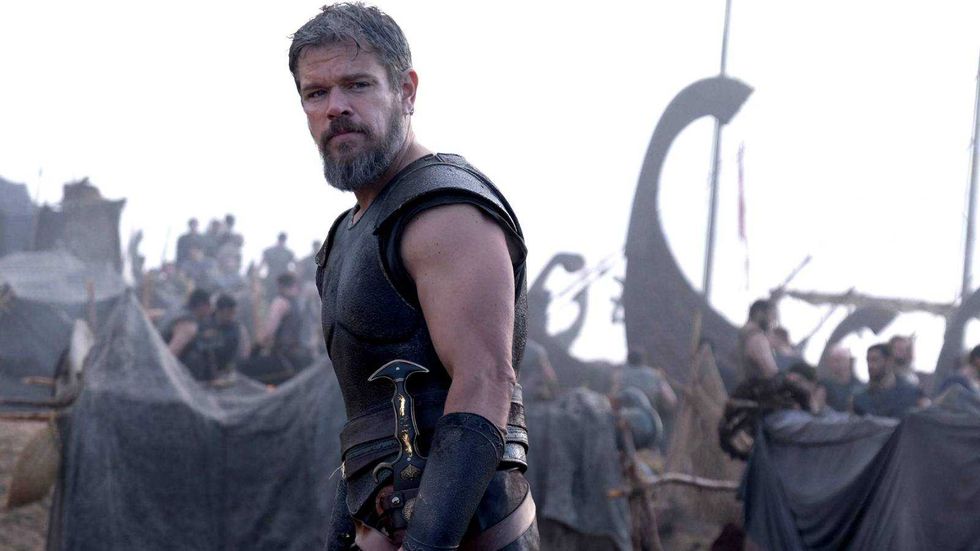 'The Odyssey' Credit: Universal Pictures
3. Nolan Calls Out "Amateur Film Criticism"
For screenwriters and directors, the most practical moment of the interview comes when discussing how modern audiences interact with heroic figures and plot devices.
This is a movie that has to use both in order to take us on a journey that feels epic and also personal.
Nolan points out a widespread flaw in contemporary film commentary: being able to identify the mechanism or trope does not invalidate the use of them.
He calls that the real problem in amateur criticism today (looking at you, CinemaSins), because people have this idea that 'Because I can understand why the story affects me the way it is, therefore it didn't work.' And that's not how storytelling works.
4. Grounding Unconventional Structure
Another part I loved about this conversation was the deconstruction of the 100-year-old cinematic "lingua franca" created by Hollywood.
Nolan touched on this while discussing the tropes he used in the movie, and to illustrate how filmmakers can innovate without alienating their audience, he references his breakthrough film Memento.
For him, that was an experiment in reversing chronology, but it still gave the audience a rigid three-act structure, so they would be comfortable following it, even as it went backward.
The same goes for The Odyssey.
Whether adapting 3,000-year-old epic poetry or writing a low-budget sci-fi noir, narrative balance requires an anchor.
For this epic, you're anchoring it all at home.
If your timeline or world-building is hyper-unconventional, your foundational dramatic beats must still be there for people to follow along, and it helps if you have a concrete place or tangible goal that the character wants.
5. How to Write Gods and Divine Power
Nolan is asked whether the Greek gods in his story are figments of imagination or literal reality, and he offers a pretty cool screenwriting perspective on how you'd tackle something like this for a movie.
Nolan's point of view in here is that these characters are living before modern science, so divinity isn't an "article of faith"; it is objective, observable reality.
The time is of apparent magic, with apparent being the key word there.
When these people hear thunder, it's the physical voice of Zeus.
So when Nolan wrote the script, he was treating the divine as an internal projection made tangible through the characters' worldview.
That worldview or point of view then had to shape everything the people believed when they arrived and saw giants or other acts of nature: the gods are real, but being projected by the people...sort of like Plato's cave.
Summing It All Up
You can see why this interview went so viral; it was a really deep and interesting conversation about the hows and whys of Nolan's choices, and it had some challenging theoretical aspects as well.
I felt smarter after listening to it, and I can't wait to see the movie again with all this understanding.
Let me know what you think in the comments.
- Christopher Nolan Almost Made 'Troy'—Now He’s Come Full Circle With 'The Odyssey' ›
- Christopher Nolan's 'The Odyssey' Proves Practical Filmmaking Still Wins ›
- How 'The Odyssey' Pulled Off Those Practical Effects ›
- Why History Nerds Are Mad at Nolan’s The Odyssey—And Why It’s Fine ›
- Why Christopher Nolan Thinks Sound Design in 'Phantom Thread' Sends Shivers Down Your Spine | No Film School ›