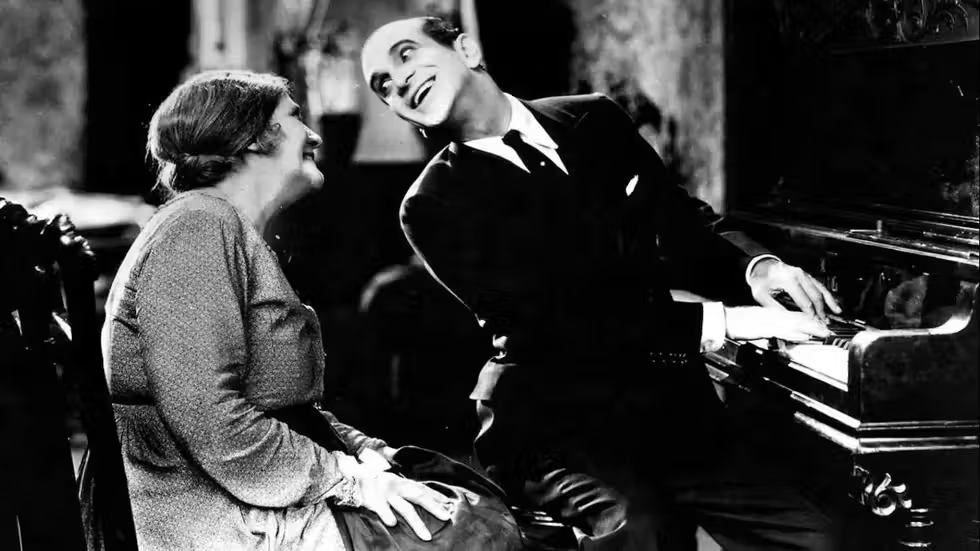
Thanks to the past several decades of commercialized cinema, it’s easy to forget that they were at one time completely devoid of dialogue. They relied on inserted cue cards or music to communicate entire storylines.
But one film in 1927 changed everything: The Jazz Singer.
The Silent Film Golden Age
The 1910s and 20s were booming decades for silent cinema. The films were often cheap to make, save for the larger D.W. Griffith-style epics due to lack of modern technology, and theatre-like staging, reducing the need for extensive editing. From a consumer standpoint, cinema was still seen as a cheaper alternative to live theater, which drove more mass amounts of consumerism.
Key movie stars like Lillian Gish began to emerge during the silent film era as recognizable faces that would draw the public in for new releases. Gish starred in dozens of films in the silent era, and while she still played a key role in iconic films like The Night of the Hunter post-1927, her career, like many others', was severely jeopardized by the invention of sound. Having fully relied on only their faces for performance, the transition into delivering dialogue often proved too much for silent film stars.
The Release of ‘The Jazz Singer’
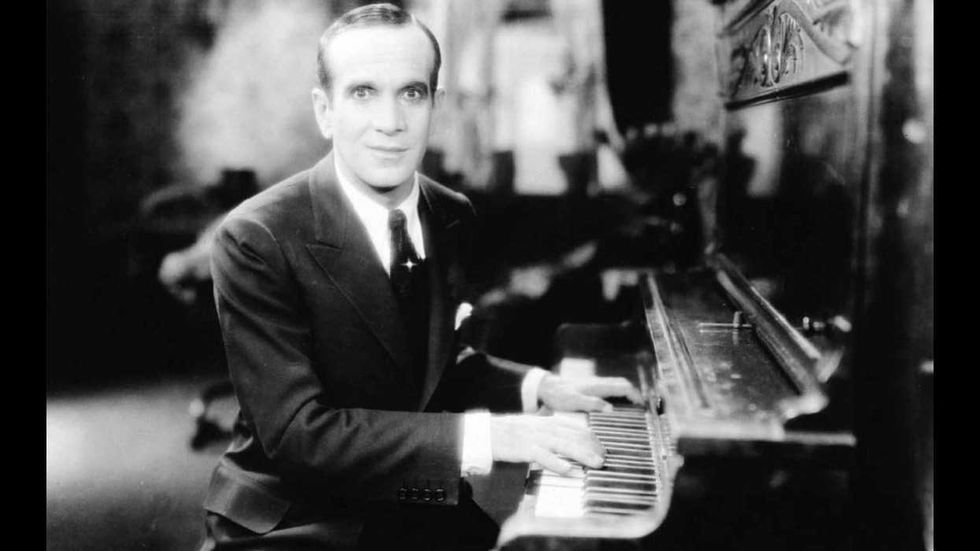 ‘The Jazz Singer’Credit: Warner Bros.
The film itself follows a young Jewish man struggling with his dreams to pursue a career as a Jazz performer to the reluctance of his traditional family. The film isn’t entirely a “talkie” per se. Al Jolson’s character has individual music numbers that are performed in the “talkie” style, but a large portion of the film still remains silent.
This made the presentation of the film largely difficult on premiere night. The respective projectionist had to manage fifteen different film reels for the film’s 89-minute-long runtime alongside separate reels and sound discs for the main character’s musical numbers. The film premiered on October 6th, 1927, in New York City on the eve of Yom Kippur.
Up until premiere night, the rumors circling Hollywood about the film, including on-screen dialogue, somewhat divided the industry. While many were excited and awed by the prospect of talking pictures, many others seemed to brush the invention off entirely. Whether it was just a poor sense of judgement, or coping with the knowledge of the industry potentially changing permanently, we may never know for sure.
What we do know, however, is that the reactions in the room on premiere night were industry-shattering. The famous line of dialogue, “you ain’t heard nothin, yet” reportedly caused deafening applause in the theater, with many members of the press and general public reporting afterwards that they felt like they had witnessed the world as we knew it change in real time. In a way, they were absolutely right.
The film had moderate financial success, which prompted the industry to begin easing out of silent films almost entirely over the next couple of decades. While the transition wasn’t as immediate as some may think, when looking back, its permanence can’t be overlooked.
The Legacy of the Film
Despite the uproarious reaction to the film on premiere night, many people attribute the hype more to the technological advancement than the actual film. While the film received generally positive reactions once released, it wasn’t hailed as a landmark artistically, and the aforementioned box office returns weren’t as groundbreaking as some Warner Bros. executives were initially anticipating.
When analyzing the film through a modern lens, the most common point of contention people dissect is the film’s sudden, yet widely narratively debated use of blackface in some key scenes. There are some historians and scholars who claim the film’s use of blackface is one of the only uses of it in the era that actually analyzes the human experience without the intent of being harmful. Most commonly analyzed as a metaphor for the Jewish-American experience and cultural assimilation, author W. T. Lahmon famously argued in his 1998 book, Raising Cain: Blackface Performance from Jim Crow to Hip Hop that the character needed to perform in blackface to metaphorically fuse his identities together.
Despite this argument, many still find the inclusion of it inherently distasteful and off-putting given the history of blackface in general and argue that any usage of the technique is harmful, regardless of the time period.
Despite this area of heated debate, the film remains a cornerstone of cinema history. The film was remade three separate times in the succeeding decades, and has been referenced countless times throughout popular media. The film was inducted into the National Film Registry in 1996.