How to Write a Romance Built on Character, Not Beats
Use Brian Williamson's HEART framework.
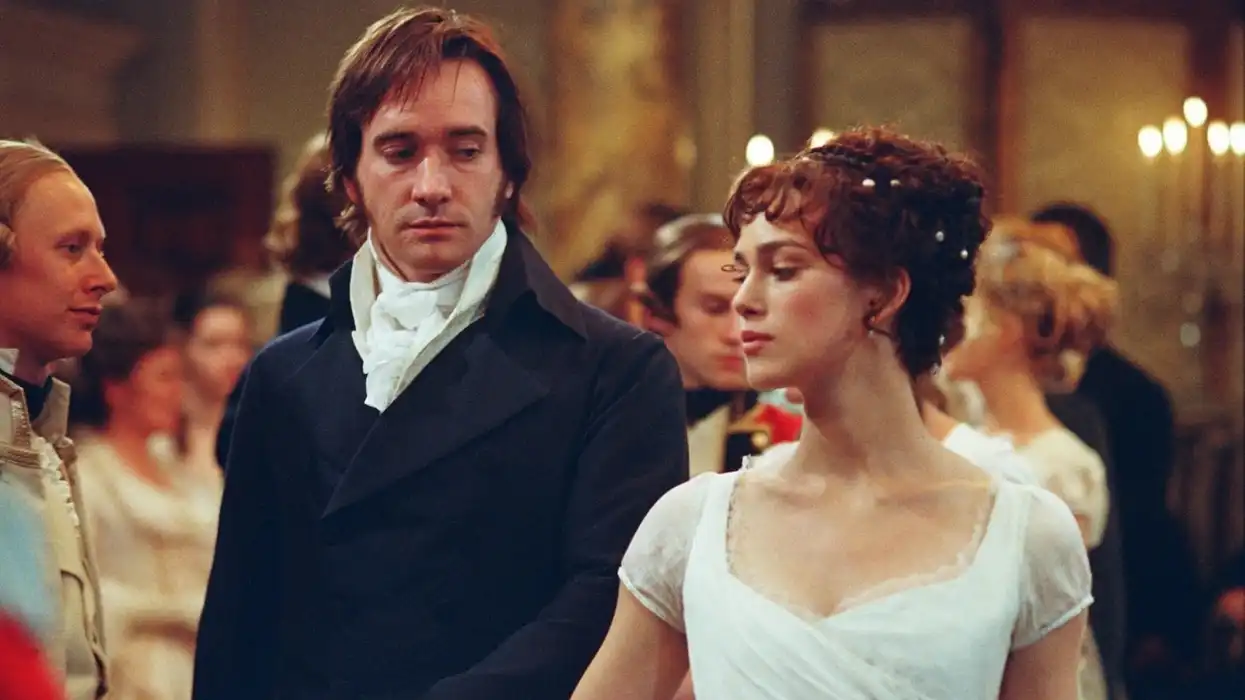
'Pride & Prejudice'
There are no real shortcuts to writing something good, especially since there are so many ways to attack story. The closest you can probably get if you're writing in a specific genre is to look at that genre's story tropes and just copy the steps. I'm thinking in this case specifically of Lifetime and Hallmark movies, and how they always hit the same beats.
Romance actually is a great example of a genre in which the beats are both reliable and expected by the audience. But story consultant Brian Williamson, who runs the channel Plot Luck, has a slightly different approach.
In a recent video, he points out that you can hit every convention the romance genre asks for and still leave an audience cold, because, as he said, "love does not care about your beat sheet." If viewers don't believe in the romance and the characters, then why would they keep watching at all?
His recommendation is to grow the relationship out of the two people in it, and he builds the whole thing using the acronym HEART (hold, exchange, awaken, risk, transform). Let's look at each step.
- YouTube www.youtube.com
Hold (What They Believe About Love)
Before your couple meets on the page, Brian said, each of them already believes something about love, and it's not just "love language" or type.
"What has this person decided somewhere deep down in their bones that love actually is?"
Maybe a character watched a marriage fall apart and decided love never lasts. Maybe a long run of rejection convinced them it isn't in the cards. In (500) Days of Summer, Tom writes greeting cards and believes that he has a single soulmate somewhere out there. Meanwhile, Summer isn't looking for anything serious and sees a relationship as passing. The mismatch is what causes all the drama between them.
Brian says the writer's first move is to have each character finish two phrases.
First: "Love is ___."
Then: "If I let myself love someone, then ___."
That second blank is the lie they're protecting, the misbelief that drives a character arc, and it's the wall the other person spends the story working against.
I like this because it forces you to write the fear before you write the flirting. It also helps you understand who each of these people is.
- YouTube www.youtube.com
Exchange (Break Their Expectations)
Brian says meet-cutes can't sustain a plot or make a whole relationship.
"Plot alone cannot create sparks," he says, and he's right.
Anything could technically be a meet-cute. You probably had a few meet-cutes yourself today that didn't play out into anything larger, because that's just life. We're constantly bumping into folks, spilling drinks, getting into disagreements over parking, whatever. And those moments don't always lead to romance, because, duh. Nora Ephron isn't writing our lives.
In a movie, what counts is the second your characters open their mouths. Everyone walks into a conversation braced for it to go a certain way, and the romantic spark comes when the other person refuses to play along. It's that initial conflict or friction that hooks us. I know I love an enemies-to-lovers myself.
In Pride and Prejudice, Darcy dismisses Elizabeth at a ball, and she hands his snobbery back with her wit and humor. Because of that, the man who writes everyone off can't write her off.
Chemistry, in other words, is a character problem before it's a plot problem.
Awaken (Bring Out What Went Quiet)
This is probably my favorite tip from his video. Every character has been alive a while before a story starts, and Brian's point is that parts of them have gone dormant. Maybe it's the fun personality they buried under responsibility, the vulnerability they shelved after one too many hits.
The relationship's job is to reactivate that. The good news, he says, is that you can plan for this.
"You can decide what has gone quiet in each person and then create the moments where this relationship slowly brings it out of them."
He uses The Princess and the Frog as an example. Tiana teaches Naveen to cook, and he likes contributing for once; he coaxes her into a dance amidst the fireflies, and she lets herself enjoy something that isn't focused on her goal. That's the moment we start rooting for them.
- YouTube www.youtube.com
Risk (Make Choosing Each Other Cost Something)
"It isn't much of a romance arc if everything goes well," Brian says.
A story, even a love story, needs conflict.
He splits the pressure into two kinds. The internal risk comes from that buried belief, or the wall that has to come down.
The external risk is everything crowding in from outside. These are things like family, money, duty, culture, timing, or the occasional rival.
You want both kinds, and you want them feeding each other. Internal and external conflict is important in any genre.
Crazy Rich Asians is his example. Rachel enters a dynasty and family where she doesn't belong, because they're so stinking rich. Then this external pressure presses on something internal, whether choosing Nick means shrinking herself for good.
"To sustain a romance story, you have to constantly be testing your characters from all angles," Brian says.
Transform (Who They Become)
The payoff is proof that the change held. "Awaken" showed you the first hints of who these people could be together; "risk" put those moments under pressure; "transform" is where the character arc and the romance resolve.
Darcy helps Elizabeth's family without taking credit, while Elizabeth admits she read him wrong. Tiana is ready to lose the restaurant rather than lose Naveen.
The ending only works because we understand why they're finally able to choose each other.
And, of course, the couple doesn't always have to end up together. Brian's other example is (500) Days of Summer, where the relationship dies. Tom might not even grow that much, because he quickly fixates on another woman. Love stories don't need togetherness all the time.
As Brian says, "Romance is just the genre. The actual story comes from how loving this particular person changes what these characters believe, what they're willing to risk, and who they are able to become."