Why Is There So Much Junk Food in 'Teenage Sex & Death at Camp Miasma'?
The movie made me want to buy gummy everything. And confront my own heart... but also gummies!
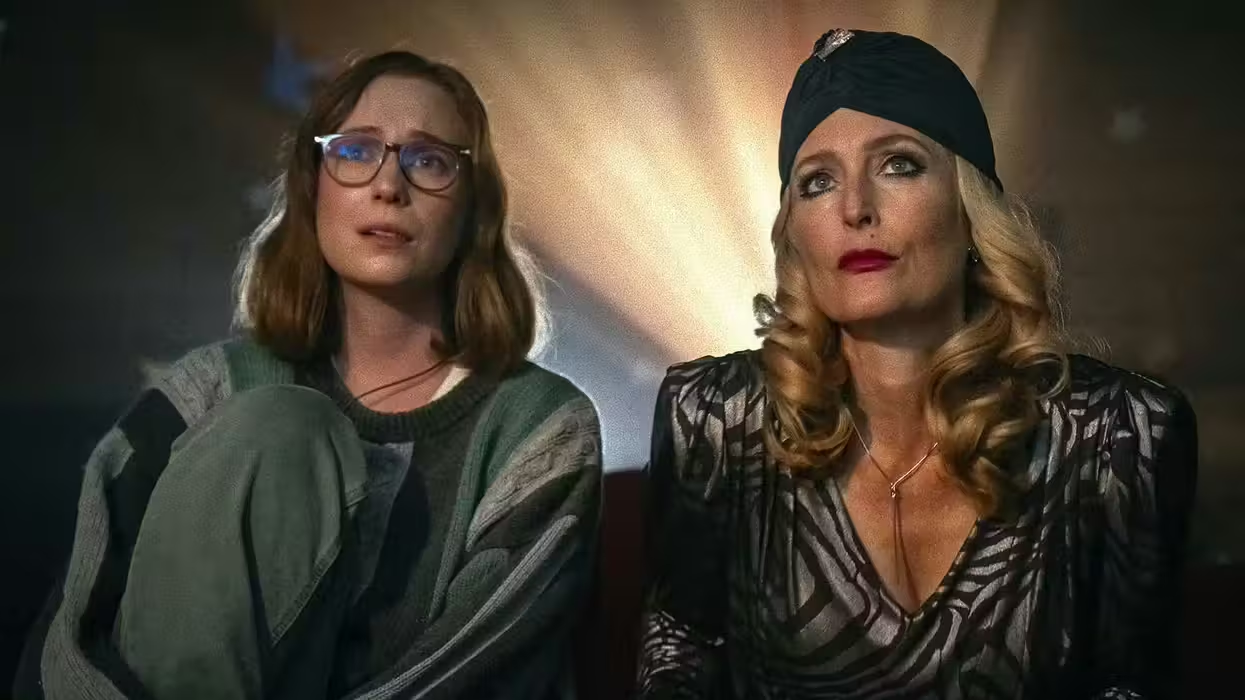
'Teenage Sex & Death at Camp Miasma'
On Saturday night, I grabbed a big bag of gummy bears and settled in for a really cool horror and sex deconstruction from Jane Schoenbrun’s Teenage Sex & Death at Camp Miasma.
If you saw it this weekend, you probably walked away with both the brilliant deconstruction of '80s slasher movies and a sudden, irresistible urge to buy even more junk food on the way out.
One of the major themes of the movie is the idea of junk food, comfort, and movies, all intertwined. In fact, one of the best scenes is when director Kris (Hannah Einbinder) is munching on Raisinets and popcorn in bed to the eye-catching visual of a chandelier made entirely out of candy wrappers.
At first glance, you might brush it off as typical indie film quirky set dressing, but in true Schoenbrun fashion, every motif serves a deeper emotional function.
So what’s actually going on with all that candy?
- YouTubewww.youtube.com
Comfort Food as an Emotional Safety Net
In a recent interview with Deadline, Schoenbrun opened up about how all that junk food ended up in the movie and why it’s intimately tied to their themes of trauma, vulnerability, and intimacy.
They said:
DEADLINE: I’m curious about the symbolism of all the processed junk food and the chandelier of wrappers.
SCHOENBRUN: The junk food in the movie, I forget when it found its way in there. It’s like so much of the movie is about, like I said, ritual, about being in a mindset where you can really enjoy something scary, whether that be Kris [Hannah Einbinder] in bed, with, you know, with Raisinets and the popcorn, watching a schlocky horror movie, or the two characters learning how to be present and enjoy sex after a lot of trauma. There is this idea that if it gets too real, you can turn it off, that you’re exploring something dangerous, doing it in a way that’s actually safe. Which in my experience of coming into my sexual identity post-transition, kind of required some gummy candy on hand. What I mean by that is, even if we’re going to be exploring scary and vulnerable and potentially embarrassing, triggering parts of ourselves, we trust each other well enough to know that at any moment, we can be like, “Let’s stop, we gotta just eat some fucking gummies.”
The Physical Anchor
I loved this answer for many reasons, but at the top was the idea of bringing a tangible, physical anchor into the movie to lay the motif for the audience.
We're engaging with the characters in this movie on a few levels, so having one thing to grab onto, like a railing, that we can hold while navigating the other stuff really helps.
Since this movie is about horror and our relationship with it, the junk food acts as an emotional safety net. It’s a tactile reminder that no matter how terrifying or intense things get, you are still safe.
For Kris, in the movie, she's reeling from relationship trauma and being in an unknown place, and worries about her career; the junk food and movies are a safe space, even if those movies contain horror.
And as she bonds with her actress in more ways than one, she shares this junk food with her, too.
Ritual, Trauma, and Reclaiming Intimacy
In Camp Miasma, intimacy is something negotiated through trauma and then trust. Well, Kris has been through sort of fake trauma, but never has dug into what coming out did to her and how it affected her ability to be intimate.
The candy becomes part of a ritual for saggeness that then begins to get healthier when shared with another person, who allows you to tap deep into your soul; Her candy is her drug, just like the movies are a drug pulling us all in, away from the reality we have to deal with head-on.
Schoenbrun applies that exact same logic to post-trauma intimacy and queer self-discovery post-transition, stuff I am not an authority on, so I will say I appreciated the radical, vulnerable parts of oneself it requires to build trust with the audience and to share this stuff.
That is all mirrored on the screen in an extended relationship between Kris and her actress.
It's a really cool way to build a movie from the theme outward and retroactively fit it into parts of a fake movie.
The Takeaway for Directors and Screenwriters
It's easy to get bogged down in high-concept visual metaphors, but what Schoenbrun does so brilliantly in Teenage Sex & Death at Camp Miasma is remind us that the best motifs often come from tangible things we can show in every scene.
By the time we see a chandelier made of candy, we're totally all in on the metaphor.
So, why not give your characters specific items or foods they can eat or use throughout your film that tap into the theme?
Is there another layer you can add?
You can even work backward, adding things in after writing.
Let your character’s coping mechanisms inform your set decoration, locations, and other things to weave them in naturally.
Summing It All Up
Next time you’re developing a script, ask yourself: What is my character’s version of "eating some fucking gummies"?
What small habit keeps them grounded when their world gets too intense? Or what's something they can share with someone else to truly open them up?
Let me know what you think in the comments.