Before I got to film school, I was still a bit of a nerd. I loved watching old movies with my Dad and checking out all of the classics.
But once I got into film school, I was able to take a bunch of curated classics and really dig into the foundations of Hollywood and storytelling, not just from an American perspective, but from the point of view of the whole world.
This diverse set of movies really opened me up and helped me become a better writer, so I wanted to bring them yhem here today. I went back through my old viewing lists and syllabi to see what movies pre-1960 professors made me watch, and made a list for you here to help you on your way to a more complete filmmaking education.
Here is a curated glossary of 100 essential films pre-1960 every film lover should cross off their list that will make them better at their desired Hollywood profession.
Let's dive in.
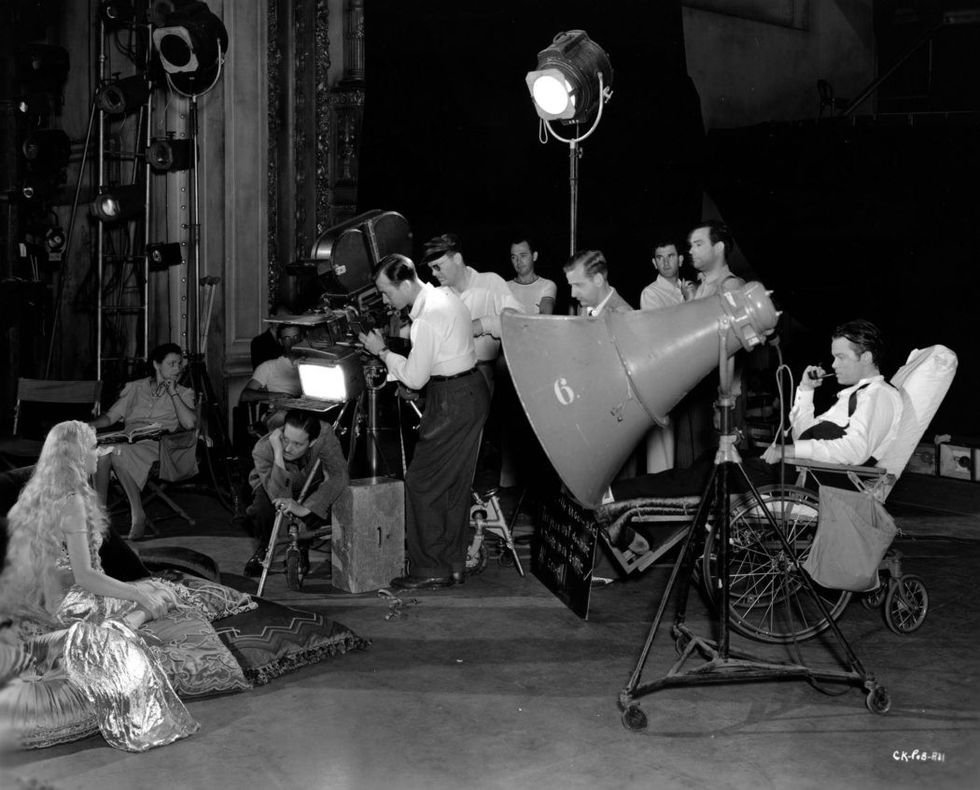 'Citizen Kane' BTS Credit: WB
The Silent Era
- A Trip to the Moon (1902, France) – Dir. Georges Méliès – Méliès created the sci-fi genre and special effects through clever theatrical illusions.
- The Great Train Robbery (1903, USA) – Dir. Edwin S. Porter – Porter realized that cuts between different locations built suspense and invented the Western.
- The Cabinet of Dr. Caligari (1920, Germany) – Dir. Robert Wiene – German Expressionism. The jagged, distorted sets reflect a mind that falls apart.
- Within Our Gates (1920, USA) – Dir. Oscar Micheaux – The oldest surviving feature by a Black director. It is a rebuttal to the racism of Birth of a Nation.
- The Phantom Carriage (1921, Sweden) – Dir. Victor Sjöström – Famous for its eerie double-exposure ghost effects. This film heavily shaped how Ingmar Bergman approached drama.
- Nosferatu (1922, Germany) – Dir. F.W. Murnau – A Dracula adaptation that became a horror milestone. It used real locations and stark shadows to manufacture dread.
- Nanook of the North (1922, USA/Canada) – Dir. Robert J. Flaherty – The grandfather of documentaries, even if a lot of the Inuit daily life was staged.
- Our Hospitality (1923, USA) – Dir. Buster Keaton & John G. Blystone – A lesson in how to weave death-defying, real-life physical stunts directly into a tight narrative plot.
- Greed (1924, USA) – Dir. Erich von Stroheim – An uncompromising, brutal look at psychological obsession. Infamously butchered by the studio from its original nine-hour cut.
- The Battleship Potemkin (1925, USSR) – Dir. Sergei Eisenstein – Soviet Montage theory. The rapid edits during the Odessa Steps sequence still dictate how action works today.
- The Gold Rush (1925, USA) – Dir. Charlie Chaplin – Chaplin blends genuine tragedy with brilliant physical comedy in the frozen Yukon.
- The Big Parade (1925, USA) – Dir. King Vidor – The first massive Hollywood blockbuster to strip the glamour away from World War I and focus instead on the grueling reality of the trenches.
- Metropolis (1927, Germany) – Dir. Fritz Lang – The visual model for every sci-fi dystopia that followed. It used optical mirror tricks (the Schüfftan process) to build a massive, terrifying city of the future.
- Sunrise: A Song of Two Humans (1927, USA) – Dir. F.W. Murnau – A gorgeous marriage of German Expressionist camera movement and massive Hollywood studio budgets. Critics often call this the peak of silent cinema.
- The General (1927, USA) – Dir. Buster Keaton – Incredibly clean, readable action cinema. Keaton used real trains and precise spatial geography to create a flawless comedic chase.
- The Passion of Joan of Arc (1928, France) – Dir. Carl Theodor Dreyer – Dreyer tells the story almost entirely through bare human faces. He captures pure spiritual and physical agony in extreme close-ups.
- The Crowd (1928, USA) – Dir. King Vidor – A visually daring studio drama. The crew hid cameras on the streets of New York to capture how a massive city makes an individual feel completely invisible.
- The Fall of the House of Usher (1928, France) – Dir. Jean Epstein – French Impressionism. It uses slow motion and overlapping exposures to turn Edgar Allan Poe’s story into a poetic nightmare.
- Man with a Movie Camera (1929, USSR) – Dir. Dziga Vertov – It threw every trick at the wall, using freeze frames, split screens, double exposures, to celebrate what the camera eye could do.
- Un Chien Andalou (1929, France) – Dir. Luis Buñuel & Salvador Dalí – The definitive surrealist short film.
The 1930s
- All Quiet on the Western Front (1930, USA) – Dir. Lewis Milestone – An early sound triumph. It matched aggressive tracking shots with loud, concussive audio to put audiences right in the trenches.
- Earth (Zemlya) (1930, USSR) – Dir. Alexander Dovzhenko – A visually poetic hymn to nature and rural life.
- M (1931, Germany) – Dir. Fritz Lang – The classic text for the modern serial killer thriller. Lang used off-screen sound and Peter Lorre’s whistled tune to terrify the audience without any display of actual violence.
- City Lights (1931, USA) – Dir. Charlie Chaplin – Chaplin actively ignored the sound revolution. He stayed silent and relied on pure pantomime to deliver one of cinema's most heartbroken endings.
- Frankenstein (1931, USA) – Dir. James Whale – Defined the look of American horror by mashing German Expressionist shadows with Boris Karloff's sympathetic creature design.
- Vampyr (1932, Germany/France) – Dir. Carl Theodor Dreyer – A deeply disorienting horror film. It feels less like a narrative and more like a fever dream because of its strange, subjective camera angles.
- Boudu Saved from Drowning (1932, France) – Dir. Jean Renoir – An early showcase for deep-focus photography and sharp social satire. It follows a cynical tramp who completely wrecks a middle-class household.
- King Kong (1933, USA) – Dir. Merian C. Cooper & Ernest B. Schoedsack – A massive achievement in stop-motion animation and creature design. It proved Hollywood could build entirely fictional worlds on an epic scale.
- L'Atalante (1934, France) – Dir. Jean Vigo – A beautiful example of poetic realism. It captures the messy, romantic reality of newlyweds who adjust to life on a gritty river barge.
- It Happened One Night (1934, USA) – Dir. Frank Capra – The definitive screwball comedy. It established the rules for the cinematic road trip and the "enemies-to-lovers" dynamic.
- The Goddess (1934, China) – Dir. Wu Yonggang – A standout from China's silent golden age, anchored by Ruan Lingyu’s devastating performance as a mother forced into prostitution to feed her son.
- The 39 Steps (1935, UK) – Dir. Alfred Hitchcock – Hitchcock uses another innocent man on the run who chases a MacGuffin he does not fully understand.
- Modern Times (1936, USA) – Dir. Charlie Chaplin – A hilarious but biting critique of the Great Depression, automation, and how modern industry treats human beings like cogs in a machine.
- The Only Son (1936, Japan) – Dir. Yasujirō Ozu – Ozu’s first sound film. It introduces his trademark low-angle framing and his obsession with the quiet life.
- Grand Illusion (1937, France) – Dir. Jean Renoir – A deeply human anti-war film that shows how class, language, and shared humanity matter more than arbitrary national borders inside a POW camp.
- The Awful Truth (1937, USA) – Dir. Leo McCarey – The standard for the comedy of remarriage. It relies entirely on rapid-fire dialogue and the brilliant, improvised chemistry of Cary Grant and Irene Dunne.
- Street Angel (1937, China) – Dir. Yuan Muzhi – A Chinese classic that mixes melodrama, musical numbers, and realism.
- The Wizard of Oz (1939, USA) – Dir. Victor Fleming – The ultimate showcase for three-strip Technicolor. It proved that Hollywood studios could manufacture pure fantasy.
- The Rules of the Game (1939, France) – Dir. Jean Renoir – A brilliant ensemble satire of the oblivious French upper class on the eve of WWII, staged with complex, deep-focus choreography.
- Stagecoach (1939, USA) – Dir. John Ford – The film that rescued the Western from B-movie status. It turned the genre into a character study set against the massive geometry of Monument Valley.
The 1940s
- The Grapes of Wrath (1940, USA) – Dir. John Ford – Gregg Toland’s moody photography turns Steinbeck’s Dust Bowl tragedy into a stark, unforgettable visual epic.
- Citizen Kane (1941, USA) – Dir. Orson Welles – The ultimate film school book condensed into two hours. Welles threw out linear plots and used forced perspective, sets with ceilings, and deep focus to change cinema forever.
- The Maltese Falcon (1941, USA) – Dir. John Huston – The film that locked in the American Film Noir template: hard-boiled detectives, cynical worldviews, and fast, witty dialogue.
- Casablanca (1942, USA) – Dir. Michael Curtiz – The studio system's perfect accident. A flawlessly paced drama where cynical self-preservation collides head-on with wartime morality.
- To Be or Not to Be (1942, USA) – Dir. Ernst Lubitsch – Uses a fast screwball plot to mock the Nazi occupation of Poland while the war was still happening.
- Ossessione (1943, Italy) – Dir. Luchino Visconti – An illegal adaptation of The Postman Always Rings Twice. It birthed Italian Neorealism when Visconti took the camera out of the studio and into the gritty Po Valley.
- Double Indemnity (1944, USA) – Dir. Billy Wilder – Locked down the visual identity of noir: voiceover narration, Venetian blind shadows, and a ruthlessly smart femme fatale.
- Ivan the Terrible, Part I (1944, USSR) – Dir. Sergei Eisenstein – A highly stylized historical epic that relies on exaggerated shadow play and bizarre, theatrical actor movements.
- Children of Paradise (1945, France) – Dir. Marcel Carné – Filmed secretly during the Nazi occupation of France, this movie serves as a defiant tribute to theater, art, and romance.
- Rome, Open City (1945, Italy) – Dir. Roberto Rossellini – Shot on the streets of Rome right after the Germans left. It is raw, urgent, and deeply humanistic cinema at its finest.
- Brief Encounter (1945, UK) – Dir. David Lean – It uses smoky steam trains and Rachmaninoff’s music to frame an extramarital affair.
- My Darling Clementine (1946, USA) – Dir. John Ford – A melancholy, poetic Western that cares less about gunfights and more about a wild frontier town that slowly builds a civilized community.
- Notorious (1946, USA) – Dir. Alfred Hitchcock – Hitchcock uses intimate camera movements, like the famous long crane down to a hidden key, to generate unbearable suspense.
- The Best Years of Our Lives (1946, USA) – Dir. William Wyler – A grounded, honest look at the psychological trauma of soldiers who returned home from WWII, beautifully staged with deep-focus compositions.
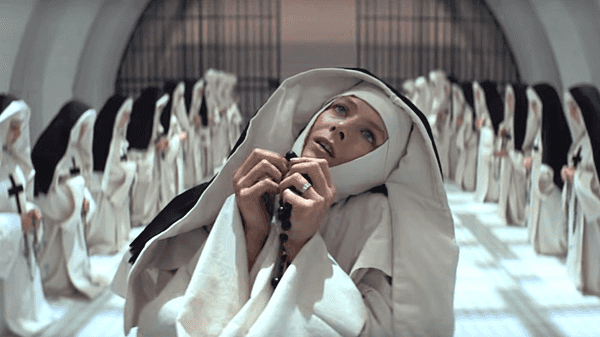
- Black Narcissus (1947, UK) – Dir. Michael Powell & Emeric Pressburger – A psychological melodrama built entirely on indoor studio sets that stood in for the Himalayas. It pushed Technicolor to its limits.
- Bicycle Thieves (1948, Italy) – Dir. Vittorio De Sica – Italian Neorealism. It uses non-professional actors and a high-stakes plot to deliver a crushing indictment of societal indifference.
- The Red Shoes (1948, UK) – Dir. Michael Powell & Emeric Pressburger – A gorgeous exploration of artistic obsession, anchored by a surreal ballet sequence that changed what a musical could look like.
- Spring in a Small Town (1948, China) – Dir. Fei Mu – A melancholic post-war work that tracks the awkward emotional tension of a broken marriage inside a ruined courtyard.
- The Treasure of the Sierra Madre (1948, USA) – Dir. John Huston – A grim, location-shot character study that shows exactly how paranoia and gold fever systematically rot human morality.
- Late Spring (1949, Japan) – Dir. Yasujirō Ozu – Ozu deals with post-war generational rifts and a daughter who tries to avoid marriage, told with quiet, domestic devastation.
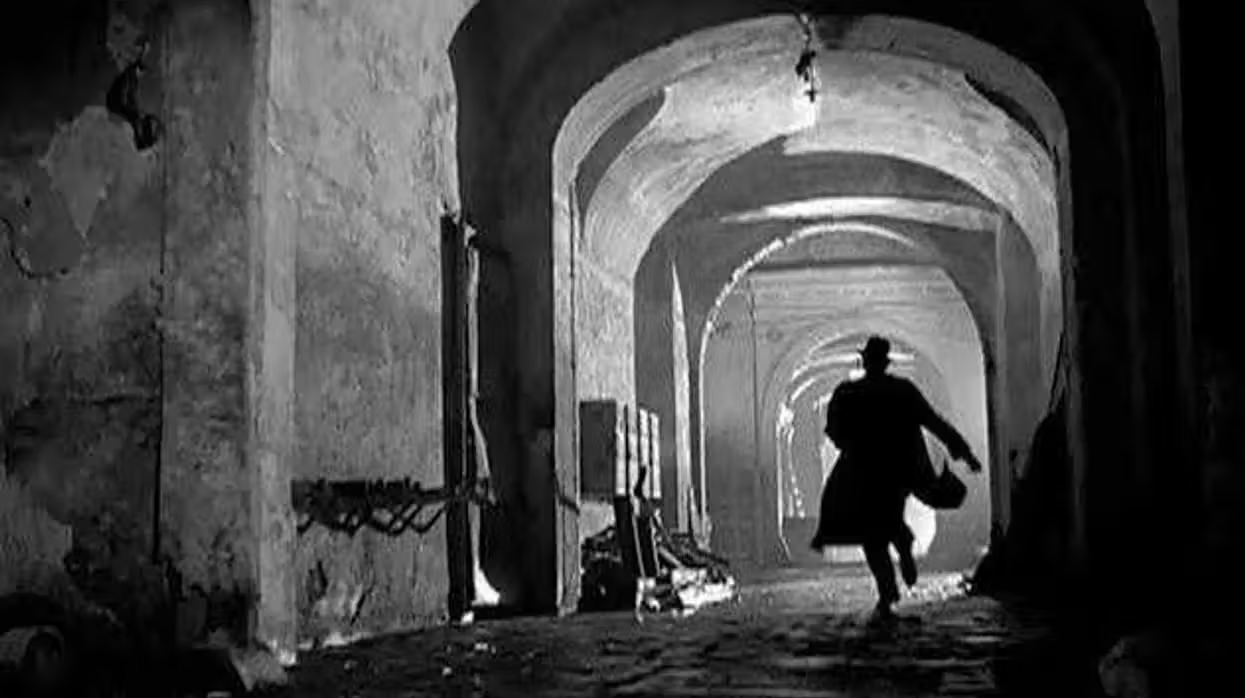
- The Third Man (1949, UK) – Dir. Carol Reed – Dutch angles, a haunting zither soundtrack, and a cynical, war-torn Vienna combine to create the ultimate post-war European noir.
The 1950s
- Rashomon (1950, Japan) – Dir. Akira Kurosawa – The film that put Japanese cinema on the map. Its multi-perspective, unreliable narrative structure permanently altered how movies handle stories.
- Sunset Boulevard (1950, USA) – Dir. Billy Wilder – Hollywood’s darkest, most cynical look, famously narrated by a dead man who floats in a swimming pool.
- Los Olvidados (1950, Mexico) – Dir. Luis Buñuel – A fierce, surrealist spin on neorealism that refuses to sentimentalize the impoverished, violent lives of kids in Mexico City.
- In a Lonely Place (1950, USA) – Dir. Nicholas Ray – A melancholic, deconstructed noir that serves as a harsh critique of toxic masculinity and Hollywood's violent underbelly.
- Diary of a Country Priest (1951, France) – Dir. Robert Bresson – An austere, deeply spiritual film. Bresson intentionally strips away theatrical style to find a pure, minimalist cinematic language.
- A Streetcar Named Desire (1951, USA) – Dir. Elia Kazan – The moment Method Acting arrived in Hollywood. It changed the vulnerability and raw psychological realism expected from American actors.
- Singin' in the Rain (1952, USA) – Dir. Stanley Donen & Gene Kelly – The absolute peak of the MGM Technicolor musical. It doubles as a hilarious, incredibly smart satire of Hollywood's chaotic transition to sound.
- Ikiru (1952, Japan) – Dir. Akira Kurosawa – A profound existential drama about a dull bureaucrat who only learns how to live after he receives a terminal cancer diagnosis.
- Ugetsu (1953, Japan) – Dir. Kenji Mizoguchi – A haunting ghost story and anti-war fable, celebrated for its fluid long takes that effortlessly blur the line between reality and the supernatural.
- The Earrings of Madame de... (1953, France) – Dir. Max Ophüls – Famous for its hyper-elegant, constantly moving camera shots that track the tragic, shifting meaning of a pair of expensive earrings.
- Wages of Fear (1953, France) – Dir. Henri-Georges Clouzot – Pure suspense. A terrifying scenario involves desperate men who drive trucks loaded with highly volatile nitroglycerine over bumpy roads.
- Tokyo Story (1953, Japan) – Dir. Yasujirō Ozu – Ozu’s masterpiece on the inevitable drift between generations, captured with immense patience and heartbreaking emotional restraint.
- Seven Samurai (1954, Japan) – Dir. Akira Kurosawa – Invented the structural framework for the modern action and ensemble movie (assemble a team to defend a village). It utilized telephoto lenses and multi-camera setups.
- Rear Window (1954, USA) – Dir. Alfred Hitchcock – A brilliant thriller confined entirely to one apartment set. It serves as a commentary on voyeurism and why we love to watch movies.
- On the Waterfront (1954, USA) – Dir. Elia Kazan – Marlon Brando’s raw, naturalistic performance anchors this gritty look at union corruption, guilt, and personal morality.
- Sansho the Bailiff (1954, Japan) – Dir. Kenji Mizoguchi – A beautifully shot, emotionally devastating historical drama about human cruelty, empathy, and the struggle to maintain compassion.
- La Strada (1954, Italy) – Dir. Federico Fellini – The bridge where Fellini left traditional neorealism behind. He moved into a more poetic, bittersweet world of circus performers and emotional fables.
- Pather Panchali (1955, India) – Dir. Satyajit Ray – A humanist look at a poor childhood in rural Bengal. It introduced Indian cinema to many people.
- The Night of the Hunter (1955, USA) – Dir. Charles Laughton – A Southern Gothic tale built with German Expressionist lighting.
- All That Heaven Allows (1955, USA) – Dir. Douglas Sirk – Sirk used vibrant, artificial Technicolor melodrama to launch a biting critique of suburban conformity and class snobbery.
- Ordet (1955, Denmark) – Dir. Carl Theodor Dreyer – A demanding but incredible examination of religious faith, which culminates in one of the most transcendent, shocking miracles ever put on film.
- Bob le Flambeur (1956, France) – Dir. Jean-Pierre Melville – The granddad of the French New Wave. It mixes cool American gangster tropes with low-budget, handheld location shots around Paris.
- The Searchers (1956, USA) – Dir. John Ford – Ford’s darkest Western. It features a deeply unsettling performance by John Wayne as an obsessive, racist anti-hero isolated by his own hatred.
- A Man Escaped (1956, France) – Dir. Robert Bresson – An absolute lesson in tension. Bresson uses meticulous sound design and zero theatrical fat to document a patient, step-by-step prison break.
- The Burmese Harp (1956, Japan) – Dir. Kon Ichikawa – A deeply moving, spiritual anti-war film about a Japanese soldier who chooses to stay behind in Burma to bury the unrecovered dead of WWII.
- The Seventh Seal (1957, Sweden) – Dir. Ingmar Bergman – The film that made heavy existentialism cool. It created the iconic image of a disillusioned knight who plays chess with Death to buy time.
- 12 Angry Men (1957, USA) – Dir. Sidney Lumet – A lesson in claustrophobic staging. Lumet slowly changes focal lengths and camera angles to turn a single jury room into a pressure cooker.
- Throne of Blood (1957, Japan) – Dir. Akira Kurosawa – A kinetic, fog-drenched adaptation of Macbeth that perfectly blends Shakespearean tragedy with the rigid aesthetics of Japanese Noh theater.
- Nights of Cabiria (1957, Italy) – Dir. Federico Fellini – Giulietta Masina gives an unforgettable performance as a fiercely optimistic Roman prostitute who refuses to let life break her spirit.
- Wild Strawberries (1957, Sweden) – Dir. Ingmar Bergman – A road-trip movie through an old man's memories.
- Mother India (1957, India) – Dir. Mehboob Khan – A colorful epic that functioned as a nationalist allegory for a newly independent India. It set the standard for Bollywood melodrama.
- The Cranes Are Flying (1957, USSR) – Dir. Mikhail Kalatozov – Features kinetic camera movements that feel decades ahead of their time. They capture the trauma of the Soviet homefront.
- Cairo Station (1958, Egypt) – Dir. Youssef Chahine – A psychological thriller that blends gritty realism with classic noir tropes inside a bustling, chaotic train station.
- Vertigo (1958, USA) – Dir. Alfred Hitchcock – Hitchcock's masterpiece about romantic obsession and manipulation. It is famous because Hitchcock invented the "dolly zoom" to visually simulate panic and delusion.
- Ashes and Diamonds (1958, Poland) – Dir. Andrzej Wajda – A visually striking, tragic look at the immediate post-WWII political fractures in Poland, anchored by Zbigniew Cybulski’s iconic, rock-star performance.
- The Music Room (1958, India) – Dir. Satyajit Ray – A hypnotic look at a proud aristocrat who clings to his fading status, and uses traditional Indian classical music as the core narrative driver.
- Touch of Evil (1958, USA) – Dir. Orson Welles – The breathless, dirty finale of the classic Hollywood Noir era. It famously kicked off with a complex, unbroken three-minute tracking shot.
- The 400 Blows (1959, France) – Dir. François Truffaut – The film that officially lit the fuse on the French New Wave. It used loose location shots and a famous final freeze-frame to tear up the old filmmaking rulebook.
- Some Like It Hot (1959, USA) – Dir. Billy Wilder – A studio comedy that uses cross-dressing musicians to deliver a hilarious look at identity and gender roles
Summing It All Up
These are the movies that made me who I am and showed me a great big movie-making world outside of Hollywood. One that I could use for inspiration and help to inspire other ideas.
So go off and enjoy the visual depth and sumptuous storytelling ahead of you.
Let me know what movies to add in the comments.
- Defining 55 Auteur Directors and Their Distinctive Styles ›
- What Are The Best Historical Movies of All Time? ›
- What's On Yale’s Reading and Watchlist For Their Film Studies Course? ›
- 10 Brilliant Movies About Movies Every Cinephile Should Watch ›
- It Happened One Night Movie ›
- 10 Classic Films That Made 1981 a Landmark Year for Cinema ›
- The Most Essential Movies of 1999 ›
- 10 Essential Movies of 1995 Every Film Fan Should See | No Film School ›