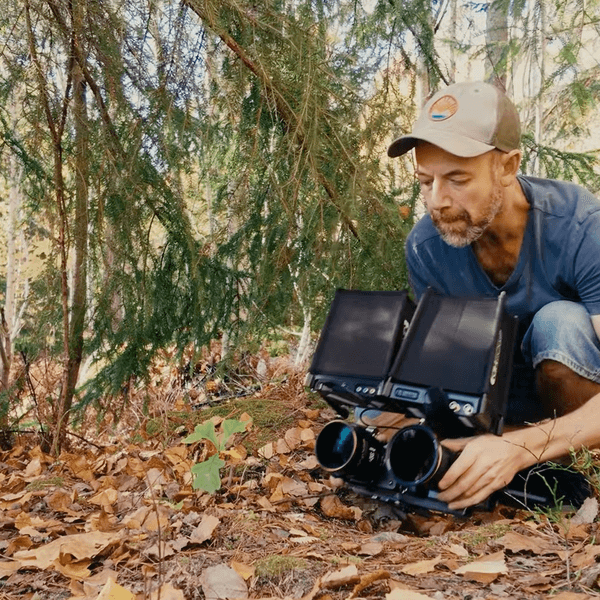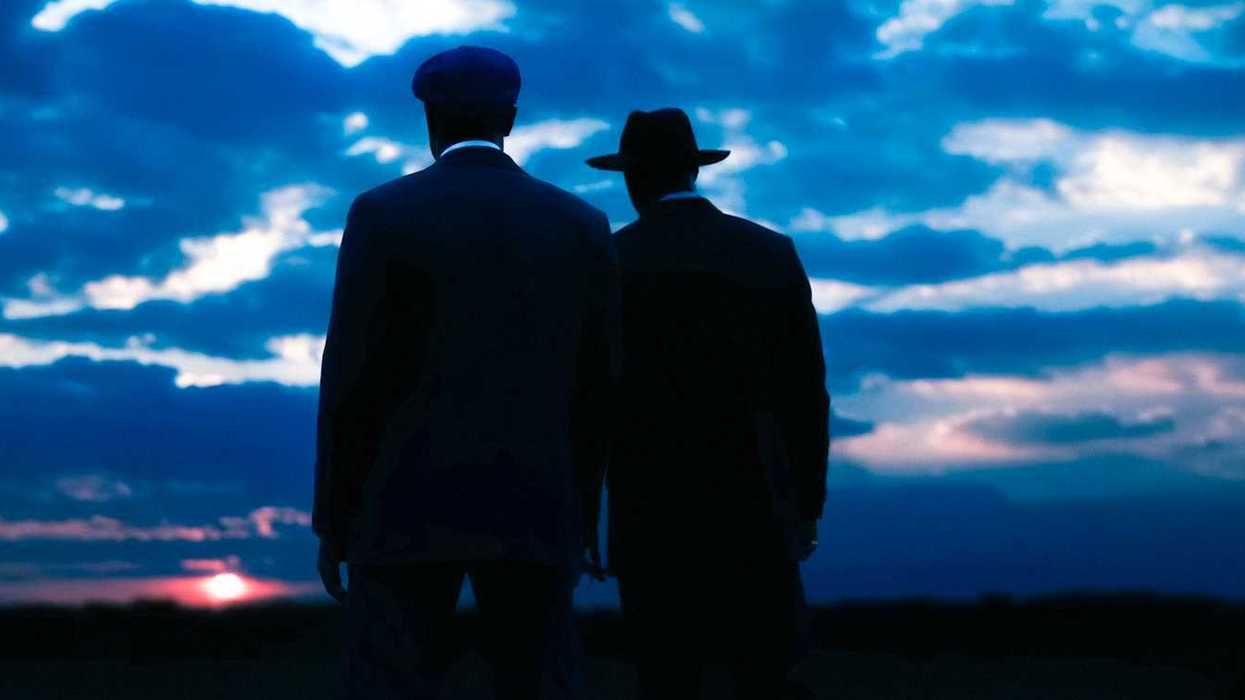
Autumn Durald Arkapaw made history as the first female cinematographer to shoot a feature in 65mm IMAX format with Ryan Coogler's Sinners.
In a recent interview with Matti Haapoja on his How They Film That series, Arkapaw shared the technical and creative insights she brought to and took from the set of the hit film.
You can watch the full interview below (and you definitely should). You get behind-the-scenes details on working with IMAX cameras, but you also learn about lighting and problem-solving.
- YouTube www.youtube.com
"The intention was always to make sure that everything felt like the print."
Sinners was famously shot with both IMAX 70mm and Ultra Panavision 70 cameras, making it the first film to blend these formats and creating dramatic shifts between tall 1.43:1 IMAX aspect ratios and wide 2.76:1 scenes. The team wanted every version of the film to capture the magic of a 70mm IMAX projection.
Arkapaw's involvement didn't end when principal photography wrapped. She worked with colorist Kostas Theodosiou throughout post-production to ensure all formats matched the look of the 70mm IMAX prints they'd tested early on.
Sinners has more VFX shots than any previous IMAX feature, largely because of the twin performances. Every composited shot needed to maintain consistent black levels, highlight rendering, and color response.
The color grading process (called the DI, or digital intermediate) involved creating LUTs that emulated the print look, then applying those to the scanned footage. When VFX files came back, Arkapaw and Theodosiou verified they matched the established aesthetic.
Arkapaw stressed the importance of quality control across all exhibition formats, from IMAX to Dolby to standard DCP. Many cinematographers aren't invited into this phase of post, but Arkapaw protected the work through to final delivery.
 Sinners Credit: Warner Bros.
"There's a lens that you find in your set that gives you this very heavy emotional feeling."
Arkapaw doesn't treat all lenses equally. Through her testing, she identifies a kind of hero lens for each project, one that delivers the emotional quality a specific story needs.
On Sinners, that lens was a 50mm Ultra Panatar anamorphic. She used it for wide shots and close-ups, always at a specific stop that gave her the right emotional fall-off.
"When used correctly, it really helps the story, but also just the acting in that one moment that you feel you need that extra thing," she said of the 50mm.
This pattern started on Black Panther: Wakanda Forever, where a 35mm Panavision anamorphic became her go-to for both expansive frames and intimate moments.
She said Dan Sasaki at Panavision helps her fine-tune lenses when needed, adjusting characteristics to get the exact fall-off she's after.
"I want to make sure that everything is exposed outside the window. I hate overexposed windows."
She hates overexposed everything, in fact.
Rather than blowing out windows and backgrounds, Arkapaw deliberately underexposes the foreground to maintain detail in highlights.
For Bo Chow's grocery store sequence in Donaldsonville, her team pre-rigged ceiling lighting to balance interior exposure with the bright exteriors visible through windows. The goal wasn't to match exposure perfectly, but to preserve information in the highlights that could be adjusted later.
She explained that with film, the highlight rolloff is naturally more forgiving, but she applies the same principle to digital work.
If she needs five stops over on the exterior, she makes sure the interior has enough light to support that choice. This is her preference through her experience, not a universal rule, but it gives her more flexibility in the grade.
 Sinners Credit: Warner Bros.
"It feels real, and they're in a real space."
Arkapaw could have taken the easier route for several of the film's sequences. For instance, characters spend time driving in a car, which can easily be done on a stage. A volume stage with LED screens or traditional rear projection would have been more comfortable for the actors and simpler logistically.
Instead, she insisted on shooting Michael B. Jordan in actual locations despite challenges like 110-degree heat and his wool three-piece suit.
She believes authenticity shows up on screen. When actors are in real environments, responding to actual light and movement, their performances connect differently.
She mounted two Vortex lights on the rig for eye light, turning them on and off to avoid reflections in the car's surfaces. But mostly she relied on natural light, maintaining her philosophy of exposing for the bright sky and allowing faces to fall slightly darker because that's what feels authentic to her. In cars, actors' faces are often blasted with light, but that's not the more realistic way to shoot it.
This work continued through the shoot. Arkapaw said she preferred working in real locations that production designer Hannah Beachler had dressed for the period. Those spaces came with challenges, natural light that changed throughout the day, weather considerations, and limited control over backgrounds, but they also delivered a texture and believability that artificial environments can't match.
This approach requires more planning and problem-solving on set. But for Arkapaw, the trade-off is always worth it. Real locations ground performances, and that truth registers with audiences even if they can't articulate why.
Check out our location scout guide as a free resource for your next shoot.
 Sinners Credit: Warner Bros.
"I'm not lighting this. I'm just using the sun."
One of the most striking shots in Sinners shows Smoke backlit by the setting sun, no artificial lighting whatsoever, as he fights off KKK members with a Tommy gun. On this shot, Arkapaw waited for the right time of day and let the sun do the work.
For day exteriors, she said she avoids lighting unless absolutely necessary. The exceptions come when the sky threatens to blow out the frame completely, or when the sun has already set and she needs to manufacture the look she wants.
The train station sequence required supplemental lighting after losing natural light, but the iconic backlit Tommy gun shot didn't. Scheduling with the assistant director to hit the right time of day was all the prep that shot needed.
Learn more about using natural light as a DP.
- How 'Sinners' Shot That Crazy Juke Joint Dance Scene ›
- How Did 'Sinners' Pull Off Those Twin Shots? ›
- Why Is There So Much Irish Music in 'Sinners'? ›
- Francis Ford Coppola Calls Ryan Coogler’s 'Sinners' the "Ultimate True Vampire Story” ›
- Autumn Durald Arkapaw Just Made Oscar History—And She Did It Carrying a 65-Pound IMAX Camera ›