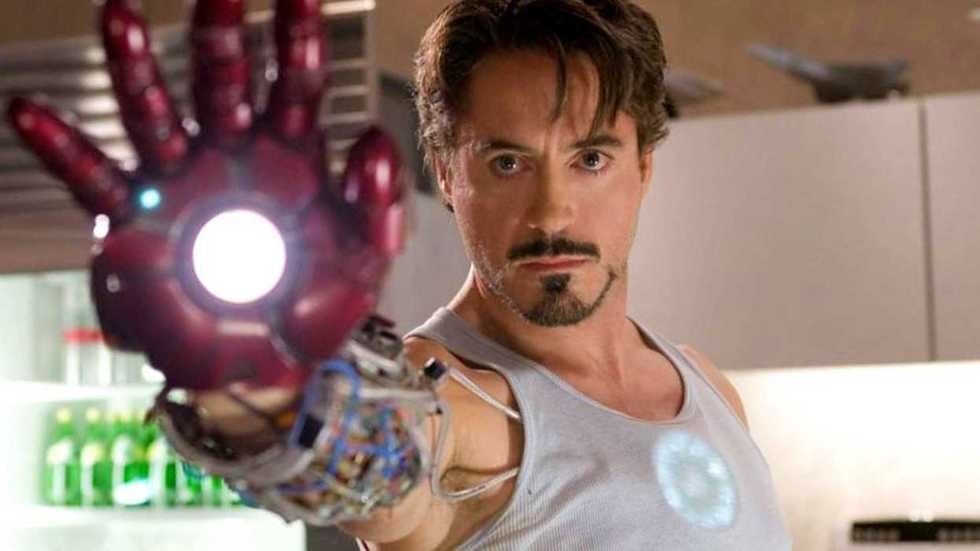
2008’s Iron Man is often credited with establishing the modern boom of superhero movies. While the blockbuster was indeed a zeitgeist-defining hit that kicked off the Marvel Cinematic Universe (which is now the highest-grossing film franchise of all time with a cumulative worldwide box office gross of more than $32 billion), it arrived in a cinematic landscape that had already been primed to receive such a movie thanks to a much earlier hit: 1998’s Blade.
The movie, which starred Wesley Snipes as Marvel Comics’ titular half-vampire vampire hunter, cleanly split the American superhero genre into pre-Blade and post-Blade eras. Let’s break down exactly how that happened.
The Superhero Genre Before Blade
Comic book superheroes have been hitting theaters in various forms basically since the invention of cinema. Very early on, exhibitors realized that the big screen needs big spectacle, from the special effects magic of Georges Méliès to the sweeping grandeur of D. W. Griffith’s Intolerance. In the 1930s, superheroes took the stage largely in the form of film serials adapting comic strip characters like Dick Tracy and Flash Gordon.
Superhero comics as we know them didn’t launch until the late 1930s, but 1940s film serials quickly brought in recognizable comic book characters including Superman and Batman after their respective introductions. When the film serial format died out, serialized storytelling moved to the burgeoning art form of television, which is where superheroes thrived in the 1960s and 1970s with shows like Batman, Wonder Woman, and The Incredible Hulk.
The genre shifted back to the big screen once more when 1978’s Superman swept into theaters after George Lucas’ 1977 sci-fi megahit Star Wars proved that there was a strong appetite for big-budget, special-effects-driven sci-fi titles. Superman was the second highest-grossing movie of the year worldwide (behind Grease) and launched a film franchise that saw Christopher Reeve returning to the title role three more times through 1987’s Superman IV: The Quest for Peace.
However, in spite of Superman’s success, the superhero genre outside of the Reeve franchise was still pretty much in the gutter. Although superhero stories slowly began to emerge from the small screen back into theaters, they were largely treated as cheap exploitation pictures. The next major DC Comics title to hit screens was 1982’s Swamp Thing, which was helmed by a pre-Nightmare on Elm Street Wes Craven, who was at the time best known for the grindhouse movies The Last House on the Left and The Hills Have Eyes.
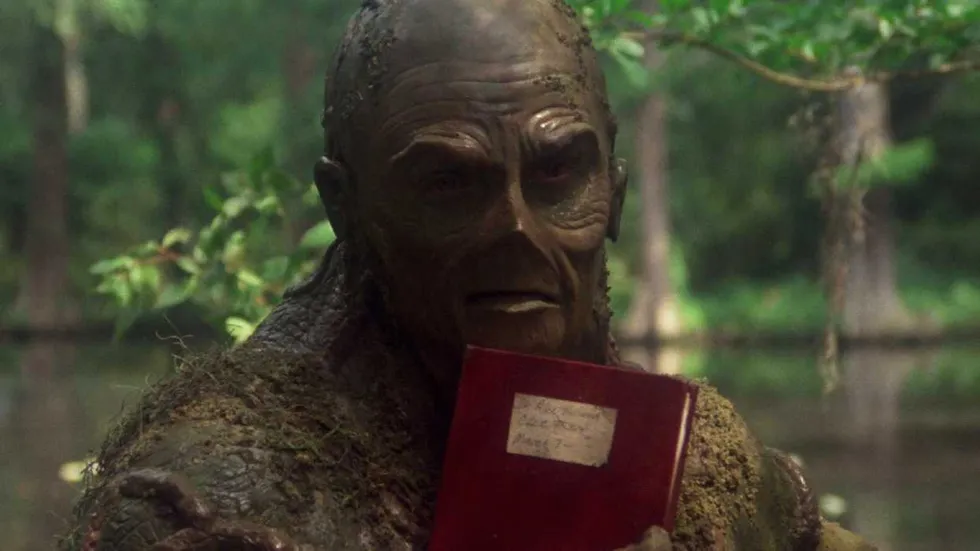 ‘Swamp Thing’ (1982)Credit: Embassy Pictures
The fact that the DC property went to Craven (who I think is a genius, but who was certainly not widely viewed as such by that point in his career) rather than a filmmaker like Superman’s Richard Donner (who was fresh off the Oscar-winning The Omen when he took on the superhero movie) speaks to the genre’s reputation in the 1980s.
The 1980s were marked by notable comic book flops from Supergirl to Howard the Duck before Tim Burton’s Batman debuted in 1989 and had a similar trajectory to Superman, launching a franchise for DC’s other marquee hero. However, while Batman carved out a space for itself, it turns out that a rising tide doesn’t always lift all ships.
Throughout the early to mid-1990s, superheroes were still largely treated as exploitation movies. While some movies (The Crow and Spawn) made bigger splashes than others (The Phantom, Judge Dredd), comic book adaptations weren’t really being taken seriously, either by studios or by audiences, outside of Superman and Batman. Enter Blade.
How Blade Changed the Game
Blade, which was directed by special effects artist Stephen Norrington (Aliens, Gremlins, Hellraiser: Bloodline), wasn’t the first R-rated superhero movie. In fact, many comic book and superhero movies throughout the 1990s were R-rated, including The Crow, Judge Dredd, Spawn, and Barb Wire. However, its R rating ended up being its secret ingredient.
While the movie wasn’t an enormous runaway hit (it grossed $131.2 million against a $45 million budget and ended up being the 25th highest-grossing movie at the domestic box office that year), it was successful enough to spawn a franchise that included two big-screen sequels and a spinoff television series, establishing Blade as a major player in the superhero space.
By virtue of being a notable success without featuring a comic book hero who was a household name at the level of Superman and Batman, it finally became the first superhero movie success to make waves in the genre. Instead of climbing to the top, then pulling up the ladder with it, it spawned a number of similarly successful imitators.
While the majority of those movies weren’t R-rated, they did draw inspiration from the sensibility that Blade’s R rating allowed. The movie had heightened action and characters, but its visceral grittiness made it feel more realistic and thus made it more compelling to audiences at the time.
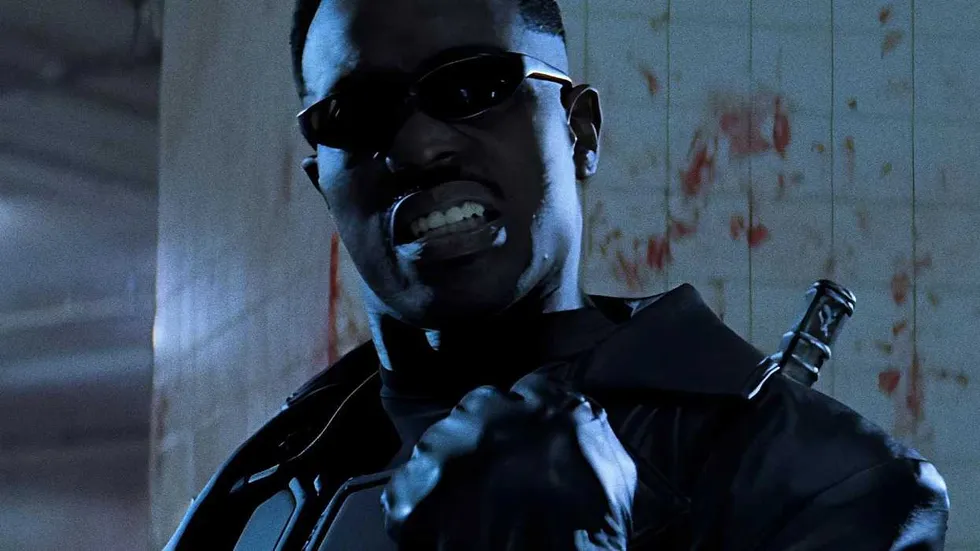 ‘Blade’ (1998)Credit: New Line Cinema
Blade’s success was also a major win for Marvel, which had been struggling to connect with audiences at the same level as the DC heroes who were dominating the genre. By repeating the Blade formula, Marvel was able to claw its way from obscurity to global prominence with superhero movies like 2000’s X-Men and 2002’s Spider-Man, which took a more grounded approach to their title characters and were massive hits, spawning sprawling franchises.
The Blade Legacy
As X-Men and Spider-Man sequels dropped throughout the 2000s, other superhero movies adapting comic books from DC, Marvel, and other publishers began to flood the marketplace, as did movies featuring original superhero characters. This served to make superhero movies a proper, ongoing subgenre rather than an intermittent series of one-offs and occasional blockbuster franchises.
By 2008, when Iron Man debuted, the foundation had been laid by everything from Hulk to Daredevil to Catwoman to Hellboy, The Incredibles, Sky High, Batman Begins, Constantine, Elektra, Fantastic Four, My Super Ex-Girlfriend, Superman Returns, and Underdog.
Even though not all of those movies were successful, audiences had been conditioned to accept the fact that movies often had superheroes in them. Even if that hero wasn’t particularly well known to them, they were more inclined to buy tickets based on word of mouth rather than prior knowledge of the character. And Iron Man had some outstanding word of mouth, which is how it launched the world’s most lucrative big-screen universe.
However, if it wasn’t for Blade putting Marvel on the map, setting the stage for audiences to embrace an unknown here, and encouraging filmmakers to use more realistic approaches to the comics, it would have never become the success that it did. In fact, it very likely would never have existed in the first place.
For more information about the post-Iron Man superhero boom, check out the No Film School archives, which contains articles on Hollywood’s post-MCU cinematic universe attempts, the newly rebranded DC Universe, how the Spider-Man reboots compare to the original Sam Raimi trilogy, the rise of superhero fatigue, and much more.