What’s the real difference between an experienced and a newbie filmmaker? The former knows that it’s always good to keep your expectations really low when it comes to money or resources, and be ready to find a way around it.
Whether you’re an indie filmmaker or Ridley Scott filming Blade Runner, a movie that would go on to change the sci-fi landscape forever, money will always be limited, and therefore, if you aren’t creatively quick on your feet…well, you should be; that’s all I want to say.
Interestingly, most of the time, these tweaks in the visual language have evidently added to the story, rather than taking away from it. (Not that I support stingy film budgets or am unaware of unnecessary budget cuts.)
In this article, we look back at how Scott visually designed a dystopian LA in Blade Runner, adhering to budget constraints and still ending up with a movie that is critically acclaimed for its visual world-building.
Story and Themes
Blade Runner follows Rick Deckard (Harrison Ford) in 2019 dystopian LA, who is tasked with the assassination of four replicants, bioengineered robots who look just like humans, who have sneaked their way back to Earth with the hopes of extending their lifespan, after being banished from the planet for raising a mutiny against humans.
The narrative explores complex themes including memory vs reality, capitalistic greed and control, ethical boundaries of science, and what it means to be human. Despite being sci-fi, Blade Runner is a morally complex story that has won hearts with its emotional resonance.
World-Building In Blade Runner
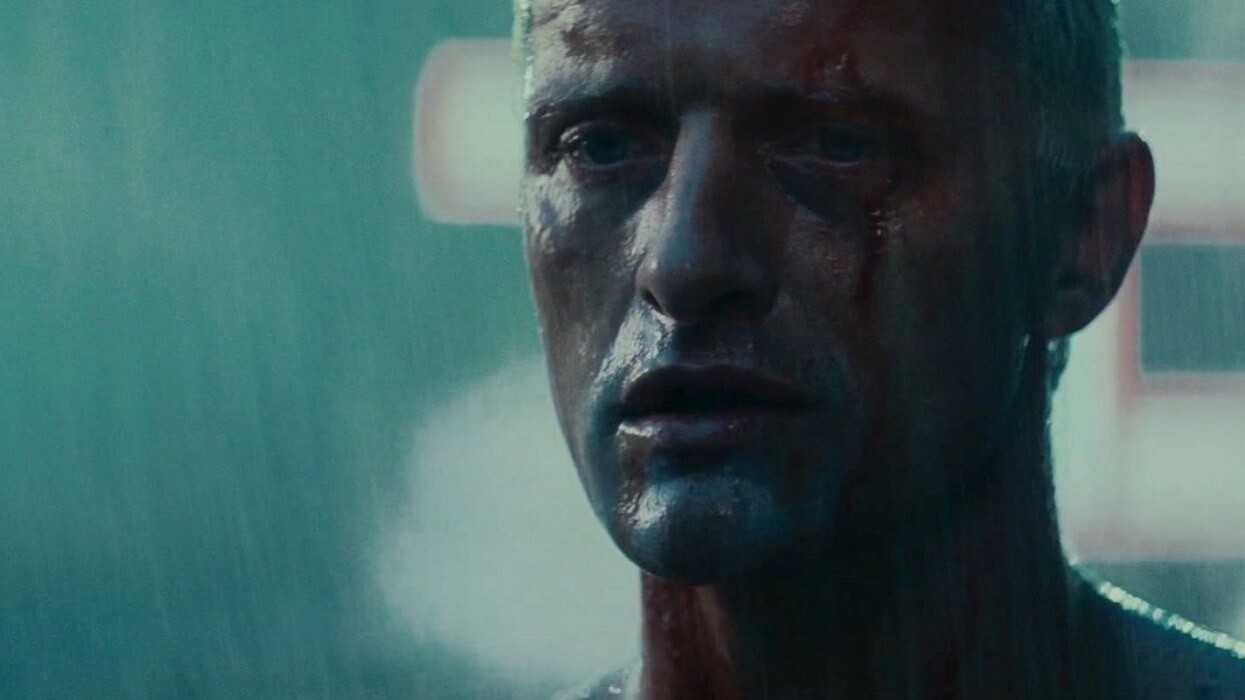
 Blade Runner (1982)Source: Warner Bros.
Scott’s Blade Runner features a 2019 dystopian LA—extremely developed technologically, yet decaying. A hyper-urban environment that merges universal ambitions of modernity: flying cars, human-like robots, and AI. Scott’s 2019 L.A. is a cluttered metropolis that lacks natural flora and features, over-crowded streets, and poverty. His reimagination of the future 30 years ahead of him is defined by economic stratification, widespread poverty, degraded infrastructure, and environmental ruin. The planet is in such a sorry state that there are literal advertisements that urge citizens to move to a different planet for a new life.
Blade Runner was primarily shot in and around L.A. and California. Some of the most iconic and historic locations include the Bradbury Building, Ennis House, Union Station, Million Dollar Theatre, and Pan Am Building. Scott’s inspiration for Blade Runner’s world was an oversaturated New York City or Chicago. With the chaos and crowd, maintaining a metropolis and its architecture is a real challenge. There’s no possible way to reduce the architecture, considering taking them down will cost as much as it cost to build them. Hence, Scott’s LA is textured, with new adjustments and redesigns within the existing setup.
Bringing Blade Runner’s World To Life in Darkness and Rain
To externalize Scott’s vision, extensive sets were built within existing structures. Yet, in Scott’s words, “They looked pretty bad, and we would have to spend more money [to make them look good].”
 Blade Runner (1982)Source: Warner Bros.
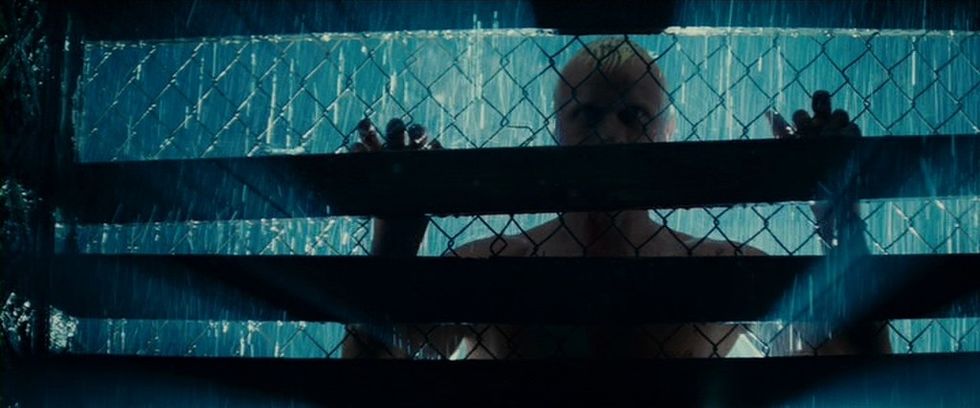
So, Scott altered his vision slightly to match the needs of the hour. Most of the scenes were shot at night, to ensure that the background was as sparsely revealed as possible. To add to the visual barrier, rain and smoke were integrated into the visual narrative. This prevented any flaws or imperfections from showing up on the screen while keeping the viewers focused on the actor on screen.
What started as a creative “compromise” turned out to be the biggest highlight of the film. The long, repeated nights and constant rain and smoke added to the grimy and dark reality of the narrative while sneakily covering up any visual flaws in production design, whatsoever.
Even three decades after its release, Scott’s wet and smoky city, plunged into darkness, continues to remain the talk of the genre, influencing countless other films that came after it. Scott’s dystopian city of LA set the standard for dystopian world-building, when in reality, his actual vision for LA was visually kept under wraps, because the production design couldn’t be achieved owing to budget constraints.
Blade Runner demonstrates how making adjustments to your vision to meet logistics is not a compromise. Rather, how you turn your disadvantages to your advantage shows your true creative genius way more than a well-written script or treatment deck.