What You Can Learn from Bong Joon Ho’s 4 Favorite Movies
The Parasite director has an eclectic list of influences.

South Korean filmmaker Bong Joon Ho is one of international cinema’s most versatile directors, crafting genre-defying works (including the 2019 Best Picture winner Parasite) in both Korean and English that bring laughs, thrills, and tears while provoking the audience to think about the state of the modern world. However, no filmmaker exists in a vacuum. When Letterboxd recently asked Director Bong about his four favorite movies during a red carpet interview, he didn’t offer any commentary on the titles he picked, but his answers nevertheless exposed a great deal about some of his key influences.
Let’s break down those picks, one by one.
Deliverance (1972)
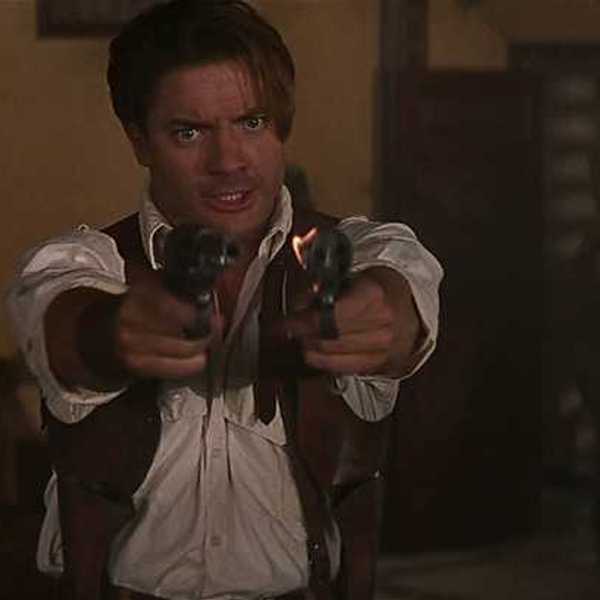
The first film on Bong Joon Ho’s list was John Boorman’s Deliverance, a controversial release that shocked audiences at the time and still holds its potency. The movie, which was adapted by James Dickey from his own novel, stars Burt Reynolds, Jon Voight, Ned Beatty, and Ronny Cox as four friends who live in the city and decide to go on vacation in rural Georgia, where they are attacked by locals in an onslaught that includes a prolonged scene of sexual assault.
Despite, and perhaps because of, its controversial material, the movie was an enormous hit, grossing $46.1 million against its $2 million budget and going on to be nominated for three Oscars, including Best Picture (it lost two to The Godfather and one to Cabaret, which is hardly shameful).
One thing that was particularly shocking, and thus effective, about the movie was that it featured major stars in a way that audiences had never seen them before. While Cox and Beatty were unknown quantities at the time, Jon Voight already had Midnight Cowboy and Catch-22 under his belt, while Reynolds was already well known for playing ruggedly masculine roles in movies like Operation C.I.A., Navajo Joe, and Sam Whisky.
By featuring performers like Reynolds being victimized, Deliverance flipped both masculinity and Hollywood celebrity on their heads. The latter approach to casting in particular seems to appeal to Director Bong, who tends to cast major Hollywood stars against type. This includes casting heartthrobs Jake Gyllenhaal and Robert Pattinson as weird little guys in Okja and Mickey 17, respectively.
The Thing (1982)
John Carpenter’s The Thing, which was Bong Joon Ho’s second pick, is a remake of the 1953 sci-fi horror movie The Thing from Another World. Both movies adapted the 1938 John W. Campbell Jr. novella Who Goes There?, about the men who staff an Arctic research facility accidentally digging up and thawing out a shape-shifting alien creature that proceeds to infiltrate and attack them.
The adaptations both use the paranoid horror story as a way to explore the tensions of the Cold War (which lasted from 1947 through 1991, encompassing the productions of both films). However, Carpenter’s The Thing amps up the body horror intensity of the original film in a way that both amps up the shock value and opens it up to further subtextual analysis. While some believe that it is an allegory for the beginning of the HIV/AIDS pandemic, it has also been viewed as an examination of modern American masculinity in crisis (the base is entirely crewed by men) and how external threats can cause infighting that can literally tear a disparate group apart rather than allowing it to unite against a common enemy.
Bong Joon Ho has used similar tactics in many of his movies, combining effective genre thrills with sharp subtext that closely examines the flaws of modern systems, including capitalism (Parasite), corporate ruthlessness (Mickey 17), and the food industry (Okja).
Psycho (1960)
Director Bong’s third pick was Alfred Hitchcock’s Psycho, a seminal horror movie about an investigation into the mysterious disappearance of runaway secretary Marion Crane (Janet Leigh) that leads directly to the isolated motel owned by the seemingly clean-cut Norman Bates (Anthony Perkins).
Psycho is a seminal classic, leading directly to the birth of the modern slasher movie as well as pushing the envelope for how gory and intense horror movies could be as the Hays Code slowly began to lose its grip on Hollywood cinema.
While Bong Joon Ho only directed one movie that could in any way be classified as a slasher (Memories of Murder) and one other that could really be called “horror” (the kaiju movie The Host), it seems highly likely that Psycho is a movie that instilled an early love of genre filmmaking in the director. After all, in addition to his many sci-fi movies, even his more straightforward dramas feature elements of genre filmmaking (including the terrifying sequence in Parasite where a character who unexpectedly appears in a doorway is perceived to be a ghost).
The Wages of Fear (1953)
Bong Joon Ho’s final pick was the 1953 French movie The Wages of Fear, which is an adaptation of the novel of the same name by Georges Arnaud that was directed and co-written by Henri-Georges Clouzot (Les diaboliques). The nail-biting thriller follows four men who are hired to deliver two truckfuls of volatile nitroglycerine to a South African oil field that is notoriously difficult to access. In a situation where the slightest bump could lead to the crew’s total annihilation, infighting among the men reaches a fever pitch.
Just like The Thing and Deliverance, The Wages of Fear is an examination of masculinity in isolation and how a group of people is tested almost beyond endurance, with no recourse but to try and get through to the end of their ordeal. While Director Bong’s casts tend to have more gender parity, these ordeals do seem to interest him, as he often puts his characters through the ringer and pushes them to the edge of their abilities to cope, whether it’s in terms of desperate post-apocalyptic circumstances (Snowpiercer), economic uncertainty (Parasite), or situations that are far bigger than they are able to properly comprehend (The Host).
It is also worth noting that both Psycho and The Wages of Fear were shot in crisp black and white. That aesthetic has clearly stuck with him, as he re-released his own movie Parasite in black and white, telling The Hollywood Reporter that “I think it may be vanity on my part, but when I think of the classics, they’re all in black and white… so I had this idea that if I turned my films into black and white then they’d become classics.”
You can read plenty more about Bong Joon Ho on No Film School, including articles about why he meticulously storyboards, his must-watch films for aspiring filmmakers, how he breaks genre conventions, and his recent conversation with David Fincher.
- What 20 Filmmakers Does Bong Joon-Ho Think Represent the Future of Film? ›
- Bong Joon-Ho's 3 Must-Watch Films for Aspiring Filmmakers ›
- Why Bong Joon-ho Meticulously Storyboards ›
- All The Bong Joon-ho Movies Ranked ›
- Bong Joon-ho Interrogated David Fincher About His Filmmaking... and It's a Masterclass ›