Bob Fosse’s 1972 musical Cabaret is one of the films selected as the best of the best by the American Film Institute for the revised 2008 edition of their legendary 100 Years… 100 Movies list. In fact, it landed at No. 63 above a number of all-time classics, including Raiders of the Lost Ark, Saving Private Ryan, All the President’s Men, The French Connection, and Spartacus.
It has earned its position on the chart for a wide variety of reasons, but first and foremost is the way that it deftly navigates a complicated tone.
Cabaret Is Full of Light
First and foremost, Cabaret (which is based on a Tony Award-winning 1966 stage musical based on a 1959 play based on Christopher Isherwood’s 1939 novel Goodbye to Berlin) is an astounding musical. The majority of the production numbers take place in the Kit Kat Klub, a cabaret theater in 1931 Berlin.
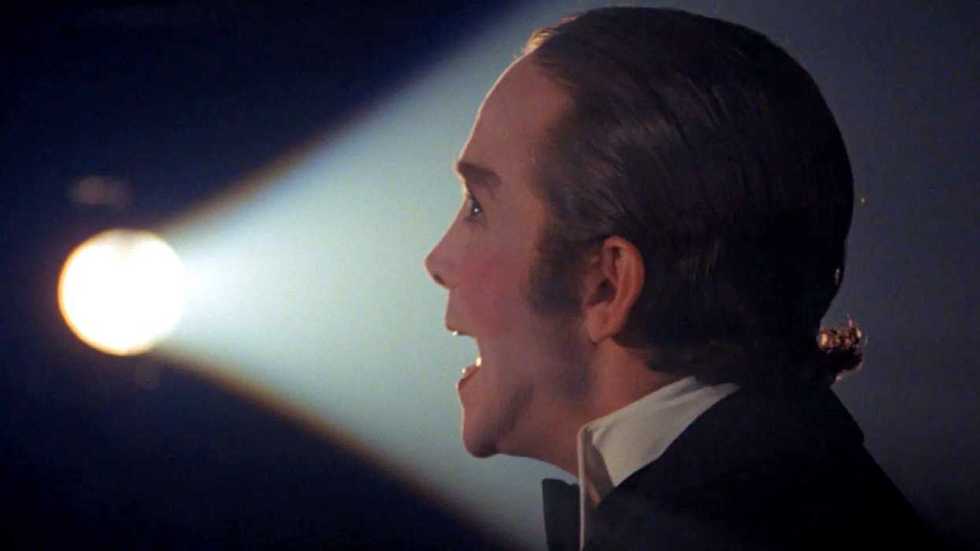
This is a very good place for them to be set, because the club is home to a dazzling stage show led by American performer Sally Bowles (Liza Minnelli in her breakthrough film role) and hosted by a mysterious and alluring MC (Joel Grey). Minnelli (who, with this film, burst out from the shadow of her legendary mother, The Wizard of Oz star Judy Garland) and Grey give riveting performances that earned them both Oscars the following year.
A number of these songs have been made famous both by the stage show and the movie over the years, including Grey’s opening number, "Willkommen," and Minnelli’s barn-burner of a torch song, "Maybe This Time." However, the number that probably best exemplifies the indefatigable energy of Cabaret is Sally Bowles’ first on-screen solo number, “Mein Herr.”
Video embed: https://www.youtube.com/watch?v=VBMYmY9NvEw
With just a chair, her body, her voice, and a few backup dancers, Minnelli makes the song into a spectacular showstopping number. Fosse’s choreography asks Minnelli to use every last bit of the chair and the stage, and she makes every last intricate step look effortless, all while singing her lungs out at the same time.
It’s easy to imagine why the film’s audience surrogate character, a shy British writer named Brian Roberts (Michael York), would be swept up into the glitz and glamor of Sally Bowles and the people in her orbit.
Cabaret Uses That Light To Sneak in the Dark
It can be difficult for musicals, both on the stage and on the screen, to tackle the darker side of humanity. The inherent unreality of characters bursting into song can sometimes make audiences unwilling to accept it when a musical brings in elements that are too harsh or too “real.”
However, Cabaret cleverly utilizes two important tricks to sneak its edgier material past the audience. The first is the fact that all of the songs in the movie are diegetic, in the sense that any singing and dancing takes place in the context of an in-universe performance. Off the stage, characters don’t simply start singing about their feelings (even though many of the numbers in the Kit Kat Klub do thematically reflect what is going on with the characters’ lives in that moment). This makes Cabaret feel more realistic than a movie with normal civilians suddenly breaking out into choreographed dances in the middle of the day.
Secondly, the movie tackles real-life subject matter that is as over-the-top in its horror as the Kit Kat Klub’s performances are over-the-top in their glamor: the rise of Nazism in pre-World War II Berlin. The extreme intensity of the political and personal violence that is brewing around the cabaret leans into the natural exaggeration of the musical form in a way that makes it feel even more dangerous and terrible.
This also effectively brings forth the themes of the movie, which are the fact that the brilliance of the cabaret numbers and the culture surrounding them is actually a spotlight that is distracting people from the world around them and the creeping horror that lurks around every corner. The glitzy glory of those production numbers thus serves to distract both the viewing audience and the characters themselves from what’s happening until it’s too late.
This is most effectively summed up in a single scene, where Brian visits a biergarten with his rich lover, Maximilian (Helmut Griem). The people around them break out into song, singing the optimistic “Tomorrow Belongs to Me.” It’s easy to get swept up in the feeling of the song, which makes it all the more harrowing when it’s eventually revealed that the people singing are Nazis, which turns the tone of the lyrics entirely on its head.
Why Cabaret Still Matters
While the friction between the jovial atmosphere inside the Berlin cabaret and the brewing turmoil outside in the streets is present in every form that the story has taken since its inception (and indeed, in other texts like the 1979 stage play Bent, which was adapted into a 1997 movie featuring Ian McKellen), the movie is best able to weave those two threads together.
While reading the story of Cabaret on the page allows more insight into the inner lives of the characters, that medium can’t quite capture the exhilarating distraction that comes from being a member of the audience at the Kit Kat Klub, and other cabarets like it. Meanwhile, the cabaret aspect can be emphasized by stage performances, which are built for that exact purpose, but the necessities of stage acting require the smaller moments to be played more broadly.
The power of cinema allows for both of those strengths to exist simultaneously, capturing the exuberance of the cabaret performances visually and auditorially while also using the power of close-up camerawork to allow the insidious violence to get under viewers’ skins, showing details and subtleties that would be impossible on the stage.
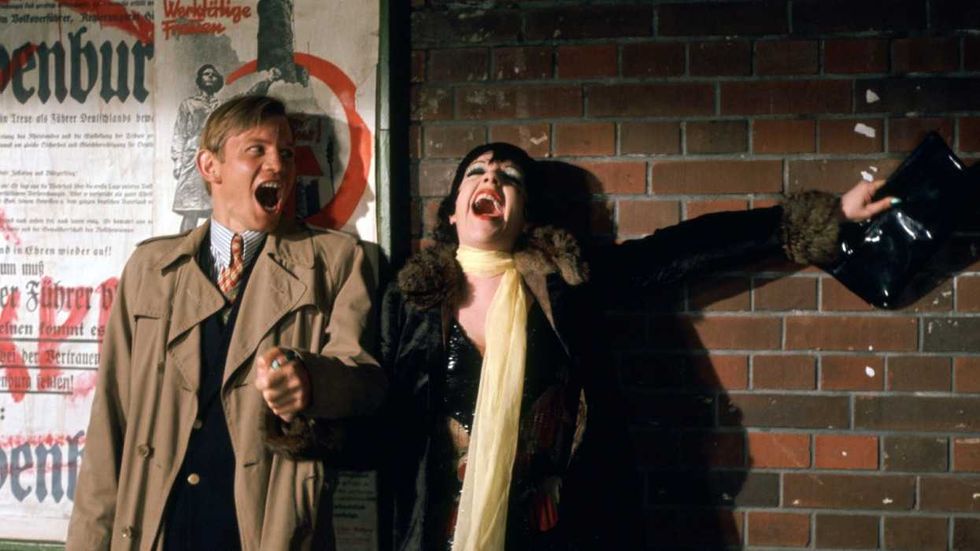 ‘Cabaret’ (1972)Credit: Allied Artists
The success of this endeavor is reflected in the film’s long-lasting legacy. In addition to being a hit in its own time, grossing $42.8 million against its $4.6 million budget and going on to be nominated for 10 Oscars, winning eight (the most ever for a movie that didn’t win Best Picture - it lost to The Godfather), it has lived on in a wide array of homages and accolades.
In addition to being honored by AFI, Cabaret has landed prominent placement on similar lists published by Movieline, TV Guide, The San Francisco Chronicle, Vulture, and many more. It has also inspired everything from the ABBA music video “Money, Money, Money” to a major character in Schmigadoon Season 2.
The time has come to weigh in. If you have seen Cabaret, do you feel that it has merited a mention on the AFI list? And if not, does its inclusion make you inclined to add it to your watchlist? Sound off in the comments below!