Alfred Hitchcock’s 1960 masterpiece, Psycho, broke new ground for the horror genre in countless ways. From dropping hints about the twist everywhere you look to switching main characters almost halfway through, even 66 years later, the film leaves us with some really substantive lessons on screenwriting.
Let’s take a look at some of them.
Why the Mid-Movie Protagonist Switch Works
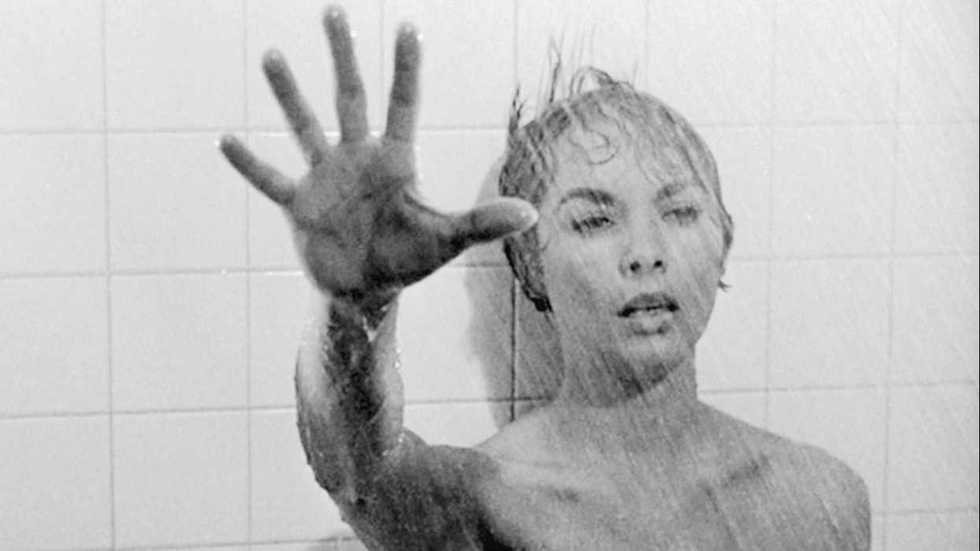
One of the many things that Psycho remains famous for is its abrupt structural change roughly 40 minutes into the film after Janet Leigh’s character, who is initially presented as the protagonist, is murdered in the shower by “Norman’s mother.” What was initially supposed to be an “on the run” style thriller has now been catapulted into a murder-mystery thriller.
There are two main reasons why such a big shift this late in the film works so seamlessly. The first is that the $40,000 that Marion Crane stole is unknowingly thrown into the car by Norman before it is sunk into the river. The initial MacGuffin of the story is still in play.
Furthermore, Marion’s sister, Lila Crane, played by Vera Miles, is a character who has already been previously hinted at as being nervous about her sister’s behavior, and plans to get to the bottom of why she would have stolen the money. This seed being planted early in the first act of the film allows the shift to her perspective nearly halfway through to feel earned and justified. Even though we haven’t physically met her yet, we already know her goals and her desperation.
How Psycho Hides Its Twist in Plain Sight
A major trait about Psycho that you’ll come to notice upon multiple rewatches is that the film is certainly not shy about hinting at Mother’s real identity. It’s clear pretty immediately that Norman is a creep. He speaks ominously about the world, he stalks Marion while she changes through a hole in the wall, and generally behaves with an anxiety that screams, “I’m hiding something dark.”
Furthermore, while facially blocked by shadows, when “Mother” kills Marion in the shower, it’s clear that she is moving far more nimbly and quickly than Norman has alluded to her being able to do. We even see this reflected later in the film in the overhead shot showing Norman carrying Mother down the stairs as she’s rendered immobile. However, this moment only comes after she’s murdered Arbogast. There are contradictions to Norman’s story splattered everywhere in the film. But because they’re so glaring, we as the audience don’t think to immediately suspect foul play.
But the big key here as to why this all works is that the film also never deliberately shows a fakeout moment to throw the audience off the trail of the twist that would generate some form of plot hole. We never see Norman and Mother walking or moving in the same shot together, we never hear Mother calling out for Norman when Norman is in frame, and we never get any alone time with Mother until Lila discovers her corpse in the basement. The film consistently toes the line of hiding the big twist of the film in plain sight, while not trying too hard to throw the audience off the breadcrumb trail.
Why Norman Bates is So Terrifying
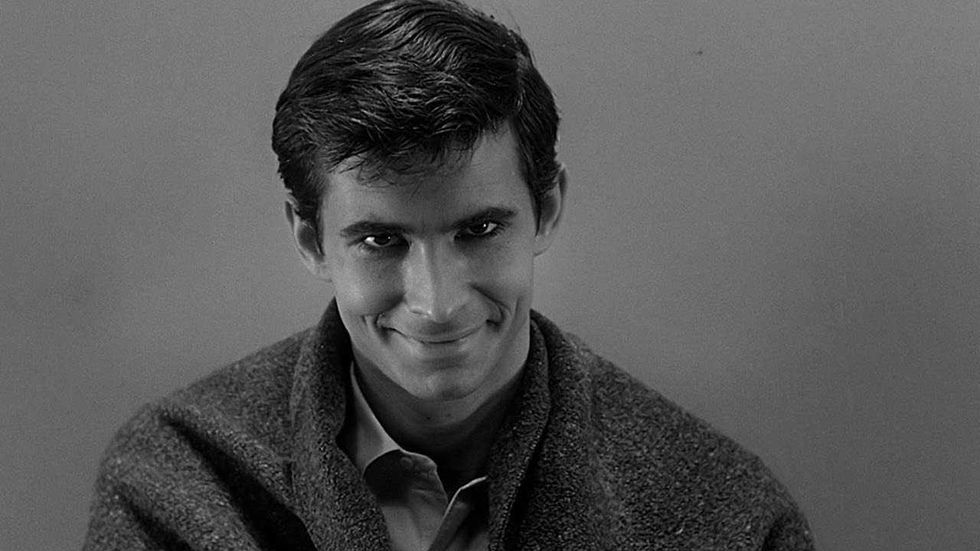 ‘Psycho’Credit: Universal Studios
What makes the initial reveal in the Bates basement of Norman’s double life and personality so unsettling comes down to two things. The first is obviously Anthony Perkins’ iconic, terrifying performance. The smile on his face as he enters the frame with the knife, dressed as Mother, is enough to make anyone shiver. But arguably more importantly, we subtextually still have no real, clear idea of a motive by this point beyond “he’s just really crazy.”
After Norman is apprehended, there is an extended scene in the police precinct where a psychologist analyzes Norman to an audience of people as a means of explaining his backstory and motivations to the audience. If the film were made today, there are elements to this scene that could likely be improved just for the sake of avoiding a potential exposition dump. But in 1960, a twist like this was so groundbreaking that people really needed the extra explanation.
What’s more important, however, is the final scene that comes right after. In a single, nearly unbroken shot of Norman backed up against the wall of his cell, we see him embodying Mother once again, but in a non-verbal, overly performative show of domesticity. We hear his inner thoughts as Mother above this performance, as it gives us a truly horrifying glimpse into Mother fully taking over his body, and acting as an environment manipulator through his split personality. The infamous final line, “Why… she wouldn’t even harm a fly,” says more about the relationship between Norman and Mother while Mother was alive, as well as Norman’s current mental state, than any other action scene in the film.
Obviously, the ambiguity of the final moments only lasted for so long, with various film sequels and a TV spinoff giving more insight into the relationship down the line. But, when examined as a standalone project, these elements of Psycho’s screenplay still deliver on the chills both on screen and off.