As I was taking a writing break to find inspiration, I came across a recent video from writing instructor John Matthew Fox that breaks down five trends reshaping the publishing industry in 2026. While Fox addresses novelists, these shifts translate directly to screenwriting and indie filmmaking.
Check out his video here.
- YouTubewww.youtube.com
Selling Direct Could Be the New Reality
Fox says, "Self-publishing needs to move aside because now selling direct is the new thing that most indie authors are doing."
For books, there are lots of pros and cons between traditional publishing and direct sales. Now, authors are asking why they should give anyone a cut of sales when they can sell directly to audiences online. Authors are cutting out the middleman entirely.
For screenwriters and indie filmmakers, this could look like rethinking funding and distribution. Instead of chasing traditional distribution deals that take 30-50% (or more) of your revenue, you can sell directly to audiences and keep most of what you earn.
For film sales, you might look at Vimeo On Demand (10% fee), Gumroad (10% on free tier, 0% on paid), and Filmhub (distributes to multiple AVOD platforms with 50/50 revenue split).
Letterboxd Video Store launched in December 2025 and might be the most important development for indie filmmakers. The platform's 17+ million users are already logging films and reviewing them obsessively. Now Letterboxd can license your film and put it directly in front of people.
The story of It Ends shows how this works. The indie film premiered at SXSW 2025, couldn't secure distribution, debuted on Letterboxd Video Store, and was later picked up by Neon for theatrical release.
As Filmmaker Magazine wrote, "They've opened up a new channel of communication between filmmakers and their audiences."
For crowdfunding, Seed&Spark often reports significantly higher success rates (around 80-82%) for its film/storytelling campaigns compared to Kickstarter's overall rate (around 38-43% for film). Equity crowdfunding through Wefunder lets you offer actual ownership stakes rather than just rewards—filmmaker Jim Cummings has used this successfully for projects under $300,000.
For screenwriters, these are some things you might consider on your way to producing your next project:
- Sell scripts directly as digital downloads through Gumroad, your own site, or maybe Substack
- Create audio drama versions of your scripts and sell them as podcasts
- Offer early access to scripts or production materials for paying supporters on Patreon
 Credit: Letterboxd
How to Compete When AI Writes Scripts
"AI-written books are only going to grow, right?" Fox says. "In the future, there will be websites that you can go to. You can upload your character names, and an outline, and a machine is going to spit out 80,000 words for you."
It's a scary thought.
There's a piece from screenwriter Simon Rich that I think about all the time, an editorial he wrote in 2023. He was worried back then, around the time of the WGA strikes, that AI was already coming for his job, even though ChatGPT wasn't the best "writer" at the time.
"I think it’s only a matter of time before AI will be able to beat any writer in a blind creative taste test," he wrote. "I’d peg it at about five years."
It's likely that time is coming, and studios will use this. But the good news is that writing that all draws from a common well tends to sound the same (at least right now) and can't be super-creative with its content. So how can you make sure you stand out?
Fox says you can be a "human-only writer."
First, market yourself as all-natural. "In bodybuilding communities, they have this question where they'll go around to, like, super-jacked guys at the gym and be like, 'Hey, bro, you natty or not?'"
The human aspect of writing will likely become a very important currency when we realize that AI writing is going to be largely formulaic and homogenous.
I've seen a lot of social media marketers push the same narrative—in a time when content is generative, sloppiness and humanity will (hopefully) become more valuable. The fact that you are a human writer can be the thing that sets you apart.
Second, write more like a human. That can be slightly messy and outside a formula. Fox names six areas to focus on.
- Use instinct, not formula. AI loves those Save the Cat beat sheets. It loves rules. You need to break them in ways that feel emotionally true (as long as your story still makes sense).
- Draw from real life. Life is strange and specific and unexpected. You've lived in a way no one else has. Use that perspective.
- Focus on language. This means your voice, in specific slang or poetry or word choice. Include the words you love, not words suggested by an LLM.
- Create human characters inspired by real people. AI doesn't really understand human motivations and will try to make characters follow rules that make sense to it. These characters are not going to have the diversity of experience that real people do.
- Explore contradictory emotions. AI loves to tell you that if a character is sad, they will always be very visibly sad. But sometimes a sad person is just unhinged, or manic, or laughing inappropriately. Get out there and observe real people. Not everyone acts the same.
- Write things that AI can't. In his 2023 piece, Rich was concerned about AI telling jokes but said it wasn't there yet, and Fox agrees that humor is a place where something like ChatGPT falters. It's also bad at satire and irony. And as mentioned, AI likes everything to be really obvious, so subtext is also nonexistent in what it gives you.
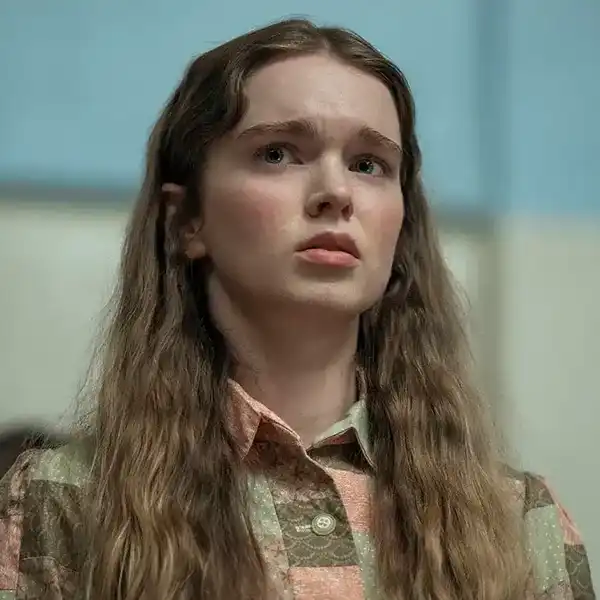
 Eighth Grade Credit: A24
Get on FilmTok
"BookTok is the primary marketing channel," Fox says. He adds, "According to Circana Bookscan, TikTok is responsible for selling one in every 12 books."
We don't have to tell you that being part of the conversation online can be huge for your film. I remember when everyone was talking about Skinamarink. Heck, people are still talking about Skinamarink on TikTok. There are so many people who would not know about that movie if not for online reactions and discussions.
Film TikTok (or FilmTok) is an incredibly valuable audience. As our piece on film marketing trends from a Barbie campaign insider notes, TikTok content can be diverse—thirst traps, reviews, dramatic or comedic edits, even picture slides.
Right now, I'll say I'm seeing a ton of edits on Luc Besson's new Dracula, even though that movie doesn't come out until February. (The girlies love to pine, and they also love Enya's "Caribbean Blue.") Free advertising, and it's organic!
The reason this works is authenticity. People just love to yap, and they love to get creative.
For indie filmmakers, a solid marketing goal could be getting screeners to FilmTok creators. Not necessarily influencers with millions of followers—find people with 10,000-50,000 followers who review films in your genre.
Filmmakers are also using TikTok for promotion, behind-the-scenes content, and building audiences. Some are even making entire films on the platform, like the scripted horror series Mountain Murder Tapes, which garnered over a million views.
Summing It All Up
Gatekeepers matter less. Direct audience relationships matter more.
That being said, if a studio offers you $200,000 for your script, take it. But there are other options now.
Platforms exist for direct sales, and you can crowdfund your indie films and build your audience through social media.