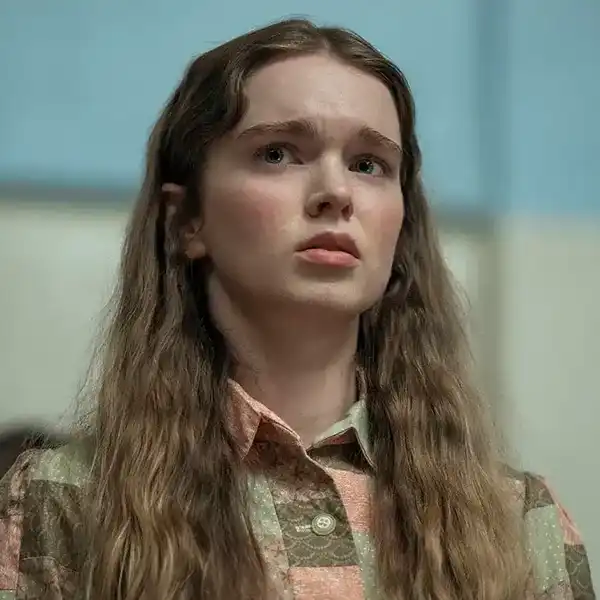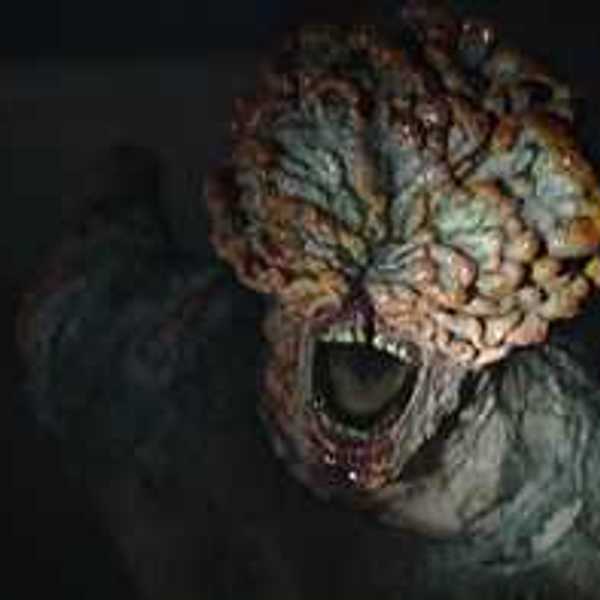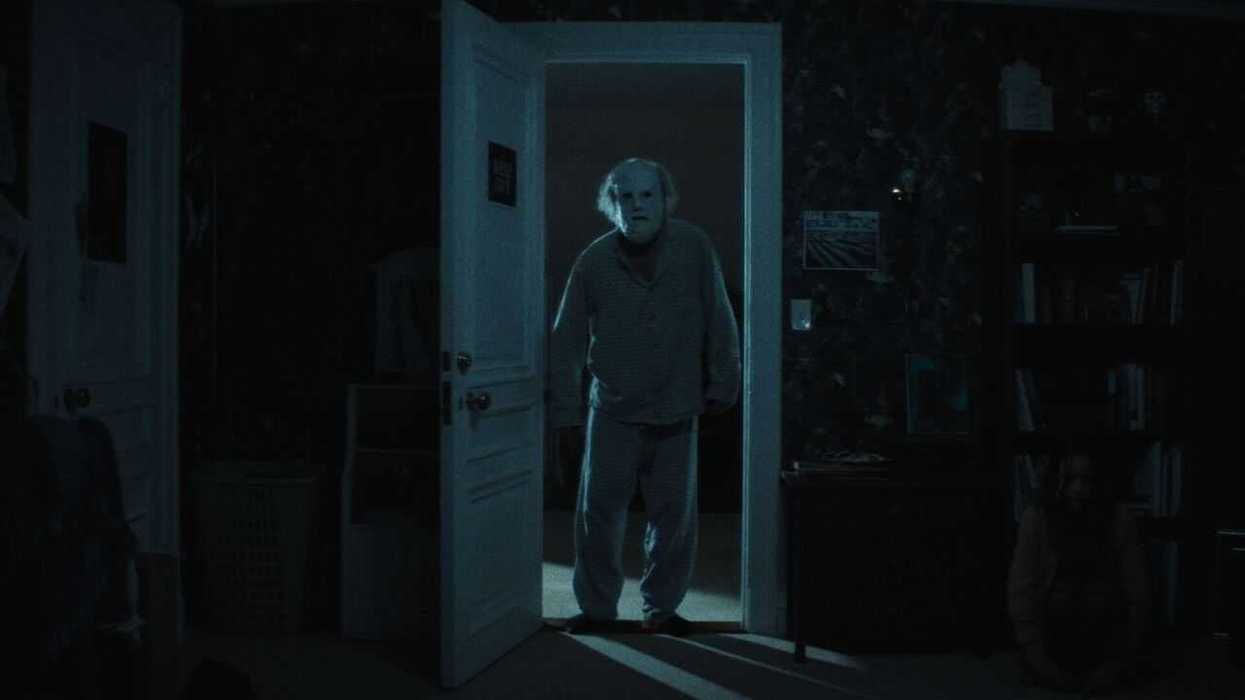
You know that I'm always going to seek out the horror films on a festival schedule, which I was so delighted to see Recluse during the Tribeca Film Festival this year. The gothic chiller had its world premiere at the festival. It follows Joan (Sasha Frolova), a film sound recordist called back to her childhood home to care for her bedridden father. What she finds there is a house sitting on a pile of buried family secrets and a dark energy she can feel long before she can see it.
Writer/director Henry Chaisson's directorial debut leans hard on mood over gore. For its restrained, tense look, Chaisson turned to cinematographer Bryce Holden, who shot the film on an Alexa 35 and built its dread through calm more than spectacle.
We chatted with Holden about how he did it, and there's plenty here you can steal for your own set. (Sidebar, if you missed this one in New York, it's also playing Fantasia Fest at the end of the month.)
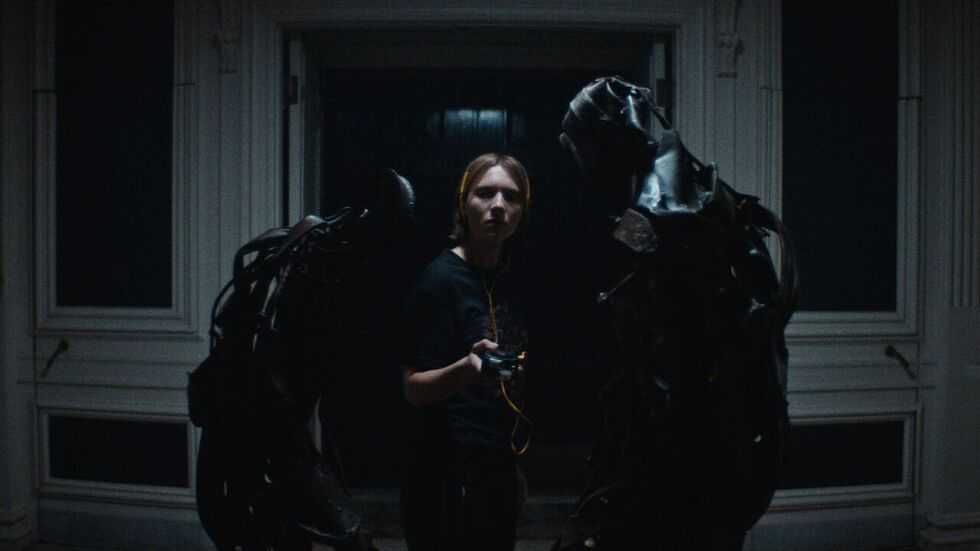 Recluse Courtesy of Tribeca Film Festival
No Film School: You came up as a 1st AC and camera operator before moving to DP. What did that path teach you that you don't think you could've learned any other way?
Bryce Holden: Yeah, I was fortunate enough that when I moved to Los Angeles after finishing my undergrad in Michigan, I got lucky and found stable work working as a 1st AC for a couple of DPs, and that taught me a lot very quickly, once I started getting on “real” sets and getting my hands on multiple types of cameras.
I think one other good thing coming up as 1st is not only getting the technical knowledge of working with the cameras and all the different tools, but just getting to be on sets with different DPs and witnessing how they do things like light and run their crews, and how they interact with directors.
Through camera assisting a bunch, I got the opportunity to work as a camera operator with a DP, a close friend that I had 1st AC’d for a lot on a travel show for National Geographic, and that was always a big eye-opening experience for me because I got to travel the world and work in all these different countries and really get a taste for the run-and-gun documentary life.
NFS: When you're prepping a horror film, what's your process look like?
BH: When I begin prep on a film, I wouldn’t say there’s anything I do differently on a horror film vs. a non-horror, but either way, it always begins with reading the script and finding some sort of connection within it that I can latch onto.
And then I’ll usually come back to the director with some ideas that I wrote down or references that circulated in my head while reading through it, and see if we connect. I think with the first read-through of any script, it's hard not to let your thoughts start to wander about references and ideas, but I do try to keep a clear head and not bring too many references to the table for the next meeting. Because I don’t want to overwhelm a director with ideas before I’ve had a chance to talk with them and see what their vision truly is.
After that initial phase, I feel like I’ll try and spend as much time with the director as possible, talking about the script, any references, maybe trying to watch a few things or look at art together, etc., and really just try and get in their head of what they want and how I can elevate and bring my own visual sensibilities to it in some way.
NFS: Did anything change in your approach between your first feature film as a DP (I Trapped the Devil) and this one?
BH: It’s funny you ask this because I feel like I was just talking to someone about this, and I’m not sure my prep has changed much from my first feature to now, but I actually maybe prep a little less? Sounds like a crazy thing to say, but I feel like for that one because it was like my first “legitimate,” I guess, feature film, I was young, and I wanted to do such a good job and make it the best thing I could, that I feel like I obsessively prepped over it, haha.
And you know that was a very small film, and we didn’t have many resources, so in the end, there was only so much I could do. But maybe now, my prep is a little more focused and not all-consuming like it was for that first one.
NFS: The protagonist in Recluse is a sound recordist, and sound design plays a huge part in the story. Did Joan's profession ever inform how you thought about the image?
BH: Yes, it definitely did. I would say our approach for the film in general was having a lot of restraint with the camera, until it doesn't. But in life, I’m a big listener as opposed to a talker, I guess you could say, haha, and I think I found myself asking, "What does it look like to listen?"
It maybe doesn’t sound like the most glamorous thing. How do you photograph someone listening? And I felt that in those moments the camera needed to be doing very little and be still because that’s sort of what you do when you’re trying to really listen or hear something or someone.
In a number of the moments when Joan is walking around the house or the grounds outside, listening in her headphones, we decided to do a lot of slow zooms with a long lens because I think there’s something about slowly zooming on characters that can really almost put you in their headspace. It's weird, but it made sense to us for those moments, and it helped us create some longer takes because we knew there would be audio of all these ambient things over those moments.
NFS: What did you shoot on, and were there any specific lens or format choices that felt essential to the film's look?
BH: We were lucky enough to shoot on the Alexa 35 for this project. And pretty early on, I think Henry and I, the director, talked about shooting in anamorphic because we thought that format would really lend itself to showing these wide vistas of all the different rooms and the property, and we also talked about this language with the zoom that I mentioned earlier.
So we decided to use the Atlas Orion Anamorphics, which I had used a few times before, but I think they have some lovely characteristics, especially while shooting wide open. They get super soft and have some cool aberrations, and I’m one who’s all for dirtying up the image a bit and embracing the imperfections of lenses, etc.
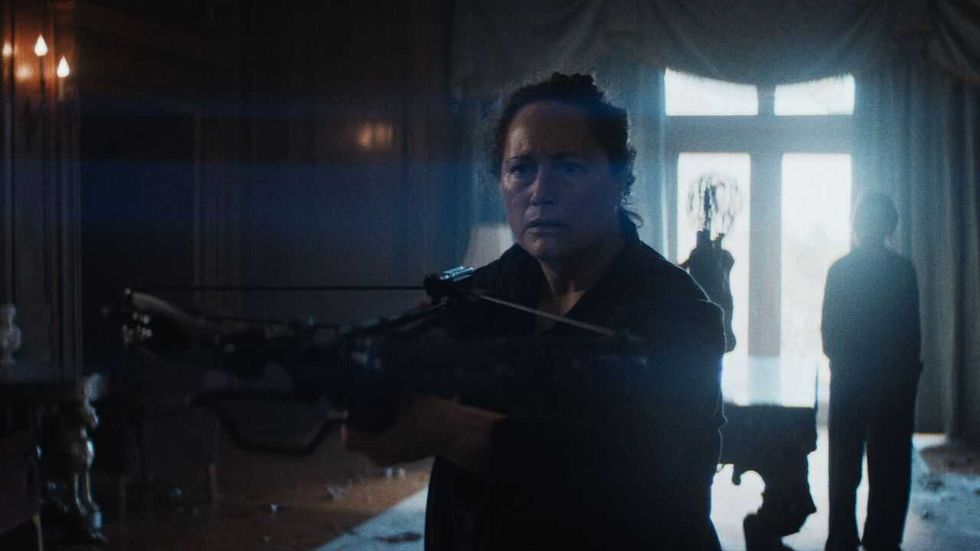
They also have some pretty amazing flares, and I loved the blue streak horizontal anamorphic flare they give off. Along with that, we used a spherical Angenieux 24-290 because it was out of our budget and hard to find a good anamorphic zoom where we were shooting.
I will also add, on the Alexa 35, we used the soft nostalgic grain texture, which is my favorite of the new textures ARRI has added, and I was super pleased with how that texture looks in the finale film and seeing it on the big screen.
 'Recluse'Courtesy of Tribeca Film Festival
NFS: Recluse is an atmospheric Gothic horror—what was your lighting strategy in a space like this?
BH: Yes, my lighting strategy on this I wouldn’t say was very different from how I normally like to light on any other project. I always try to go with a less-is-more approach and adhere to the great cinematographer Harris Savides' style of lighting the space, because I really love allowing the actors and the director freedom to work within that space. If they want to move from one side of the room to the other, I think they should be able to, and I never want to limit them to just one area.
I actually hate having a bunch of stands and gear around the area we are shooting in if they aren’t necessary, and I joke about this all the time with my crew.
But being a gothic horror film, Henry and I were very inspired by the paintings of Andrew Wyeth, Edward Hopper and some older renaissance painters where alot of those artists use single-source lighting, mostly motivated from the window or a candle, and because we were lucky enough to shoot in this beautiful estate with huge windows, my goal was to try and keep most of the lighting outside and push in through those windows as much as possible.
I feel like so much of the film is about keeping things out of the house and protecting the secrets inside that I wanted the interiors to feel like the sun was trying to get in while being forced out.
NFS: What were some unique challenges of this project?
BH: Some challenges were, as always with a project like this, there's a small budget and my team was very small who all did an amazing job, but the schedule every day I would say was pretty jam-packed with things to shoot, plus location moves all around the house, outside and inside, etc., and then there were a number of times where we were battling the actor's availability and shooting things very out of order, which I feel can be super challenging especially when you’re shooting some of the final scenes of the film on the first day or something.
I think sometimes instances like that can be very challenging on smaller productions because I feel like everyone, including myself and even the actors, needs some time to really discover the flow, and "what this is gonna be" before getting into scenes like that.
I feel like one day, I’d love to shoot a movie in chronological order like Refn supposedly does!
NFS: What advice do you have for an up-and-coming DP wanting to work in horror?
BH: I’m not sure I’d say I’m a "horror DP," haha, although I have shot a couple of horror films. But one piece of advice I’d say is that I think anyone who wants to be a DP or work in film, for that matter, should love films, not only making them, but watching them, analyzing them, talking about them with friends.
I just think it's good to have a vocabulary of films in your repertoire, not only seeing things that came out this year but seeing things from 10, 20, or 50 years ago. I also think it’s important to know the history behind certain genres, like horror, for example, and know the films that influenced this and that and led to this, and who shot what, etc.
I think knowing these things is extremely valuable in developing your own style and voice as an up-and-coming DP, and it's knowledge that can help you in all aspects of production and working with a director and your team.
NFS: Is there anything you'd like to add about the film or your experience?
BH: Making this film was super challenging, like most films are, but also incredibly rewarding. It was such a fun project to be a part of. We honestly had the best crew filled with many friends that I had worked with on projects previously and supported by a great local crew out of Boston, MA.
I mean, we all got to live in this amazing but incredibly creepy house that you see in the film, and truly, we were like one big family. I’m so proud it got to premiere at a festival like Tribeca, and so many people came out to support it each night for every one of its screenings; it was amazing to see. I’m honored that Henry gave me the call to come shoot this almost two years ago and to be a part of the experience with him, and I can’t wait for the next one.
I look forward to seeing where Recluse goes next, and hopefully, you can catch it on the big screen somewhere soon.