The invisible hand behind some of television's most addictive TV shows belongs to the editor. For Chris Rodriguez, ACE, the path to shaping the cultural zeitgeist comes from the sweaty, chaotic DIY punk and metalcore garages of Orange County and somehow found its way into his edit bay today.
Whether he is capturing the rapid-fire, overlapping comedic brilliance of a Kevin Hart roundtable in Funny AF, navigating the high-stakes emotional minefields of Netflix’s Love is Blind, or pacing the sleek competition of Project Runway, Rodriguez views the timeline as a site of constant discovery.
We sat down with the veteran editor to discuss his journey from burning DVDs for local bands to earning his ACE letters, the art of leaving in the "imperfections" to achieve authentic comedy, and why the best editors trust their gut over the software manual.
Let's dive in.
- YouTubewww.youtube.com
NFS: What first drew you to editing, and when did you realize it was the creative role you wanted to pursue professionally?
Chris Rodriguez: I was raised in Orange County, California, during a really exciting time. The hardcore and metalcore scene was exploding; every block had a garage band. A handful of my friends were in bands, and even my brother was in a touring band. I wasn’t patient nor gifted enough to play an instrument nor scream into a microphone that was always just above my head. But I was a creative kid, and I was drawn to the one thing I couldn’t keep my hands off of, which was this little Sony Mini-DV camera that my dad had picked up from our local Fry’s Electronics. So naturally, I started filming my friend’s bands, just messing around, shooting their local shows and practices, even our late-night stints at Del Taco. I would ingest the footage into Final Cut and mess with whatever I captured and at that time there wasn’t a place to upload it to so everything lived as either a QuickTime file on my desktop or on a burnt DVD, and I would just pass it off to friends, and this very quickly became an obsession over time as I got deeper into documenting the music scene around me.
This hobby eventually led me to writing treatments and directing music videos. As much as I enjoyed directing, it was in the edit where I would be completely energized and lose all track of time. Being on set was cool, but I was always just antsy to get back home, starting to ingest the footage so I could start what I felt was truly the creative work. What I loved about the process of editing early on was this constant process of discovery and creation. I was learning how to shape a story, learning new ways to quickly convey emotion in a two to three-minute music video, and this all led to editing becoming my true passion. I am really fortunate to have found this calling really early on in my career, and I still love it just as much as I did back then.
NFS: Working with a talent as distinctive as Kevin Hart on Funny AF, what have you learned about editing around a strong comedic voice?
CR: When you work with a talent like Kevin Hart, you quickly realize that the funniest moments are often the ones that aren’t scripted. His comedy is successful and fun because it comes across as spontaneous and natural, even when there’s an underlying structure to it all. As an editor, I’ve figured out that my job isn’t to make every single moment perfect, so it sounds like it’s been rehearsed over and over again. Instead, I’m always chasing the moments that feel the most real and genuine. This can help make the content feel more authentic and relatable, rather than something that has been put together in a factory.
I actually took this approach from Butch Walker, a famed music producer. In his recordings, he likes to leave in all the subtle mistakes, like someone coughing or a chair creaking. He thinks these small imperfections make the music feel more real and honest. When you listen to his albums, it feels like you are right there in the room with the band. Walker wants his listeners to feel like they’re getting a real artist. This allows the music to feel more personal and intimate. By creating these flaws, he believes you can transport listeners to another time and place, and that overall creates more engagement.
So when I’m editing, I try not to get too caught up in the tiny details, like being hyperfixated on replacing every shaky shot or grammatical error in a bite or take, for instance, the round table discussions with Kevin, Chelsea, Kumail, and Keegan. The comedians were always talking over one another, but that’s what made it funny. I didn’t try to isolate mics or give each person their own moment. I really just let them rift. Viewers can tell when something feels real, honest, and genuine. I think that’s what people respond to the most. I take this same approach to both Love is Blind and Project Runway, preserving the most authentic moments, helping make it that much more relatable.
NFS: Reality television often hinges on unexpected moments. Have there been any surprising scenes that completely changed the direction of an episode during the edit?
CR: Absolutely. I would say the biggest thing I’ve learned from editing reality television is that the story you think you’re cutting in the beginning is rarely how it turns out once you deliver the picture lock.
On a show like Love is Blind, these unexpected moments occur every season. A good example of this would have to be the relationship dynamic between Nick, Hannah, and Leo in season 7. As we dug deeper into the footage it became clear that Leo played a much more important role in Nick and Hannah’s story than we initially thought. Hannah’s dates with Leo, as well as her private conversations in the women’s quarters, gave us a much better understanding of her feelings and what she was ultimately looking for in a partner. Leo’s presence essentially helped us to fully understand what Hannah liked about someone and, most importantly, what she didn’t. By fully embracing Leo as an important cast member, it gave us better context and helped to shape Hannah’s emotions and actions, which gave much more weight behind her decisions, and this made her storyline feel much more real and complete. Sometimes a cast member's greatest importance isn’t their own storyline. It’s what they help reveal about someone else. When you start to uncover these interactions and new perspectives, entire storylines can take on new meaning.
That’s the beauty of working on a show as dynamic and unpredictable as Love is Blind. The story is constantly evolving, and we are always finding ourselves stopping to reassess new material and how it fits into the bigger scheme of things. This is why it’s important to watch every frame of footage, even the moments where the camera crew feels like they are not ready. Every piece of footage and audio captured matters. Embracing all the unexpected moments can completely change the direction of not only an episode, but it can even shape the arc of a couple’s entire journey outside the pods, all the way to the wedding day.
NFS: How do you know when an edit is "finished," especially when there are always alternate versions or additional moments you could include?
CR: I think for me an edit feels “finished” when I’m watching it back and every moment feels earned and purposeful. If I feel like I’m on that rollercoaster and I’m left wanting more, that’s when I know it’s done. It’s hard to describe; it’s more of a gut feeling. If I can get through a scene without hitting the space bar, that’s genuinely a good sign.
If you’re hyper-focused on fixing every little shot or cramming in nuggets of additional information into a scene, you’ll never stop editing. As an editor, you have to be good at knowing when enough is enough. There’s always going to be different shots to cut to, another music cue to try, and ten different ways to structure a scene, so for me, if the story feels like it’s accomplishing what it’s meant to accomplish and I’m both visually and emotionally invested, that’s it.
Editing is really an act of trust. A lot of it comes down to trusting your instincts and knowing when you’ve discovered the story. If you can quickly recognize that the version of a scene or episode in front of you is achieving x, y, and z, you’ll be better able to move on from it, satisfied rather than constantly trying to figure out how to make it better.
NFS: What is the most common misconception people have about the role of an editor in unscripted television?
CR: The biggest misconception about editors working in unscripted television is that we’re the ones doing all the work ourselves.
Post-production in unscripted is a constant collaboration from start to finish. On shows like Love is Blind, Project Runway, and Funny AF w/Kevin Hart, we really rely on everyone around us, from the executive producers, story producers, story APs, and assistant editors. They are often the ones who discover the key moments first and build the string outs that help steer stories in the right direction. From there, my role is to bring my own interpretation into the mix. By giving my own thoughts and ideas, we can start to bounce ideas on how we can really drive the scene.
I’ve found that the more we as editors can lean into this collaboration, the stronger the material becomes. This is actually why I’ve been able to become such a versatile editor working across many different formats from live shows to relationship and competition shows throughout my career. It’s because I’ve been able to fully embrace this collaboration and trust the people around me.
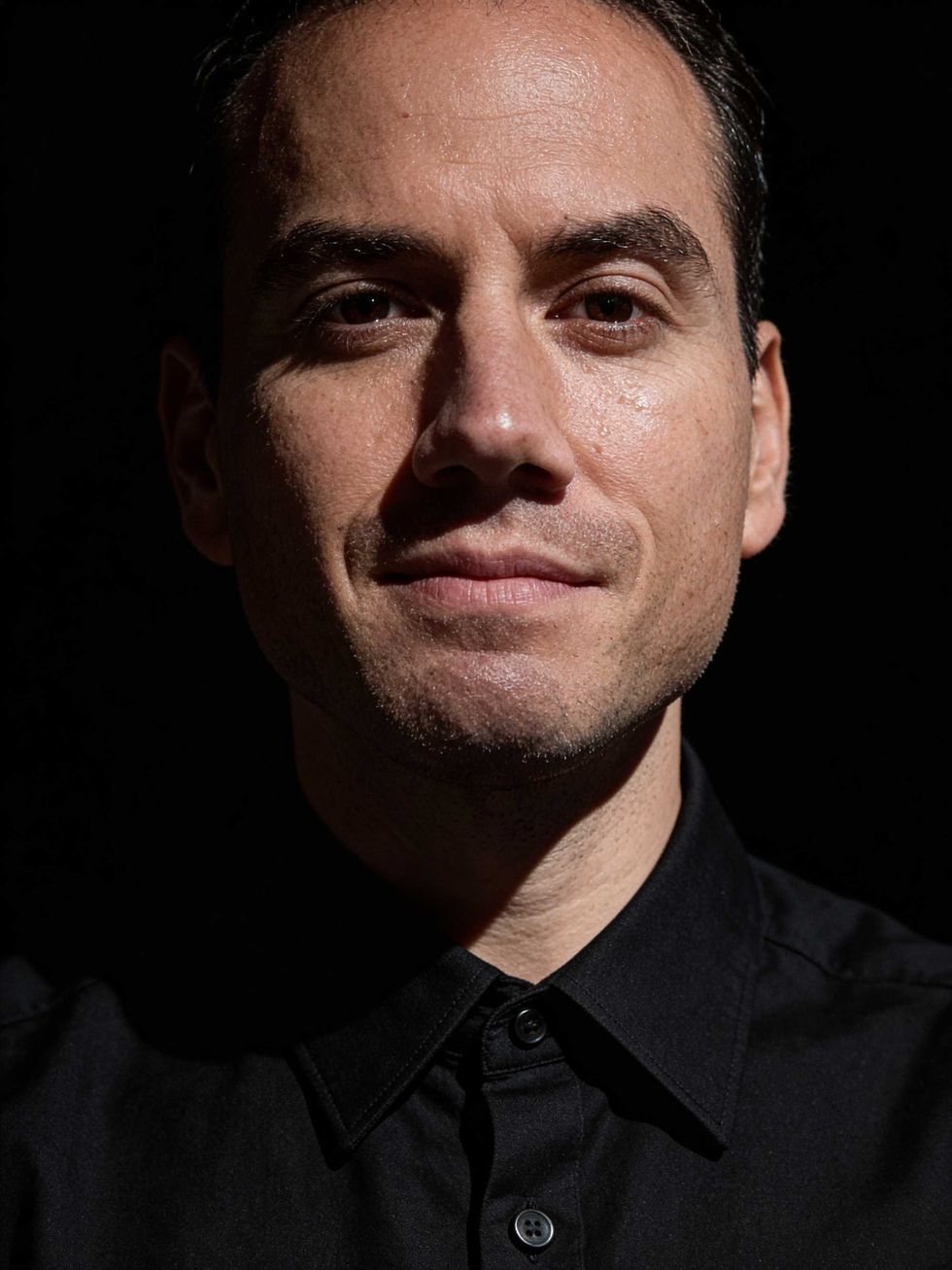 Chris Rodriguez, ACECredit: Impact24
NFS: Were there any mentors, editors, or filmmakers who helped shape your creative philosophy?
CR: I don’t have a mentor or filmmaker who has shaped how I think about editing, to be honest. I would say my creative philosophy developed from just trial and error at a young age. Constantly adjusting and recutting footage, figuring out what worked and what didn’t. I didn’t realize it at the time, but I was building the foundation that helped to develop my instincts and sense of style. I also learned a lot about structure and storytelling from the notes process in working with agents, bands, labels, and managers. Watching how they responded to my work helped me to get better at shaping a story. It really just boiled down to repetition: the more you do it, the more comfortable and instinctive it all becomes.
Even though I was editing and making some money from it, I ended up going to film school because that’s what you do in order to break into the ‘industry’. What’s interesting is that in film school, I hardly ever touched an Avid. I spent much of my time watching movies and writing papers about the theories behind them. I wasn’t being fulfilled, so I ultimately left, and soon after, I got a job as a Post PA runner at Editgods, a Hollywood-based post-production facility owned by ACE editor Guy Harding. What I took from my experience working under Guy wasn’t necessarily building up my skills as an editor. It was understanding the level of discipline and care this profession required, even the bits that didn’t matter as much, like an award show's bumpers being cut and executed like any other big part of the show. Here, I learned all the important parts of this job that are never discovered unless you’re given fast deadlines and larger budgets. Through this experience, I learned the importance of staying clear-headed, trusting your instincts, taking creative chances, and that editing isn’t just about pacing, rhythm, and style. There was a standard you had to always maintain in order to keep clients happy and coming back. This was my biggest takeaway.
So when I think about influences, I don’t have a single person; it was really more about surrounding myself with talented people in an environment where the high level of work raised every expectation imaginable.
NFS: For aspiring editors hoping to break into reality and entertainment programming, what skills or habits do you think are most important to develop?
CR: Taste. I think taste is what separates good editors. Knowing what matters in the footage and what doesn’t is a powerful skill set. When you’re working with hundreds of hours of material, you have to be good at identifying truth and what’s actually going to connect with viewers. Anything that will spark an emotion, conversation, or debate is the stuff you want to get good at identifying.
This is something that can’t be taught; you develop it from constantly watching raw footage or just observing people in general. Going back to Love is Blind, this is what we're constantly doing. Mining for those offhand comments, mannerisms, anything that can add weight. The more you do it, the more you’ll recognize what feels real versus what feels super manufactured.
I think a lot of editors will say that learning the Avid like the back of your hand is important, and yes, that matters, but to be honest, I don’t even know what half the buttons actually do. What I do know, though, is what footage to lean into, the moments the audience is really going to feel, versus what just fills space.