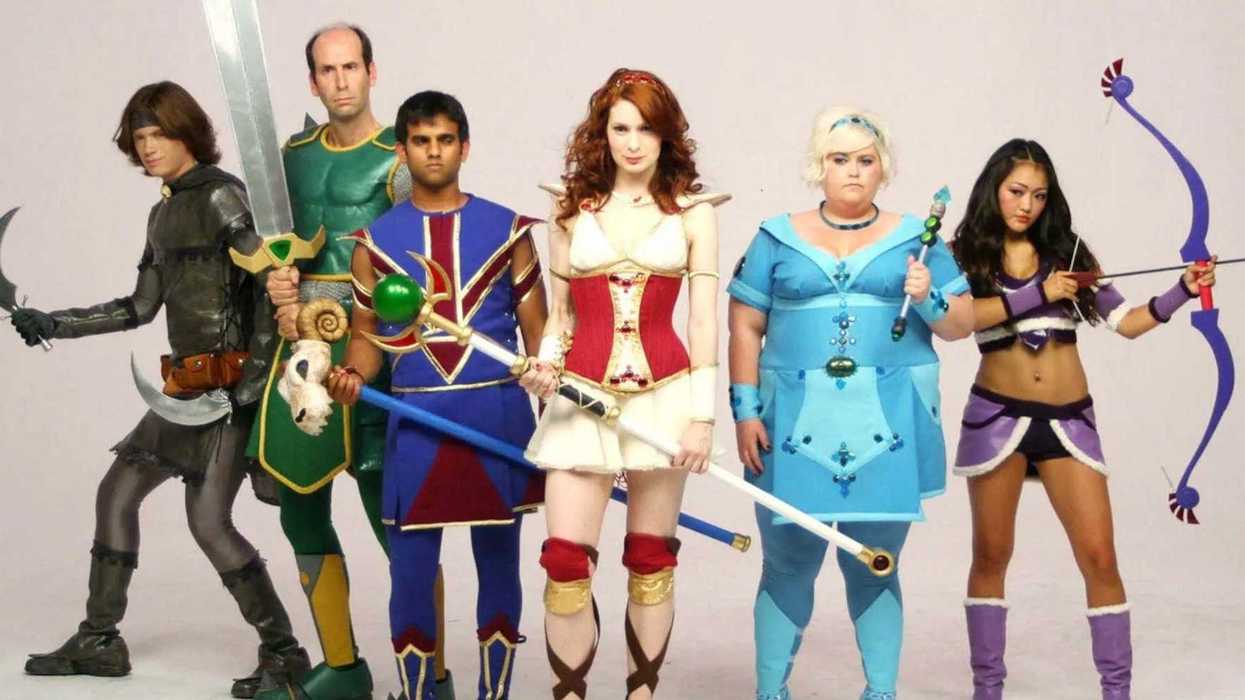
Few creators have a stronger claim to the DIY, fan-funded playbook than Felicia Day.
In 2007, she wrote herself the lead role Hollywood wouldn't cast her in and shot the first three episodes of The Guild at a friend's house on an SD camera for about $300. The popular webseries (which focused on a nerdy group of friends) ran six seasons, launched her into Supernatural, Eureka, and her own company Geek & Sundry, and helped pull gamer culture into the mainstream.
Now she's bringing the Knights of Good back. On July 20, Day will launch a Kickstarter for a feature-length Guild reunion movie, reuniting the original cast to mark the show's 20th anniversary in 2027. She kept the IP and took the project straight to the fans rather than into a studio pitch (a Hollywood exec already called to ask about recasting and rebooting it, and she passed).
We had the pleasure of speaking with Day about how she decides where a tiny budget goes, why she funded the back half of season one with a PayPal button years before Kickstarter existed, how she approaches mobilizing committed fans over chasing passive views, and what she makes of an industry she calls broken. Her answers are candid and loaded with advice for anyone funding a first film.
Enjoy!
- YouTube www.youtube.com
Editor’s note: The following conversation has been edited for length and clarity.
NFS: The Guild became your calling card and launched your career into so many different franchises, allowing you to start Geek & Sundry. When you were sitting down and recording those first pages as an independent creator, what were you hoping would come of it?
Felicia Day: It's a good question because you always hope to find instant success and popularity and money just pouring at your feet with anything you make. We all just want to be instantly successful and have everyone discover how wonderful we are. I had been in Hollywood for many years up until then, and I had worked enough to maintain my life here, but it certainly wasn't a thriving situation. I certainly didn't feel like I was getting opportunities to feature who I am, what I love, and seeing myself on a screen anywhere. And in fact, I was rejected a lot, so I kept trying to change myself to see where I could fit in, and it was never working. So I played a lot of video games, and I got really depressed. And thank goodness I was inspired to write my show as a half-hour comedy with the aspiration of it being a TV show.
Unfortunately, no one understood gamers back then. They still don’t, really. And they certainly didn't understand that people could play games online together. They didn't understand that women played games. All the cliches abound in Hollywood to this day. But back then, it was just a real disconnect.
So the idea of picking up a camera and shooting it on our own was absolutely foreign because YouTube had just started. There were some sketches on there, and that was it. It was so exotic and so cutting-edge. I mean, a lot of people didn't even know you could watch videos online. And the fact that my co-producer, Kim Evey, was actually my sketch-writing teacher as well. She had uploaded a couple of her sketches to this platform and found a development deal with Crackle (Sony, a very long time ago that company was there). So it was her idea to shoot just the first 10 pages as three episodes.
And I was certainly not the kind of person to pick up a camera and make something outside of somebody's permission. So it was thrilling, it was scary, but the first time we uploaded that video, all my thoughts of turning this into a TV series were like, abandoned. I just wanted to make this video and have people watch it and give me comments because I finally felt seen and understood for the first time in my life since moving to Hollywood. And that's where it all started. It was really just me and the connection with the community and the commenters, for better or for worse.
NFS: I always talk about loving that era of the internet because I was on Tumblr, I was on FanFiction.net. It was fun.
FD: It was fun, and it had a community to it. It was hanging out. We don't have that anymore. People don't understand that you would just run to Twitter and you would actually be able to talk to people. And there was a dialogue. So that's what I really miss about the internet. And what I'm finding now that we're doing the Kickstarter for the reunion movie, I'm just like, “Oh, it's so hard to reach your fans now.” It really, truly is. Not only because of the saturation of people, but the algorithms don't want you to connect in the way they used to. And I think it's kind of sad.
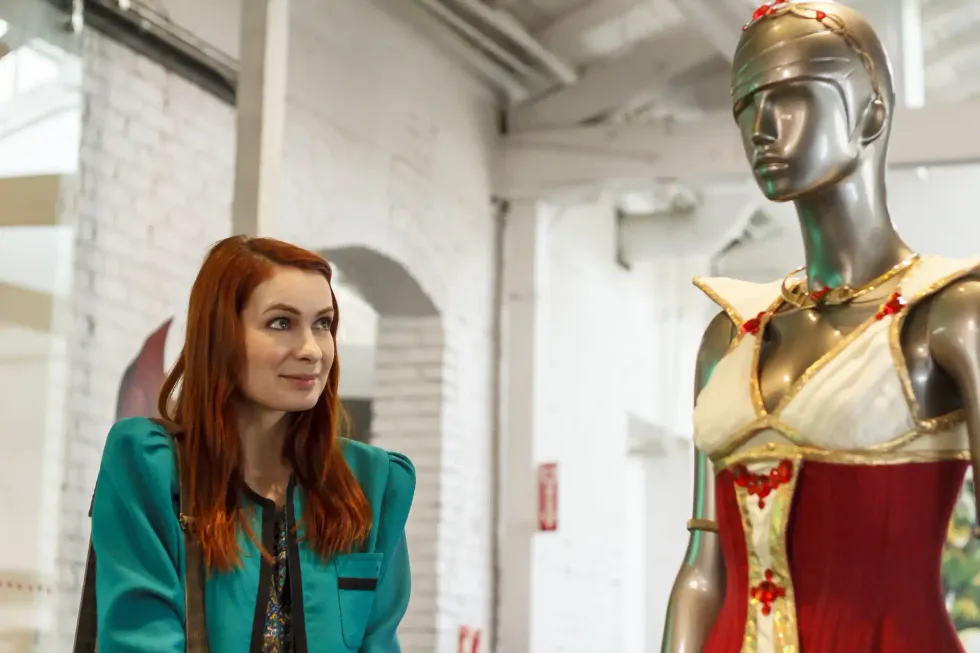 The GuildCredit: Nikita Bogolyubov
NFS: I do want to touch on mobilizing that fan base here in a second, but with the project itself, why do you think now, beyond the anniversary, is the right time for The Guild to be a movie?
FD: It's the anniversary that really was the impetus for it. It's also a Hollywood person finally calling me up to inquire about the show, and they wanted to recast me and reboot the show. That was also one of the motivations. I just felt like I couldn't let the 20th anniversary go without some kind of last hurrah.
I started developing this last summer, before all the Markiplier and Obsession and Backrooms [success] and all of this. So, complete coincidence that it happens to be during a time that maybe we'll get a little bit of extra interest. That would be wonderful because, as you know, movies are expensive.
I shot webseries for very little money back in the day, but we still had a lot of free equipment. We're going to have to start from scratch now, but it's going to be low-budget, and it's going to be great.
And I'm just blessed to reenter the world where creators are a lot more supported, and there are a lot more resources, because we were just inventing everything as we went along back then. I mean, I put a PayPal button up on the website in 2008 to try to fund the rest of Season 1 because there wasn't a Kickstarter. It was just a whim. Put this button up, see if people give me money. They did. And we finished the season and started prepping two. And we got a distribution deal, I retained the IP, and here we are in a new world, but also not really new because it's back where I belong.
NFS: So you have the script. What are you most excited about exploring with these characters?
FD: The script took a long time to develop. I certainly wanted to make it relevant now. I didn't want to betray anything that we'd done in the past. I wanted to find ways to make it fresh for me and the audience, but also familiar.
You're always walking a knife's edge when you're trying to reboot something, but I promise you on the 20th, when we announce the movie, the setting will be exactly what it needs to be, and people are going to be very excited. The characters are exactly who you thought they would be.
We had a reading of the script before I decided to really fully commit to the Kickstarter because I was like, "I need to make sure this movie holds up. It's worth asking people for money for. " And within 10 minutes, we were all back in our joking, teasing-each-other way. We were fooling around. We were rolling our eyes at each other, and it just felt like coming home.
The script is really funny. Everybody was so happy to read it. It was perfect. It was exactly what I worked so hard to bring together, and just getting the band back together was just a thrill.
NFS: You already mentioned this is going to be low-budget, and recently, you did an interview where you talked about doing less, but doing it better. So how does that look in your approach to this project?
FD: We shot [The Guild] for such a low budget, and we had free stages and free equipment from YouTube, especially for our last season. We paid people web rates.
So when we were budgeting and seeing what the bare minimum we could make this movie for was, it was vastly different from what I thought 14, 15 years ago. So it's been an adjustment, but there are certain things that we need and certain comforts and things that I don't want to go back to doing.
I don't want to go and get craft service for everybody. I'm sorry. We can't shoot in our homes. We're all grown up. We want to pay people decent wages ... and we want to shoot in Los Angeles because we all live here. Each one of those things incrementally makes the budget more and more. We're certainly still going to be nowhere near any other, even low-budget traditional movie.
But I'm hoping to raise enough money to bring the world to life, most importantly, in the way I'd love to. And that's going to be it. The limitations will be the number of days we can shoot, the costumes, production design, locations, all of that. We can get equipment pretty cheap because, sadly, there's not a lot going on in LA. That, at least, is probably the most affordable thing. But locations are expensive. Union minimums and stuff are different from new media. I'm going straight to a movie, so all those expenses are different.
So just know that I know I'm going to make a movie, and I know how to scale it, and I have a dream of not having to scale it down too much. It's not going to be like a studio movie. I wouldn't even want it to be like that. I want to keep the authenticity of it, but it would be really nice to have a trailer. I will say that.
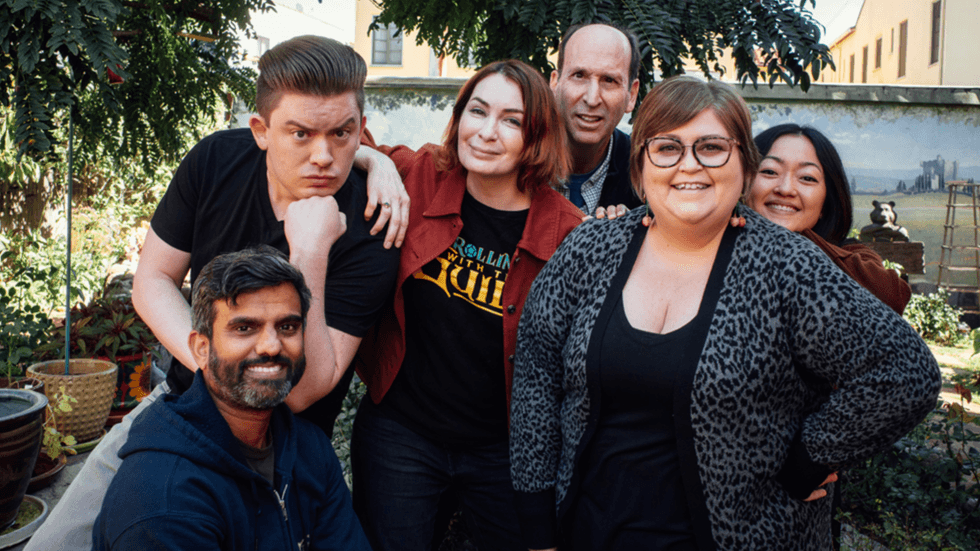 The cast of 'The Guild'Credit: Felicia Day
NFS: Manifesting that for you.
FD: I’m going to manifest just a honeywagon. That'd be nice.
NFS: We talked at the top about how Hollywood didn't know what to do with gamers, and you set out to prove that it was viable. So, what are you now trying to disrupt in Hollywood?
FD: The biggest disruption is my need for Hollywood. As a person, it just never has worked out. It's always been a bad relationship. I've developed a lot in Hollywood. It never went anywhere. And my stories weren't bad, they just weren't for them.
And at a certain point, you just have to realize a relationship doesn't work. It's not about you or me, it's us. And I won't say I'm not ruling out, of course, acting and hosting. I love that. I love it when I get to go on someone's set. I love hosting and bringing out the best in other people. Those jobs, I hope I get to keep doing until I stop doing anything.
But as far as writing and producing, I just need them to be on my own terms, especially with my writing. And that's what I've been doing for the last five years since COVID.
I wrote an audio TV show essentially for Audible. I did a movie in audio form because I wanted to do the movie, and there's no money. I did a graphic novel. I'm working on a novel now.
So when I decided to turn off the need to always be ready to be available or be approved of by somebody at a big company, it was so liberating. And what is so wonderful is—not in a wonderful way—Hollywood is crumbling right now. The seams are open, wide open. They don't know what they're doing. It is really sad. I know famous, famous people who have not worked in years. People are having to find other jobs.
People below the line are devastated. Everything is really, really broken. And it seems like the companies are not, they don't care about the creatives, they're just trying to replace them with AI to make it cheaper.
And so there's a real problem in this industry. And the sad thing, but also the good thing, is that creatives are not being paid enough for the hassle and the pain of development to put up with it anymore. And so we were in this situation where it's like, "Well, I'm getting paid well, so I'll work 15 hours a day. I'm getting paid well, so I'll spend three years developing a script." It's too much. Nobody's making a living. And so you see people starting to rebel, starting to look for other places.
I know really famous showrunners making a play right now. They're doing their own comic books. They're not just doing it to develop IP to bring back to Hollywood. They're doing it, and that would be a byproduct, but creators are finding other outlets to make things. And the wonderful thing is that film, [even though] it is kind of expensive, there are ways to do it really cheap. Pick up a phone and do Tangerine. It was on an iPhone.
So it's really cool that now people are seeing, well, they're seeing dollars, and they're turning toward creators who are pioneering and leading their own path, but at least you get the chance to define yourself outside of what they need.
And I think that's the key as far as all creativity. You can't be creating to please other people. You have to lead with what you are and what you have to say first, and then hopefully be enabled to make that vision happen.
NFS: I do think, despite the tumult of what's going on right now, it is exciting at the same time that there are those opportunities.
FD: It is. It's almost like the potential that everybody thought 19 years ago when I did The Guild, and there were some national webseries out there getting optioned here and there. And it's like, “Oh, this is a way to discover talent.” I mean, it happened with Broad City. Issa Rae came out of webseries. Amazing creators came from there.
It's great to have these horror films making $100 million dollars, but it's been done before by women, actually, because quite frankly, the women didn't have the chances in Hollywood that dudes have. So, yay for discovering YouTube talent, but let's make sure that YouTube talent isn't just the same kind of people Hollywood always wants to hire over and over again. The sad part is maybe they're just recognizing themselves in this talent, and they're like, "Oh, now we're going to go there.”
NFS: So you mentioned the fan base and have talked in the past about the value of having 50,000 followers and how those fans can translate to momentum. So, how are you thinking about that math? What's your approach to that mobilization and getting the audience to move for you?
FD: It's really hard. I mean, I have millions of people who follow me, but the algorithm wants you to tap dance the way you want to tap dance. I remember when I first started TikTok a couple of years ago, and I had a couple of posts go totally viral, like two, three million each. And I was like, "Whoa, this is cool."
Then I started posting things that were not just a mom video, and I was punished. They literally downgrade you. And so they only want you to do the one thing because it's convenient for them. Well, guess what? That's exactly what Hollywood does, except we're doing all this for free. And I'm just like, "I can't do it. I don't want to do it."
So my solution is I do have to spend money on ads because I do need to reach my fans. And it's amazing how people are like, "I'm a lifelong Guild person. I haven't heard about your movie." I'm like, "Oh, this is it. This is social media nowadays."
And I just have to repeat myself. And I guess the one thing you have to, hopefully, people give grace to creators for repeating themselves a lot. They have to in order to find enough people to support themselves. You have to be talking all the time, find interesting ways to approach the same subject, get the same word out, because otherwise one post will not do anything anymore. And it's sad, but I think it's also an encouragement to cultivate smaller, more powerful communities.
We need 50,000 people to donate to this movie, and then we'll have a movie, a great movie with a budget. And that number of people would never be given credence in a traditional Hollywood metric system. A show with 50,000 people watching it is trash. They wouldn't care.
But those people enable great art to be made. So there is power in fewer. And I've always believed that. I've always loved my Twitch audience, my hardcore Guildies who started on the website, and a terrible chat program I put in there. I still know those guys. So that to me is what's beautiful about the web is that concentrating on fewer but mightier, I think, is the key, because just to try to use a shotgun to hit everybody, it's not going to work because the algorithm will not let you. They don't want people to leave their platform.
NFS: Someone's trying to self-fund a film like you are. What bit of advice would you give them beyond what you've already said?
FD: Oh boy, it's really hard. I have the privilege of 20 years of accumulating fanbases and fans and connections, so I would not want to use my example. And we're doing things with this Kickstarter that no one has ever done before. I just heard from Kickstarter, we're the No. 1-followed movie at Kickstarter in history before we launch. We have more followers than any other movie, so that's exciting, but also you never know what's going to happen.
So I guess my advice is to start small, the way your fanbase is. The first episode of The Guild was $300. It was an SD camera and a sound person, and at somebody's house. And that's, I think, why horror is really popular now, because you can make cheap horror. People have been doing it forever, direct-to-DVD horror, believe me, I've auditioned for 150 of them.
But you can do something different with tools that are super readily available. And I would encourage you, before you ask money from other people, to hone your art form, do the stuff that makes you level up, before you ask people to sacrifice.
I know what I'm doing here. I've done it a lot, and I want to make sure that I'm going to deliver because you only have one time to ask people for money like this. I've never done a Kickstarter before now. It's this. This is it. This is my baby. I'm ready, and I put everything into it to make it as great as possible for me and for the fans. So you’ve got to be ready talent-wise. You’ve got to use the tools at your disposal to make yourself the best artist that you can, and you need to prove yourself, and don't wait for somebody to give you that check to start making. You can make it for free.
And that's what's beautiful about this time. It doesn't pay your bills, but I didn't pay the bills with The Guild for many years. So you’ve just got to keep going because you care about it enough. And that really comes back to who you are and why you're a creator. And if you're just looking for money and fame, there are lots of other places you can find that. You’ve got to create because you want to share your perspective with people and be a creator. So that's my best advice.
NFS: Is there anything else you want to add about the project or the Kickstarter?
FD: I'd appreciate it if people went and followed it at WatchTheGuild.com. If you sign up, it's free. And if you later pledge, you get a special pin that will not be available after the 20th of July, when we launch. And spread the word if you like what I do. Your post in a forum or on your Facebook will probably do more work, more good than $100 on Facebook ads that I'll probably spend today.