But that assumption misses something important. Some of the most durable editing instincts come from music videos, and those instincts translate directly into long-form storytelling when you understand what to carry over and what to leave behind.
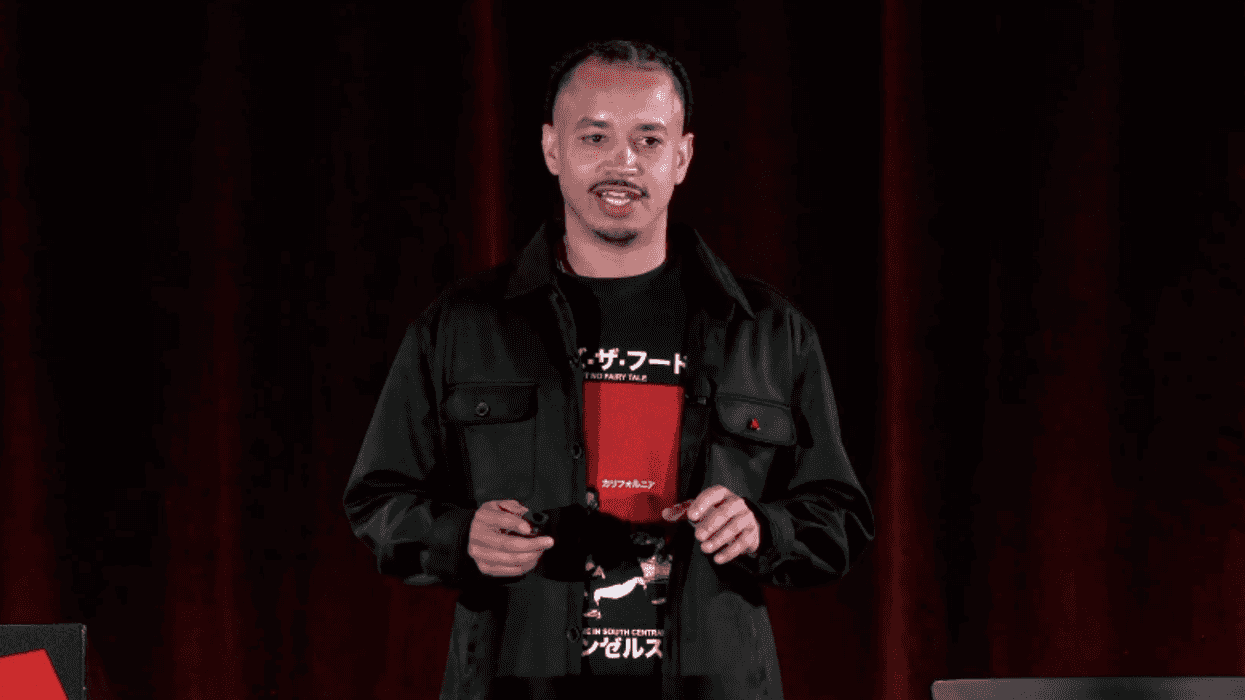
In a recent Adobe MAX Luminary session, editor Vinnie Hobbs walks through his career editing music videos, commercials, and feature films – and along the way, he quietly outlines an editing philosophy that applies far beyond the music space. This article is written for film-minded editors who want practical techniques, not genre labels.

Rhythm Is the Entry Point, Not the Destination
Vinnie admits that early in his career, rhythm was everything. Cutting to the beat felt like mastery. Then someone told him, bluntly, that cutting to the beat isn’t hard—and that comment changed how he thought about editing.
For film editors, this moment should sound familiar. Rhythm matters, but it isn’t the goal. What matters is why a cut happens. In features, the cut often follows breath, hesitation, or emotional shift—not tempo. Music video work forces editors to feel timing viscerally. Film demands that you slow that instinct down and aim it at emotion.
The transferable skill here is not speed, it’s sensitivity. Learning to feel when a moment has said enough—and when silence is doing more work than another shot—is a muscle Vinnie developed in music videos and refined in film.
Cut for Breath, Not Just Continuity
One of the most film-relevant insights Vinnie shares is that continuity is emotional before it is visual. A shot can be imperfect on paper and still work if the emotion stays consistent from moment to moment. This tends to land most clearly for editors who are moving from shorter projects into narrative work. Music videos teach you to prioritize feeling over logic. Film teaches you to sustain that feeling across scenes.
When Vinnie edited his first feature, he says he stopped cutting for rhythm and started cutting for breath in the same way a musician spaces notes. That mindset shift is critical for film editors because the audience doesn’t need perfect visual continuity as much as they need emotional connection.
Tools Are Secondary to Judgment
Throughout his talk, Vinnie repeats a simple idea: don’t get obsessed with the paintbrush. Look at the canvas. For film editors, this translates directly. Multicam, reframing, AI tools, sound effects—none of these matter without taste. Vinnie’s use of tools is always in service of clarity, speed, or communication, not spectacle.
His use of multicam, for example, isn’t about convenience. It’s about creating space to audition performances quickly and make better emotional choices. That same approach applies to dialogue scenes, coverage-heavy sequences, and performance-driven cuts in film.
Sound Design Is Storytelling
One of the most transferable techniques Vinnie demonstrates is his approach to sound. Reverb, room tone, and subtle spatial effects aren’t flourishes—they’re narrative glue. Film editors often treat sound design as something that comes later. Vinnie treats it as part of the edit. By shaping how sound occupies space, he reinforces emotion, scale, and tension.
If you’re cutting features, this is a direct takeaway: sound design is not decoration. It shapes pacing, supports performance, and guides the audience’s emotional response.
Collaboration Is the Real Skill Ceiling
Perhaps the most important lesson for film-minded editors is not technical at all. Vinnie repeatedly returns to the importance of collaboration—learning when to lead, when to step back, and when to let someone else’s idea reshape the cut.
Music videos often involve intense, fast-moving collaboration with artists and directors. That environment forces editors to defend choices without ego. Feature films demand the same skill, just stretched over months instead of days.
Vinnie’s growth didn’t come from better effects or faster shortcuts. It came from learning how to trust the people in the room without losing his own sense of what the cut needed.
Why This Matters If You Want to Edit Films
You don’t have to work in music videos to cut feature films, but there’s a lot to lose if you overlook what that world can teach you. Music video editing sharpens instincts. Film editing disciplines them. The editors who thrive in long-form storytelling are often the ones who learned how to feel a moment before they learned how to explain it.
Vinnie’s journey shows that the techniques are transferable—not as style, but as judgment. Rhythm becomes breath. Speed becomes decisiveness. Effects become restrained. And collaboration becomes the foundation of everything.
For those who want the full context, Vinnie walks through these ideas—and many more—in his Adobe MAX Luminary session, available on Adobe.com.