Did the headline pull you in? I hope so; that was my intent, because I am here to tell you that the penis in this landmark documentary is maybe the most essential part of it; the penis tells the whole story of Elizabeth Holmes.
If you haven't seen You Can See Everything, go watch it. It's amazing.
This article will be all spoilers.
If you have, you know that about forty minutes into the movie, judging by my internal clock, we get a workout montage featuring Elizabeth Holmes's husband, Billy Evans. Then, Billy steps into the shower to wash off, and we see him fully naked as he washes himself off.
This is literally a tie-in to the title, but this naked sharing of their lives also becomes a metaphor for the story, an emasculation of the directors, and a hubristic trap Evans himself falls into.
Yes, the whole theme of the movie is tied up in one penis.
Let's dive in.
- YouTubewww.youtube.com
You Can Literally See Everything
In most documentaries, you're not getting full-frontal male nudity. In fact, I don't think I have seen many docs with any nudity at all. They're usually pretty scholarly, and even ones about salacious things pick and choose when to show someone naked.
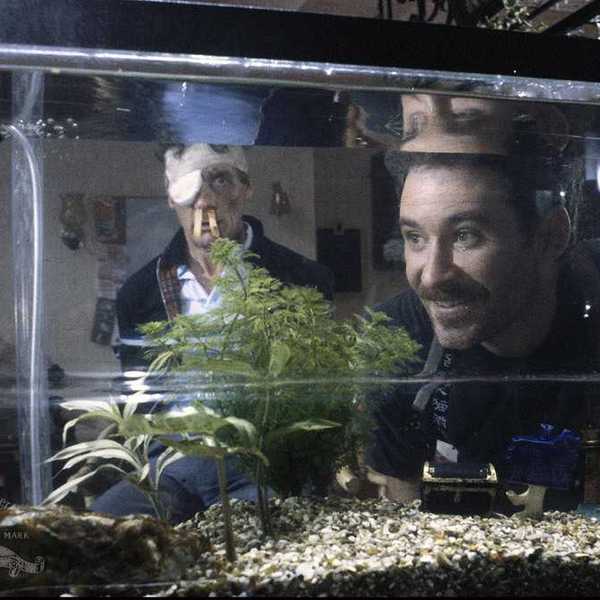
Co-directed by Nathan Fielder and Lance Oppenheim, You Can See Everything also makes careful, calculated decisions about what it shows and when it shows it to you.
So getting a penis early in the movie is something they decided to do in the edit.
They could have left it out, so I want to explore why it's here, why it's so early, and what it means for the characters.
This movie is three hours long and split into two parts, with perspective shifts that recontextualize what we have seen, like a magic trick.
This is a tale as old as time in docs, first seen in Orson Welles's F is for Fake and later used in docs like The Act of Killing to illustrate a point.
Here, Fielder and Oppenheim use that strategy to turn our judgment of Holmes and her husband, Billy Evans.
But the only way to do that is to show them, naked, in the first half as the people they claim to be. That it is both literal and metaphorical.
One from the living with the subjects sense, and the other from seeing a penis in the shower.
Enter: actual nudity from Billy Evans post-workout.
At the time, we just think this is a quirky thing from a guy who is proud of his body, a narcissist who is leaning way too slowly into the "We're innocent, we'll show you anything you want and let you examine our lives to any degree to prove it."
But as we get deeper into the film, we recontextualize this nudity as narcissism and toxic masculinity. Something planted early on, when we see him yank the omelet away from his wife and tell her she whips the eggs wrong.
In both instances, we have plants that pay off later, showing how physical exposure (both penis and egg power) can function as psychological warfare, and how they connect only when you reveal a person's true motive.
Since we have the motives early on, as the toxicity shows itself later, we can harken back to both the dick and the omelet as precursors to us hitting that this story would be about a power swing.
In this movie, Billy's true motive is seen as control. The big question becomes: how much of that control does Elizabeth cede to avoid charges, and how much is she actually being taken advantage of by a man pushing her around?
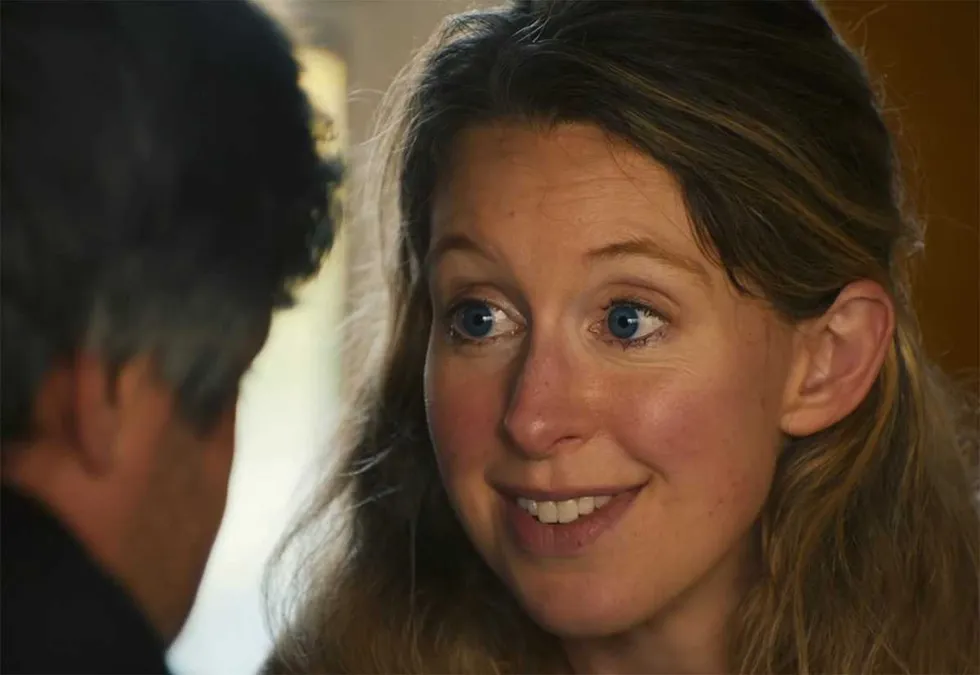 'You Can See Everything'Credit: A24
The Power Dynamic Behind the Exposure
According to co-director Lance Oppenheim, the nudity moment early in the movie wasn't either director's idea.
Evans offered to let the crew film him in the shower, claiming he had zero problems about being seen naked.
So, they obliged.
To Evans, exposure is leverage. On paper, his bizarre justification for showing his body on camera is that displaying his penis somehow serves as absolute proof of his wife’s innocence. It’s a delusion wrapped in pseudo-logic, but it also exposes that Billy just wants to dominate everyone around him.
This guy is showing his penis to use his own body as an instrument of intimidation.
It's a way of showing the documentarian he's the alpha in the room, and their cameras can only capture him succeeding.
This is Billy Evans's attempt to assert a twisted form of hyper-masculinity, designed to emasculate the directors behind the lens.
It's a classic power play, converting raw exposure into a literal flex.
And somehow, Fielder and Oppenheim keep their composure enough to include it in the movie, which lets them have all the power later.
Billy can't conceive of them having any power, because he doesn't see these two funny directors as guys with power. But he's wrong; beneath the surface, they have all the power, not just in the edit, but in the ability to edit a movie with hindsight.
They can harken back to his penis and say...why show us that? Who are you really?
Something he's not smart enough to understand.
This all makes the penis necessary, and the whole crux of the movie, as they all dance around the Holmes accusations and portray different versions of the same story, allowing the audience to decide her innocence.
For directors and editors, the scene offers a brilliant study in how subject agency can reveal character faster than any interview dialogue ever could.
Fielder and Oppenheim turn Evans' attempt at emasculation on its head. The moment stops being a display of male dominance and becomes a staggering portrait of self-delusion.
It's truly one of the bravest acts of documentary directing and one of the funniest things, to see this blowhard's big penis backfire on him so completely that you walk out of the documentary talking about how dumb this big dicked idiot looks on screen.
The Takeaway for Directors
Yes, there are lessons in all of this, and the directors set them. When you make a doc, you can find the underlying truth in the edit, and I think in You Can See Everything, they found it later when they saw Billy's true colors.
When they set up the movie, you get the nudity early, which jars many viewers; only later do you realize what it's for, and only then do you feel it.
So, when your subject tries to hijack your camera to project power, sometimes the most honest choice a filmmaker can make is to let them do it, holding the shot until the performance exposes itself. You have that; you can share it with the world.
That's what makes this one of the greatest documentaries of all time, and I think a movie is also a piece of modern art.
Let me know what you think in the comments.